
CJP Centre Talks on NEET Demands End With 24-Hour Deadline
CJP representatives met Union ministers and submitted demands linked to the NEET paper leak protest, including accountability and protection for protesters. The talks unfolded as the Supreme Court ordered the Centre to explain its long-term examination reform plan.
Protest Delegation Submits Its Core Demands
New Delhi, July 24, 2026: CJP Centre talks on NEET demands ended without a final settlement on Friday after representatives of the Cockroach Janta Party met Union ministers at the Constitution Club of India.
The protest group said it had given the Centre about 24 hours to respond to its principal demand for the removal or resignation of Union Education Minister Dharmendra Pradhan.
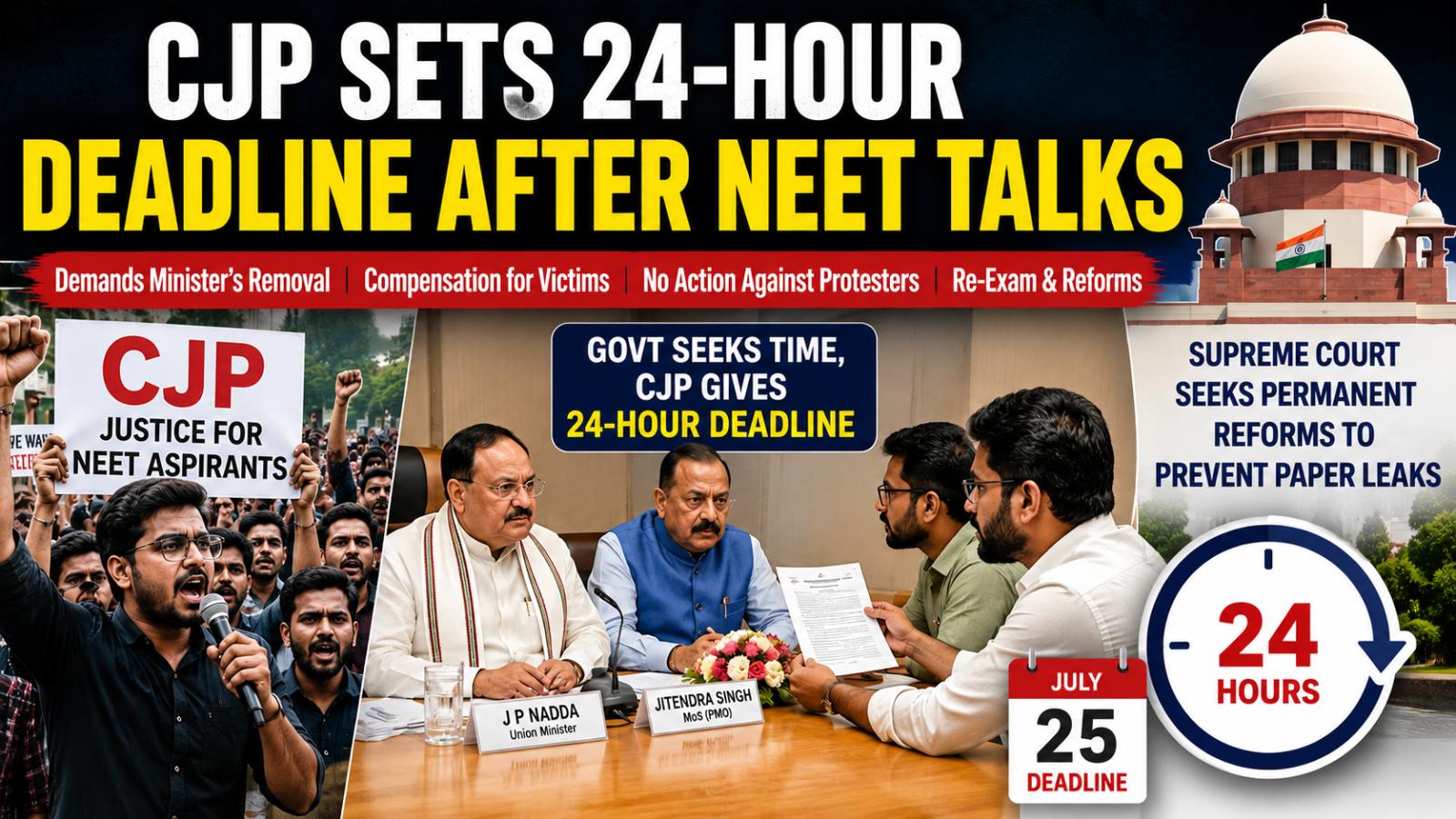
CJP spokespersons Saurav Das and Ashutosh Ranka met Union Health Minister JP Nadda and Minister of State Jitendra Singh at what the group had requested as a neutral venue. The meeting was the second formal round of discussions between the protest representatives and the Narendra Modi government over the continuing NEET-UG paper leak agitation.
CJP Lists Compensation, Re-Exam and Protester Protection
The CJP delegation submitted a letter after consultations with protesters and supporters across the country.
Across its letter and post-meeting briefing, the group pressed for Pradhan’s resignation, compensation for families of aspirants who reportedly died by suicide amid the examination crisis, protection of peaceful protesters from legal action and a response to its five-point charter on examination reforms.
The group has also called for a fresh examination for affected NEET aspirants. It demanded a public apology from the government, the Rapid Action Force leadership, and the Delhi Police Commissioner over the alleged use of force against students during the July 20 march towards Parliament.
The allegations concerning police conduct remain subject to judicial and official scrutiny.
Government Seeks Time as CJP Sets Deadline
Ranka said the government had accepted two demands “in principle”: suitable compensation for affected families and an assurance that student protesters would not face legal action.
These claims were made by the CJP after the meeting. The government did not immediately announce a complete agreement on the protest charter.
Nadda said the Centre required time to examine and discuss the demands while indicating that further negotiations were possible. CJP representatives said the government had been given until around 2 pm on Saturday, July 25, to respond to the demand concerning Pradhan.
They warned that the movement could expand across the country if there was no satisfactory outcome. Another meeting between the government and CJP representatives was scheduled for Saturday.
The talks therefore produced limited movement but did not resolve the central political dispute over the Education Minister’s position.
Supreme Court Seeks Permanent NEET Security Reforms
The negotiations coincided with a significant intervention by the Supreme Court.
The Court directed the Centre and the National Testing Agency to file detailed affidavits explaining the progress made on reforms following the NEET-UG paper leak.
The bench said temporary or ad hoc measures would not be sufficient and indicated that it would continue monitoring the reform process. The requested information includes steps related to digital infrastructure, examination security, transparency, administration, expert-led units, and accountability mechanisms.
The Centre told the Court that it was prepared to take additional steps to address students’ concerns and strengthen the fairness of the examination system.
The judicial review shifts part of the focus from immediate protest demands towards the creation of permanent safeguards against future breaches.
Paper Leak Dispute Continues in Parliament
The NEET controversy also remained a major issue in Parliament.
The government said it was willing to discuss the paper leak in both Houses and signalled flexibility over the date and format of the debate.
Opposition parties, however, continued to insist that a discussion would have little meaning unless Pradhan resigned. Rahul Gandhi and other Opposition leaders linked the demand for ministerial accountability with wider concerns about repeated examination failures and the treatment of protesters.
What Happens Next
The next CJP-Centre meeting, the protest group’s July 25 deadline, and the affidavits sought by the Supreme Court will determine the immediate direction of the dispute.
The issue is now unfolding simultaneously through government negotiations, nationwide demonstrations, parliamentary pressure, and judicial monitoring. This has made permanent examination reform as important as the continuing demand for political accountability.