America Ends Open-Ended Visa Stays for Students and Journalists
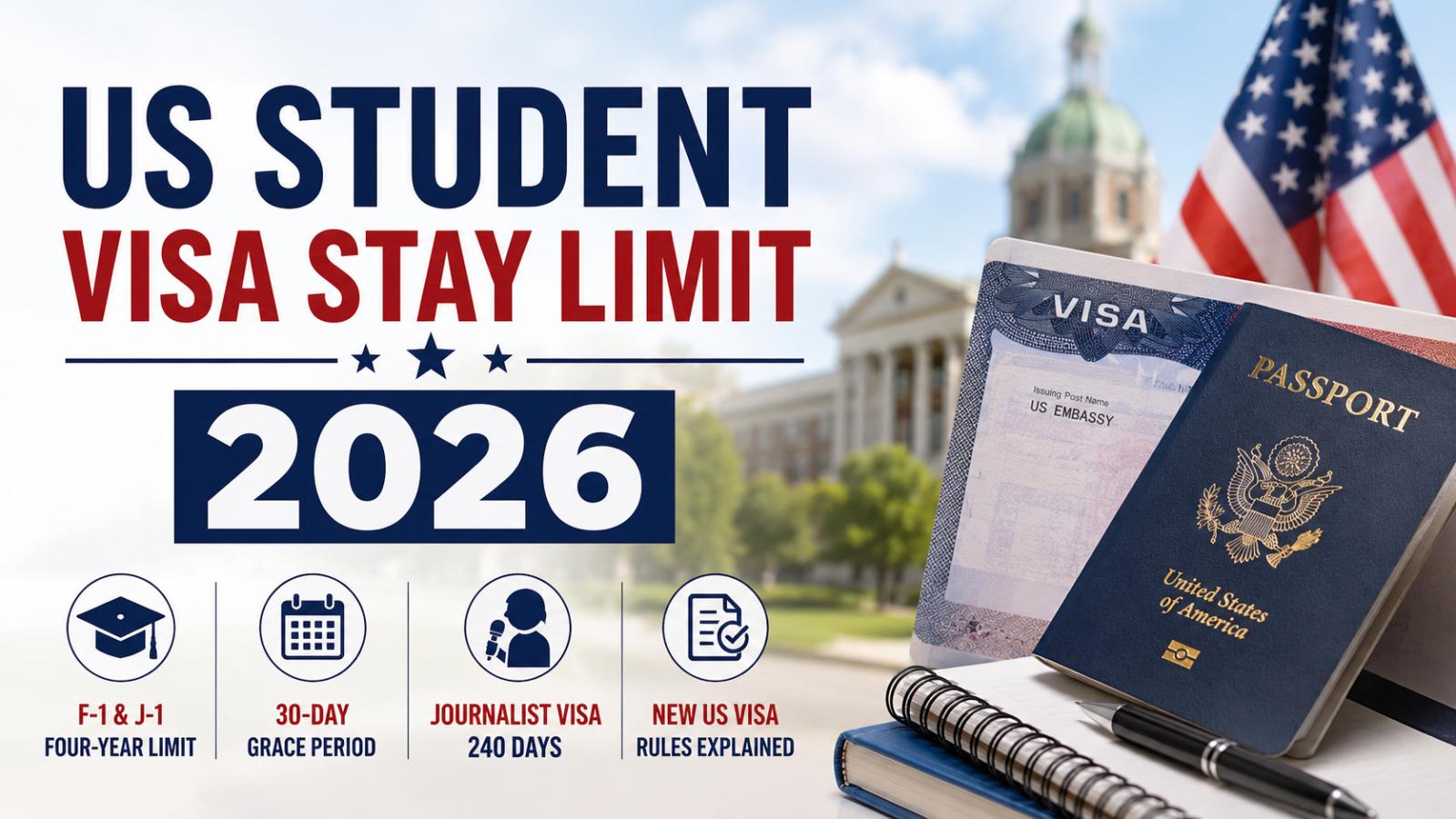
The United States has finalised stricter visa regulations that will introduce fixed admission periods for international students, exchange visitors, and foreign journalists. The US student visa stay limit 2026 will replace the long-standing system that allowed eligible visa holders to remain for the duration of their academic programme or professional assignment.
Under the new Department of Homeland Security rule, F-category students and J-category exchange visitors may generally be admitted for a maximum of four years. Most foreign journalists holding I visas will receive admission periods of up to 240 days, while Chinese journalists will face a shorter 90-day limit.
The regulation is expected to take effect 60 days after its publication in the Federal Register, subject to congressional review.
What Changes Under the New US Visa Rule?
Previously, many F, J, and I visa holders were admitted under “duration of status”. This meant they could remain in the country while continuing to meet the conditions of their programme, course, or media assignment, without a fixed departure date on their admission record.
The new system introduces a specific end date. Students and exchange visitors who need more than four years to complete their approved activities will have to apply to the Department of Homeland Security for an extension.
They may alternatively leave the country and seek readmission, although entry would still be subject to immigration checks and approval.
The change affects:
- F-1 students enrolled in US educational institutions
- J-1 exchange visitors, researchers, and trainees
- I-Visa holders working for foreign media organisations
- Dependants connected to the affected visa categories
F1 Visa Four-Year Rule Explained
The F1 visa four-year rule could have the greatest impact on students pursuing doctoral degrees, medical programmes, research courses, or other qualifications that commonly take longer than four years.
Students whose programmes are delayed may also need to seek an extension. Delays can occur because of research requirements, changes in academic schedules, medical circumstances or additional practical training.
Graduate students will face tighter restrictions on changing their educational objectives. Transfers to another institution or significant programme changes may require formal authorisation under the new regulations.
The departure period following the completion of a degree or approved training will also be reduced. F-category students will generally have 30 days to leave the United States or obtain another lawful authorization, compared with the previous 60-day period.
This shortened F1 visa 30-day grace period may require students to make employment, travel, and immigration decisions earlier.
How J1 Exchange Visitors Could Be Affected
The J1 visa four-year limit will apply to cultural exchange visitors, researchers, trainees, and other participants covered by the category.
Many exchange programmes last less than four years and may not be directly disrupted. However, research scholars, physicians, and participants in longer programs may need additional approval to complete their assignments.
Universities and programme sponsors may also face more administrative work because they will have to help participants monitor admission deadlines and prepare extension applications.
Journalist Visa Limited to 240 Days
Foreign media representatives will generally be admitted for up to 240 days at a time under the revised I-Visa regulations.
Extensions will be permitted, but journalists and international news organisations may have to submit renewal applications more frequently. Media groups have argued that repeated approval requirements could make long-term reporting assignments more difficult and uncertain.
Chinese journalists will be admitted for only 90 days, excluding journalists from Hong Kong and Macao. China has criticised the measure as discriminatory and warned that it may consider reciprocal action.
Why the US Government Introduced the Restrictions
The Department of Homeland Security says fixed admission periods will provide immigration authorities with more opportunities to screen visa holders and confirm that they continue to meet programme requirements.
According to figures cited by the department, the United States recorded more than 1.8 million student visa admissions in 2024, an increase of over 11% from the previous year.
More than 500,000 exchange visitor visas and approximately 37,300 foreign media visas were also granted during the 2024 financial year. DHS said the rising number of admissions had made monitoring visa holders more challenging.
What Foreign Students Should Check
International students should review their Form I-20, passport, admission record, and approved programme end date. J-1 visitors should similarly verify the dates listed on their DS-2019 documentation.
Students whose academic programme, practical training or research period could extend beyond the permitted admission date should contact their university’s designated international student adviser.
Applicants should also avoid making travel or employment decisions based only on general news reports. The exact impact will depend on the final effective date, transition provisions and the admission period recorded for each visa holder.