

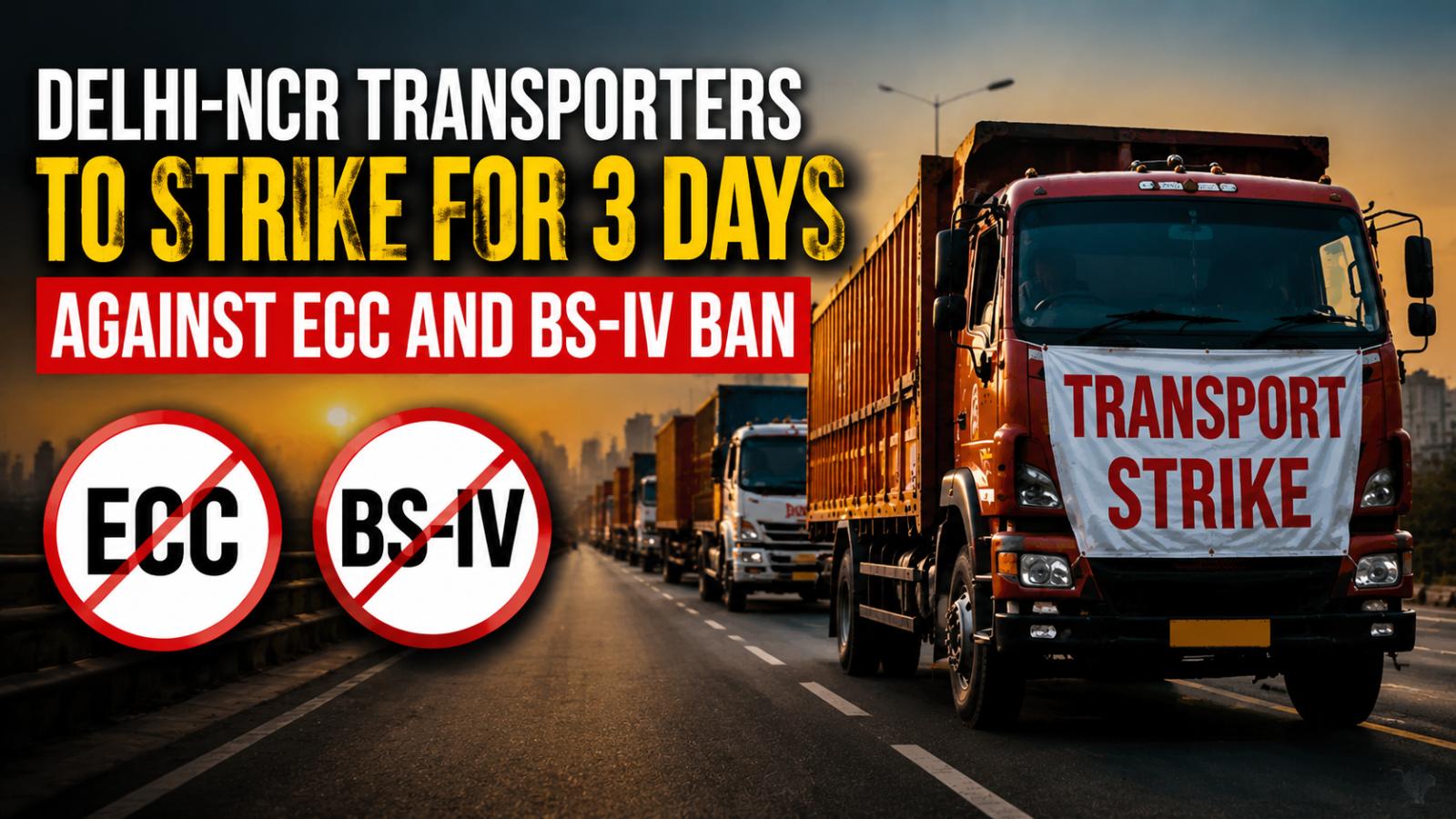
Transporters and truck drivers in Delhi‑NCR are planning a three‑day strike starting May 21, raising concerns about potential delays in moving goods and essential supplies. The strike call comes from the All India Motor Transport Congress (AIMTC), which represents many trucker unions across the region. The drivers say they are protesting a recent increase in the Environment Compensation Cess (EC Cess) imposed on all goods vehicles entering Delhi. This charge was raised significantly after orders tied to pollution control, making every Delhi‑bound freight trip much more expensive for truck operators.
In addition to higher EC Cess, transporters are strongly opposing a government decision to ban BS‑IV commercial vehicles from entering the region from November 1. The drivers report that these rules, when combined, are hurting their earnings and increasing the cost of moving goods, including everyday essentials like vegetables, milk, medicines, and other supplies. The protest leaders argue that even though EC Cess collections have been substantial over the past years, the city has not seen a proportionate improvement in air quality. They also point out that the levy applies to all trucks — including those carrying essential items — which they say is unfair and burdensome.
Potential Supply Disruption and Expert Views
Transport analysts warn that if the strike goes ahead as scheduled, it could cause delays in freight delivery and impact markets and households across Delhi and nearby cities. Trucks account for the majority of goods movement into the capital, and a stoppage could slow down supply chains for both essential and commercial products. Operators are urging authorities to rethink both the EC Cess hike and the proposed BS‑IV ban or risk a long‑term breakdown in freight operations.
Experts also question whether banning older BS‑IV vehicles is truly effective in reducing pollution, noting that actual emissions under city traffic conditions might not differ drastically from newer models. They suggest that enforcement based on actual emission performance could be more practical than strict registration categories. With these concerns at the forefront, transport unions say they will maintain pressure until their demands are addressed, underlining the economic and social stakes tied to goods movement and logistics in the region.