

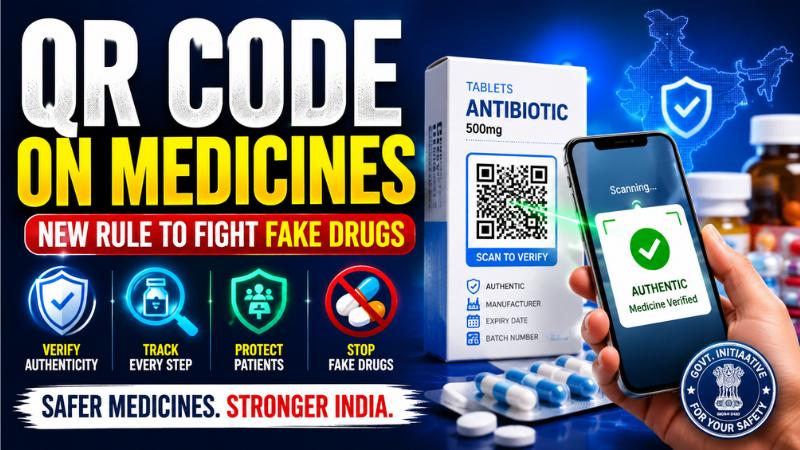
QR Code On Medicines In India: Govt Expands Rule To Fight Fake Drugs
The Indian government has made QR codes mandatory on several critical medicines, including vaccines, antibiotics, anti-cancer drugs, and psychotropic medicines, in a major step to curb fake drugs and improve medicine safety.
The Health Ministry has notified amendments to the Drugs Rules, 1945, expanding India’s drug track-and-trace system. The move is aimed at helping patients, pharmacists, distributors, and regulators verify whether a medicine is genuine.
Critical Medicines Brought Under QR Code Rule
Under the revised rules, all vaccines, antimicrobials, anti-cancer medicines, and narcotic and psychotropic drugs covered under the NDPS Act, 1985, will come under Schedule H2 of the Drugs Rules.
Manufacturers will have to print or affix a barcode or QR code on the primary packaging of these medicines. If there is not enough space on the primary pack, the code can be placed on the secondary packaging.
What Details Will The QR Code Show?
The QR code will carry important product details that can help verify the medicine. These include the unique product identification code, generic name, brand name, manufacturer details, batch number, manufacturing date, expiry date, manufacturing licence number, and other relevant product information.
This digital verification system is expected to make it easier to identify fake, substandard, or suspicious medicines in the supply chain.
Rollout To Begin From July 2027
The government has given manufacturers time to comply with the new requirement.
The QR code rule will apply to vaccines, anti-cancer medicines, and narcotic and psychotropic drugs from July 1, 2027.
For antimicrobials, including antibiotics, the mandate will come into effect from July 1, 2028.
The staggered rollout has been planned because the pharmaceutical industry will need time to update packaging, labelling, and verification systems.
Why The Rule Matters
Fake medicines are a serious public health concern because they can put patients at risk and reduce trust in the healthcare system. The expanded QR code rule is expected to improve transparency and make it harder for counterfeit products to enter the market.
Until now, QR code-based identification was mandatory mainly for India’s top 300 pharmaceutical brands. The new amendment widens the system to cover entire categories of high-risk and widely used medicines.
Link To Anti-Microbial Resistance Fight
The move may also help India’s fight against anti-microbial resistance, or AMR. Poor-quality or counterfeit antibiotics can worsen treatment outcomes and contribute to resistance.
By improving tracking of antimicrobial medicines, authorities hope to ensure patients receive safe and effective drugs.
A Major Step For Drug Safety
The expanded QR code mandate is one of India’s major steps toward strengthening medicine authentication. If implemented effectively, it can improve consumer confidence, support regulators, and make India’s drug supply chain safer.