
US-Iran Nuclear Talks Unfinished After Trump’s Big Claim
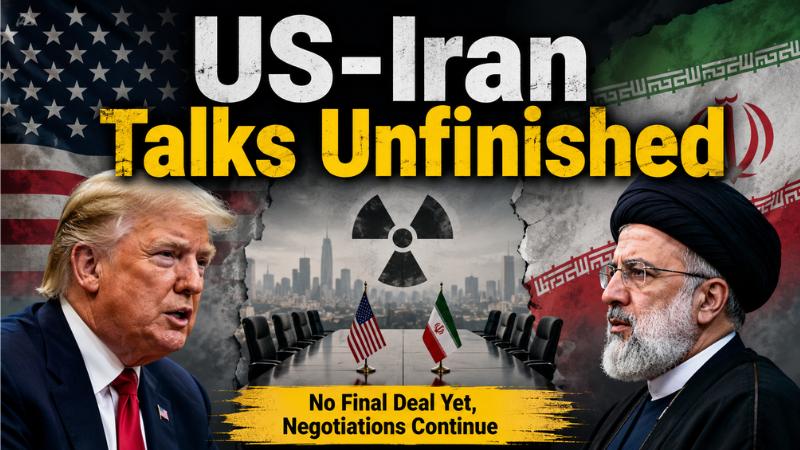
A new diplomatic twist has emerged in the US-Iran nuclear row after US President Donald Trump claimed that Iran had agreed never to pursue a nuclear weapon. However, Tehran has taken a more careful position, saying that the understanding is only an early step and that a final agreement has not yet been completed.
The development has drawn global attention because it comes at a sensitive time for West Asia, oil markets, and international security. While Washington is presenting the move as a major diplomatic breakthrough, Iran’s response shows that the process is still unfinished.
Trump Says Iran Accepted Nuclear Commitment
Trump claimed that Iran had agreed not to develop or possess a nuclear weapon. He also rejected reports that the United States was planning to pay Iran a large financial amount as part of the understanding.
According to Trump, the key point of the discussion was Iran’s nuclear future. His statement suggested that the United States had secured a major commitment from Tehran. The White House also highlighted Trump’s position that Iran should never be allowed to acquire a nuclear weapon.
The claim immediately became a major international headline because the Iranian nuclear issue has remained one of the most sensitive security questions for the United States, Israel, and several countries in West Asia.
Tehran Says Final Agreement Is Still Pending
Iran, however, has not presented the development as a completed final deal. Iranian President Masoud Pezeshkian described the understanding as an important step toward stopping conflict and beginning negotiations.
At the same time, Tehran made it clear that a final agreement has not yet taken shape. This difference in wording is important. It means that both sides may have reached a framework or preliminary understanding, but the full terms are still not confirmed publicly.
Iran’s cautious response also suggests that difficult questions remain. These may include nuclear inspections, uranium enrichment, sanctions relief, and future guarantees from both sides.
Why The Difference In Statements Matters
The main issue is the difference between a political claim and a final signed agreement. Trump’s statement gives the impression of a major diplomatic win, while Iran’s statement points to a longer negotiation process.
This makes the story more complex than a simple peace deal announcement. Until the full terms are released and both governments clearly confirm the same conditions, the situation should be treated as a developing diplomatic story.
For global readers, the key point is that the US-Iran nuclear talks are moving forward, but they are not fully settled yet.
Strait Of Hormuz Adds Global Market Angle
The talks are also being watched closely because of the Strait of Hormuz, one of the world’s most important oil shipping routes. Any tension in this region can quickly affect crude oil prices, fuel costs, and global investor sentiment.
Reports around the preliminary understanding have raised hopes that shipping and oil movement through the region may gradually stabilize. This is important for countries such as India, which depend heavily on imported crude oil.
If tensions ease, it can reduce pressure on oil prices, inflation and currency markets. But if negotiations fail or conflict returns, global markets could again face uncertainty.
Israel Maintains A Tough Position
Israel has continued to take a firm stand on Iran’s nuclear programme. Israeli Prime Minister Benjamin Netanyahu has repeatedly said that Iran must not be allowed to acquire nuclear weapons.
This means the US-Iran understanding may not immediately settle all tensions in the region. Israel’s security concerns, Iran’s nuclear commitments and the wider conflict involving regional groups remain important factors.
Even if Washington and Tehran move closer to a deal, the response from Israel and other regional players will play a major role in deciding whether the situation truly stabilizes.
What Happens Next?
The next stage of talks will be crucial. The major questions now are whether Iran will accept stronger nuclear monitoring, whether the United States will offer sanctions relief, and how both sides will verify the commitments made during negotiations.
There is also a question of timing. A preliminary framework can reduce tensions, but a final agreement usually requires detailed written terms, verification steps, and political approval.
For now, Trump’s claim has created hope for a breakthrough, but Tehran’s cautious response shows that the US-Iran nuclear talks are still unfinished.
The US-Iran nuclear row has entered an important phase, but it has not reached a clear conclusion yet. Trump says Iran has accepted a nuclear commitment, while Tehran says final negotiations are still pending.
This makes the story important for global politics, energy markets and West Asia stability. Until both sides release clear details, the safest conclusion is that the talks have progressed, but the final deal is still waiting to take shape.