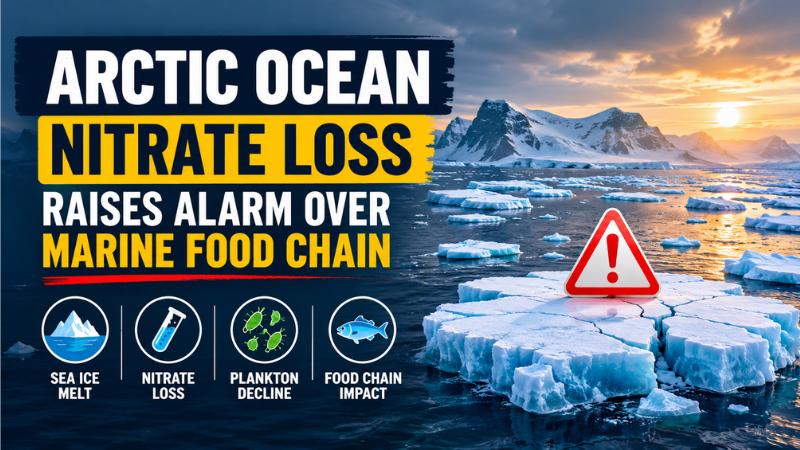
Arctic Sea Ice Melt Triggers Nutrient Crisis
Arctic Ocean Shows Major Ecosystem Shift
Scientists have warned that the Arctic Ocean has entered a worrying new phase after a major nutrient change was detected beneath melting sea ice. A study by researchers at the University of Edinburgh found that the Arctic may have crossed a key tipping point around 2009, when rapid sea ice loss began altering the ocean’s natural balance.
Nitrate Loss Hits Plankton Growth
As sea ice disappears, shallow parts of the Arctic seabed are exposed to more sunlight. This triggers a process that converts nitrate, an important nutrient for plankton, into nitrogen gas. Since plankton forms the base of the marine food chain, a drop in nitrate can affect fish, seabirds, seals, whales, and other species.
Researchers say the Arctic Ocean is no longer limited only by sunlight, but increasingly by nitrate availability. This change may also reduce the ocean’s ability to absorb carbon from the atmosphere. With sea ice melt continuing, scientists warn that the Arctic ecosystem may not return to its earlier state, making long-term monitoring important for global climate and fisheries.