

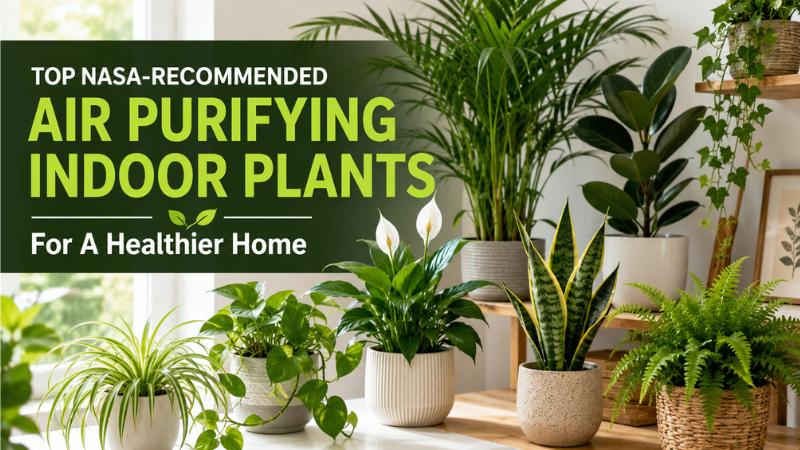
NASA-Recommended Indoor Plants That Help Clean Indoor Air
Indoor plants are becoming an essential part of modern homes not only for decoration but also for improving indoor air quality. According to NASA-backed studies, several indoor plants can naturally remove harmful toxins from the air while creating a healthier and fresher living environment. These plants are easy to maintain and suitable for homes, apartments, balconies, and office spaces. Their growing popularity comes from their ability to combine beauty, wellness, and low-maintenance care in one natural solution.
Areca Palm
The Areca Palm is one of the most luxurious-looking indoor plants known for its tall, feathery leaves and strong air-purifying abilities. It helps remove harmful toxins like formaldehyde, xylene, and toluene from indoor air. This plant thrives in bright indirect sunlight and requires regular watering. It is commonly used in living rooms and office spaces to create a fresh and elegant atmosphere.
Rubber Plant
The Rubber Plant is popular for its glossy dark green leaves and aesthetic appearance. It is highly effective at removing formaldehyde from indoor air while requiring very little maintenance. This plant grows well in low to medium light conditions and only needs occasional watering, making it ideal for busy homeowners looking for both décor and cleaner air.
English Ivy
English Ivy is admired for its dark green veiny leaves and trailing growth pattern. It helps reduce airborne mold and indoor pollutants naturally. The plant grows well in hanging baskets or small indoor spaces and requires minimal sunlight and moderate watering. Its decorative appearance makes it perfect for bedrooms, kitchens, and balconies.
Peace Lily
Peace Lilies are widely known for their glossy leaves and elegant white flowers. These plants can remove toxins such as ammonia, benzene, formaldehyde, and trichloroethylene from the air. Peace Lilies grow well in low to moderate indoor light and require regular watering to stay healthy. Their air-cleaning properties and attractive flowers make them one of the most preferred indoor plants.
Boston Fern
Boston Ferns are commonly used in hanging pots because of their long arching green leaves. They are believed to help remove pollutants like formaldehyde and xylene while improving indoor humidity levels. These plants grow best in humid environments with indirect sunlight and regular watering, making them ideal for bathrooms and indoor balconies.
Popular Low-Maintenance Plants For Cleaner Homes
Pothos
Pothos, also called the Money Plant, is one of the easiest indoor plants to maintain. It grows quickly in low light conditions and requires very little water. The plant helps remove toxins like formaldehyde, benzene, and xylene from the air. Its trailing green leaves make it suitable for shelves, office desks, and hanging pots.
Snake Plant
Snake Plants are highly popular because they survive in low light and need minimal watering. They are known for removing toxins from indoor air while releasing oxygen during nighttime, making them ideal for bedrooms. Their upright sword-shaped leaves also add a sleek modern look to indoor spaces.
Spider Plant
Spider Plants are effective at removing pollutants such as formaldehyde, xylene, and toluene from the air. These low-maintenance plants grow easily in indirect sunlight and require only occasional watering. Their hanging foliage makes them attractive for shelves, balconies, and indoor décor setups.
Weeping Fig
The Weeping Fig is a tree-like indoor plant with glossy leaves and elegant growth. It helps clean indoor air by removing toxins like xylene and toluene. This plant prefers moderate to bright light and regular watering. It is often placed in larger rooms and office spaces to improve both appearance and air quality.
Dumb Cane
Dumb Cane plants feature large decorative leaves with mixed shades of green. They are known for removing pollutants like xylene and toluene from indoor spaces. These plants grow best in indirect sunlight and require occasional watering. Their stylish appearance and air-purifying benefits make them a favorite indoor décor option.
Adding these NASA-recommended indoor plants to homes and offices is a simple and natural way to improve indoor air quality. These plants not only enhance interior décor but also help create a cleaner, healthier, and more refreshing environment with minimal maintenance.