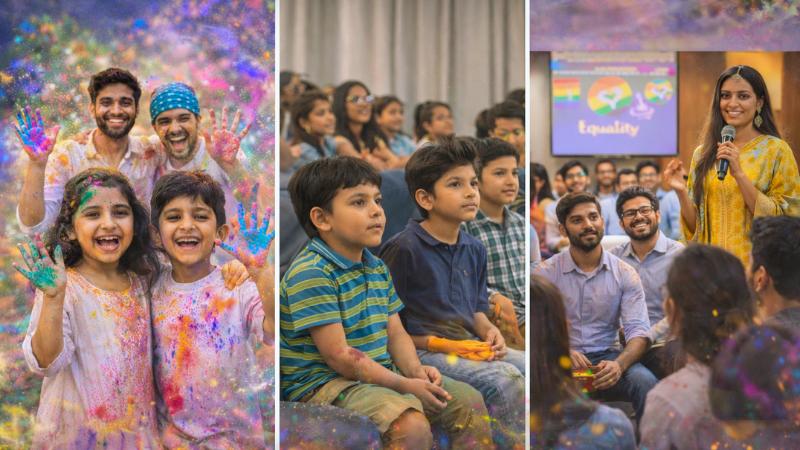
Young Indian-Americans, particularly second-generation NRIs, are spearheading a cultural revolution in the United States. Born or raised in the U.S., these youth are reinterpreting Indian culture through a fusion of traditional and contemporary influences. While their parents often maintained strong ties to Indian traditions, younger NRIs are creating a unique identity that blends Indian values with modern societal norms. This transformation is especially visible in the way they celebrate Indian festivals, such as Diwali and Holi, with modern twists that incorporate technology, fusion dance, and bilingual emceeing, making these celebrations more inclusive for people from diverse backgrounds.
Culinary innovation is another domain where these youth are making a significant impact. Traditional Indian recipes are being adapted to modern tastes and dietary preferences. Vegan butter chicken, quinoa upma, and air-fried samosas are just a few examples of how young Indian-Americans are staying connected to their roots while promoting sustainability and healthy eating. Cooking has become a way to tell stories and pass down traditions, albeit in a contemporary context, as second-generation NRIs experiment with ingredients and cooking methods that resonate with their modern lifestyles.
Language plays a crucial role in the ongoing cultural evolution. Though many second-generation NRIs might not be fluent in their parents' native languages, they still embrace key cultural phrases and expressions. Some are actively learning their ancestral languages through digital tools or community programs, ensuring that the connection to their linguistic heritage remains strong. This linguistic blend of old and new is reinforced by films, storytelling, and social media, which serve as essential tools for maintaining cultural ties in a fast-paced, interconnected world.
Perhaps the most profound shift lies in how second-generation NRIs are challenging long-held cultural taboos. Issues like gender equality, mental health and interfaith relationships are now being addressed more openly and inclusively. While the previous generation might have shied away from these conversations due to cultural and social constraints, today's youth are breaking barriers and engaging in these discussions with a fresh perspective. Their willingness to confront such topics reflects a broader, more inclusive view of identity that blends both Indian cultural values and Western ideals of self-expression, freedom, and equality. This transformation is shaping the way they define themselves and their relationships, emphasizing the importance of personal choice, respect for diversity, and social justice. Through this evolving dialogue, second-generation NRIs are not only redefining their cultural identity but also influencing how future generations will approach these critical issues within both their communities and the broader global context.