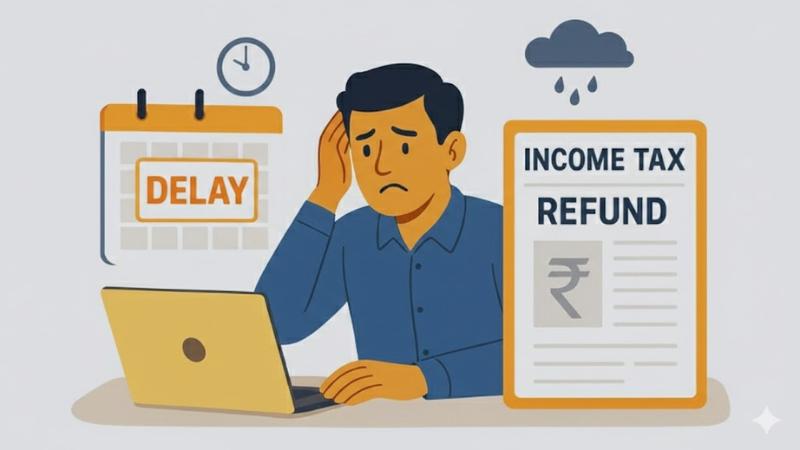
Waiting for your tax refund can be frustrating, especially when more than 90 days have passed since you filed your return. Many taxpayers assume that once the return is submitted, the refund will be processed automatically within a fixed timeline. However, several technical, verification, and compliance-related factors can slow down the process.
Understanding the possible reasons behind the delay can help you take the right steps instead of worrying unnecessarily.
1. Errors or Mismatch in Tax Return Details
One of the most common reasons for refund delays is incorrect or mismatched information in your tax return. If your income details, bank account number, tax deducted at source (TDS), or personal information do not match the records available with the tax department, the system may flag your return for review.
Even small mistakes, such as an incorrect IFSC code or a spelling error in your name, can result in processing delays. When such discrepancies are identified, the refund is usually put on hold until the issue is clarified.
2. Pending Verification or Additional Review
If your return requires additional verification, the processing timeline can extend beyond 90 days. This often happens in cases where large deductions, high-value transactions, or significant refunds are claimed.
In some situations, the tax department may conduct manual checks to ensure compliance. Until the review process is completed, the refund cannot be issued. Checking your tax portal regularly for notices or required actions can help prevent further delays.
3. Bank Account Validation Issues
Refunds are directly credited to the bank account mentioned in your tax return. If the account is not pre-validated, inactive, or incorrectly linked with your tax profile, the refund transfer may fail.
In such cases, the refund remains pending until the account details are corrected and validated. Ensuring that your bank account is active, correctly linked, and verified is essential for smooth processing.
4. Outstanding Tax Demands or Adjustments
Sometimes, refunds are adjusted against previous outstanding tax dues. If there is any pending demand from earlier assessment years, the tax department may first adjust the refund amount against that liability.
This can delay or reduce the refund amount. Reviewing your tax account statement can clarify whether any adjustments have been made.
5. High Filing Volume and Processing Backlog
During peak filing season, tax authorities receive millions of returns within a short period. Heavy workload and system backlogs can slow down refund processing timelines.
In such cases, the delay may not be related to any specific issue with your return, but simply due to administrative processing time.
What You Should Do If 90 Days Have Passed
If your refund has not been credited even after 90 days, start by checking the status on the official tax portal. Look for any pending verification, notices, or required actions.
Ensure your bank account is validated and correctly linked. If everything appears correct and there are no pending notices, you may raise a grievance or contact the tax helpdesk for clarification.
Final Thoughts
A delay of more than 90 days does not always indicate a serious problem. In most cases, it is linked to verification checks, minor errors, or administrative backlog. Staying informed, regularly monitoring your return status, and promptly responding to any notices can significantly speed up the process. Patience combined with proactive follow-up is the key to resolving tax refund delays efficiently.


 Joyful
0%
Joyful
0%
 Cool
0%
Cool
0%
 Thrilled
0%
Thrilled
0%
 Upset
0%
Upset
0%
 Unhappy
0%
Unhappy
0%