

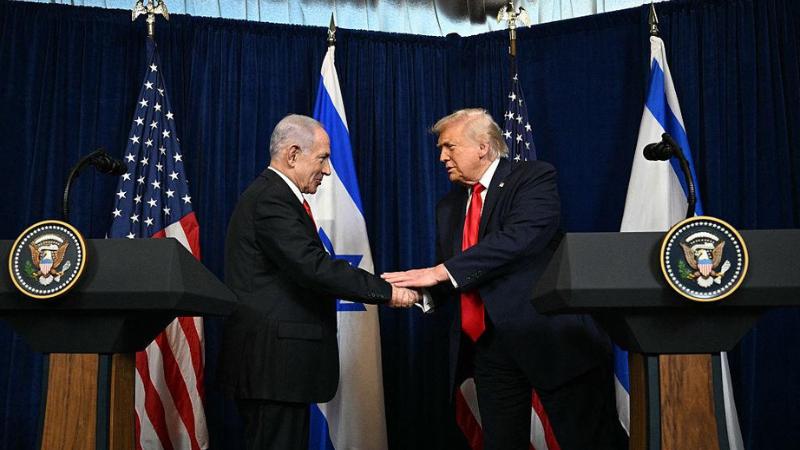
US President Donald Trump held high-level talks with Israeli Prime Minister Benjamin Netanyahu on Wednesday, with discussions focusing heavily on Iran’s nuclear programme, regional security concerns and ongoing diplomatic efforts in West Asia. The meeting comes at a time of renewed tensions involving Tehran and carries broader implications for global geopolitics, including countries such as India that maintain strategic and economic interests across the region.
After the meeting, Trump said negotiations with Iran must continue to determine whether a new agreement can be reached to limit Tehran’s nuclear ambitions. Writing on his social media platform, the US president stressed that while Washington prefers a diplomatic settlement, failure to secure a deal could result in serious consequences for Iran. He pointed to past instances when Iran rejected negotiations and faced punitive measures, indicating that the United States remains prepared to combine diplomacy with pressure.
The talks between the US and Israeli leaders also covered developments in Gaza and the wider Middle East. Trump claimed that progress was being made toward stabilising the region, describing recent efforts as steps toward lasting peace. While details of these developments were not elaborated upon, both sides appeared to emphasise close coordination on security matters.
In an earlier interview, Trump said it was obvious that any future agreement with Iran must address its nuclear programme. However, he also suggested that negotiations could expand to include Iran’s ballistic missile capabilities, which have been a longstanding concern for Israel and several Western nations. Missile technology, analysts say, has become central to Tehran’s regional strategy and deterrence posture.
When asked about Netanyahu’s position on renewed US-Iran dialogue, Trump said the Israeli prime minister supports negotiations, provided they lead to a strong and enforceable agreement. He added that both countries share the objective of preventing Iran from developing nuclear weapons and ensuring regional stability.
Trump further claimed that Iran appears more willing to negotiate this time compared to previous rounds. He attributed this change to what he described as credible military pressure from the United States. Referring to