

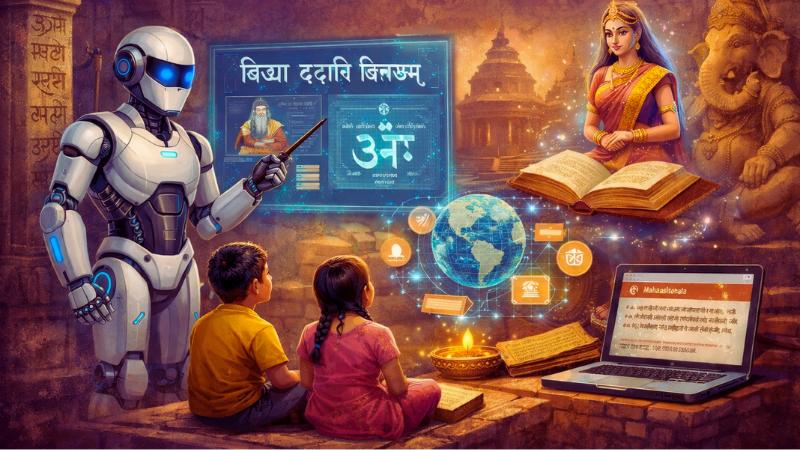
As technology advances at an unprecedented pace, one of the most intriguing possibilities is the role artificial intelligence (AI) can play in preserving and promoting ancient languages. One such language is Sanskrit, a classical language of India, historically significant for its cultural, religious, and literary contributions. But with fewer speakers and fewer learning resources, can robots, through AI, help teach Sanskrit and preserve this ancient language?
The Challenge of Sanskrit Preservation
Sanskrit, though considered the root of many modern Indian languages, has seen a decline in everyday usage. Once a language of scholarship, religion, and literature, its use is now largely limited to religious rituals, ancient texts, and academic circles. The primary challenge lies in the dwindling number of speakers and the lack of immersive learning environments. Furthermore, Sanskrit is a complex language, with intricate grammar rules, numerous declensions, and a vast vocabulary that makes it difficult to master without traditional, teacher-guided methods.
In response to these challenges, technology, particularly AI, offers an innovative way forward. AI’s potential to bridge gaps in language learning—especially for complex and ancient languages like Sanskrit—raises the question: can robots teach Sanskrit effectively?
AI and Sanskrit Learning: How It Works
Artificial intelligence is revolutionizing language learning by creating interactive, personalized learning experiences. AI-driven platforms use machine learning and natural language processing (NLP) techniques to analyze, translate, and understand languages, including Sanskrit. These systems are trained on large datasets of Sanskrit texts, ancient scriptures, and modern linguistic rules to help learners navigate this complex language.
AI-based applications designed to teach Sanskrit can offer a range of features:
- Grammar Assistance: With its complex system of verb conjugations and noun declensions, Sanskrit requires careful attention to grammar. AI can help by providing real-time corrections and personalized grammar tips.
- Interactive Learning: Using conversational bots, students can engage in dialogues in Sanskrit, receiving instant feedback on their pronunciation and sentence structure.
- Virtual Tutors: AI can simulate a personalized learning experience with virtual Sanskrit tutors that can guide learners step by step, providing lessons on vocabulary, syntax, and script.
- Text Translation and Analysis: AI can analyze Sanskrit texts, helping learners understand and translate ancient scriptures like the Vedas, Upanishads, and epics like the Mahabharata and Ramayana.
The Role of Robotics in Sanskrit Education
While AI systems can assist with learning Sanskrit, robotics brings an additional layer of interactivity and engagement. Robots equipped with AI can serve as physical tutors in classrooms, offering lessons, answering questions, and providing a more dynamic and engaging learning experience. They can teach pronunciation, script writing, and even historical contexts of Sanskrit words.
For example, a robot could guide students through the process of writing Sanskrit characters, providing instant feedback on their stroke order and accuracy. Additionally, robots can be programmed to lead group activities, such as reciting verses, singing chants, and helping students memorize key scriptures.
Benefits of AI and Robotics in Language Preservation
- Global Accessibility: AI-powered Sanskrit learning tools can be accessed by anyone, anywhere in the world. This can significantly expand the reach of Sanskrit education, especially to younger generations who may not have access to traditional Sanskrit teachers.
- Interactive Learning Experience: The combination of AI and robotics allows for an interactive and gamified learning experience, making the process more engaging for learners and helping them retain the language better.
- Preserving Ancient Texts: AI-driven systems can scan, transcribe, and translate ancient Sanskrit manuscripts that are in danger of being lost due to degradation over time. Digital archives powered by AI could preserve these texts and make them accessible to scholars and learners worldwide.
- Cultural Heritage Preservation: Teaching Sanskrit through AI and robotics allows the younger generation to connect with their cultural heritage. The ability to understand ancient texts and participate in rituals can help preserve traditions and maintain a connection with India's rich historical past.
- Personalized Learning: AI can adapt to each learner’s pace and provide tailored lessons that meet their needs. For students learning Sanskrit at different levels, AI can modify the complexity of lessons and provide extra practice where needed.
Limitations and Challenges
While AI and robotics offer great promise in teaching Sanskrit, there are several limitations to consider:
- Lack of Emotional Intelligence: AI and robots may lack the emotional intelligence that human teachers bring to the classroom. Language learning often involves more than just grammar—it requires understanding cultural nuances, tone, and emotional context, which AI may struggle with.
- Authentic Pronunciation: Sanskrit has a rich oral tradition, and proper pronunciation is crucial for correct usage. While AI can teach grammar and vocabulary, ensuring authentic pronunciation and understanding the cultural context of words may remain a challenge for technology.
- Technological Accessibility: While AI and robotics can make Sanskrit education more accessible, the availability of the necessary technology in rural or underserved areas could limit the impact of these tools.
A New Frontier for Sanskrit Learning
The prospect of using AI and robots to teach Sanskrit represents an exciting new frontier in language preservation. While the technology is still developing, it offers numerous opportunities to modernize the teaching of an ancient language and ensure that future generations can learn and appreciate Sanskrit.
With AI, learners can have access to personalized, interactive, and efficient language learning tools that not only teach Sanskrit but also preserve it for generations to come. Robotics, in conjunction with AI, can enhance the classroom experience by providing real-time guidance and fostering a more immersive learning environment.
As we explore the intersection of AI, robotics, and language preservation, we may find that the future of Sanskrit learning is not just in the hands of human teachers but also in the capabilities of intelligent machines.