

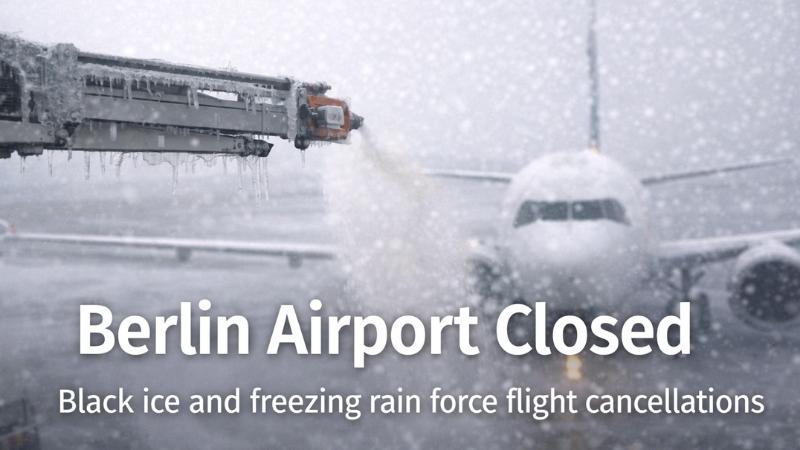
Berlin’s primary international airport remained shut on Friday after severe winter weather created dangerous layers of black ice across runways and taxiways, forcing authorities to suspend flight operations and leaving thousands of passengers stranded. The closure disrupted departures and arrivals across Germany and impacted several international routes, including those used by Indian travellers connecting through European hubs.
Airport officials said persistent freezing rain and sub-zero temperatures made aircraft movement unsafe, preventing both take-offs and landings. With surfaces turning slick and visibility fluctuating, ground teams were unable to ensure the safety standards required for commercial aviation. Authorities added that there is no confirmed timeline for the full restoration of services, as weather conditions continue to change.
The disruption began earlier when snowfall followed by freezing rain created hazardous conditions around the airfield. Airlines initially delayed select flights, but as the ice thickened, cancellations increased throughout the day. By Thursday evening, all flight activity had been suspended as a precaution. Officials described the runway surface as comparable to an “ice rink,” underlining the seriousness of the situation and the challenges faced by de-icing crews.
Around 30 outbound flights were scheduled after the shutdown period, while nearly 70 incoming services were expected to land. Many of these flights were diverted to alternate airports or canceled altogether. Since early Thursday morning, no departures have taken place, and several arrivals have also been scrapped. Authorities said exact figures may vary because schedules were being revised continuously in response to weather updates.
The national weather service issued a red-level ice warning for large parts of eastern Germany, stretching from Berlin toward the Baltic Sea. The advisory warned of elevated accident risks and widespread transport disruption. Forecasters indicated that freezing rain combined with persistent cold temperatures could extend the impact to highways, rail networks, and airport infrastructure for several days.
Beyond aviation, the cold snap led to multiple road accidents across the region. Reports of vehicle collisions near Potsdam resulted in several injuries, highlighting broader safety concerns. In Berlin city, slippery roads also sparked discussions on the use of salt treatments to improve traction, though environmental implications remain under review.
For Indian passengers planning travel through Europe, the closure may lead to missed connections, delayed itineraries, or rescheduled bookings. Travel experts recommend checking flight status updates directly with airlines and allowing additional time for alternative arrangements. With winter weather expected to persist, authorities stressed that the airport will reopen only once operations can resume safely without compromising passenger welfare.
Meteorological data shows that temperatures in Germany this January have remained well below long-term averages, contributing to the prolonged build-up of snow and ice. Until conditions stabilise, disruptions to flights and travel are likely to continue, underscoring the importance of caution and preparedness for international travellers.