PM Narendra Modi Launches Amrit Bharat Express Between UP And Maharashtra
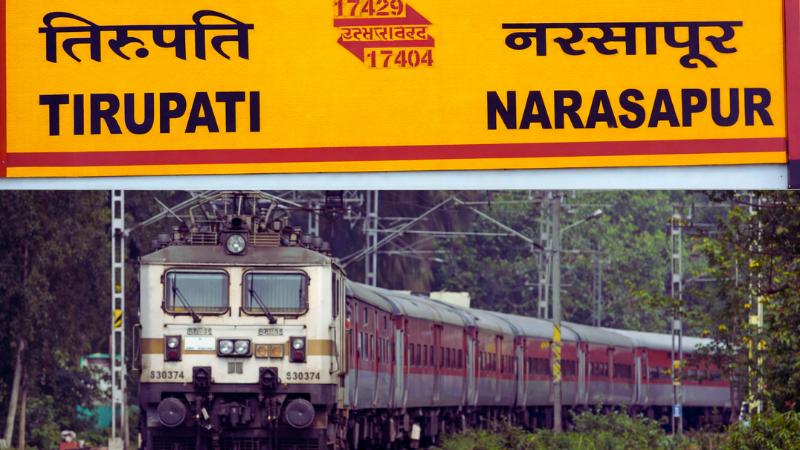
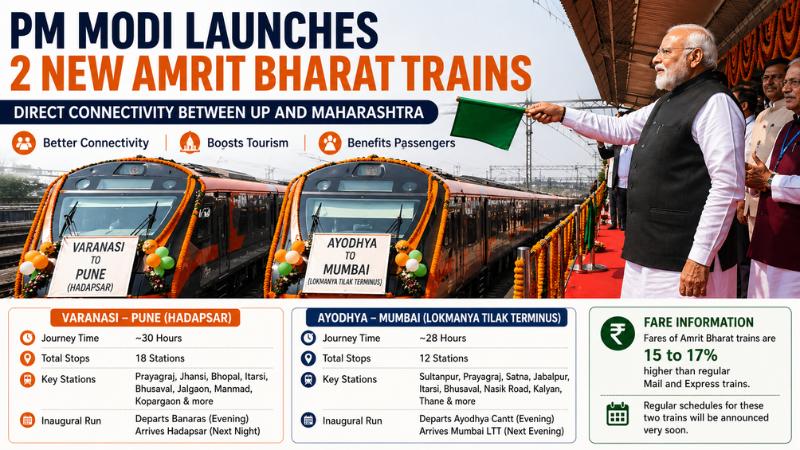
PM Narendra Modi flags off two new Amrit Bharat Express trains connecting Varanasi–Pune and Ayodhya–Mumbai, boosting direct rail travel between Uttar Pradesh and Maharashtra. Prime Minister Narendra Modi on Tuesday 28th April 2026, flagged off two new Amrit Bharat Express trains, strengthening rail connectivity between Uttar Pradesh and Maharashtra. The announ
PM Narendra Modi Launches Amrit Bharat Express Between UP And Maharashtra
PM Narendra Modi flags off two new Amrit Bharat Express trains connecting Varanasi–Pune and Ayodhya–Mumbai, boosting direct rail travel between Uttar Pradesh and Maharashtra. Prime Minister Narendra Modi on Tuesday 28th April 2026, flagged off two new Amrit Bharat Express trains, strengthening rail connectivity between Uttar Pradesh and Maharashtra. The announ
IPL 2026: Tilak Varma Leads Mumbai Indians to Strong Comeback Win Over Gujarat Titans
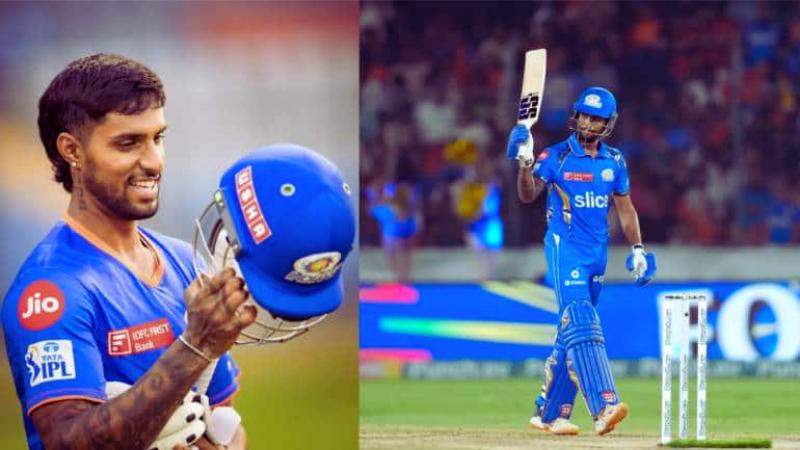
Mumbai Indians produced a commanding performance against Gujarat Titans in their IPL 2026 clash, registering a dominant 99-run victory in Ahmedabad. The win marked a strong comeback for the Mumbai Indians, ending their four-match losing streak and providing a much-needed boost in the tournament. Batting first, the Mumbai Indians had a shaky start after losing early wickets in the power play. However, Tilak Varma completely changed the momentum with a stunning century. He smashed 101 off just 45 balls, registering one of the fastest hundreds in the franchise’s history. Backed by a useful 45 from Naman Dhir, MI posted a competitive total of 199/5 in 20 overs. In reply, the Gujarat Titans never managed to build momentum. Jasprit Bumrah struck early with a key breakthrough, while Ashwani Kumar delivered an impressive four-wicket haul. The Titans’ batting lineup collapsed under pressure and were bundled out for just 100 runs in 15.5 overs. Captain Shubman Gill had an off day as MI’s bowling unit maintained relentless pressure throughout the innings. The comprehensive win significantly improved the Mumbai Indians’ net run rate and standings in the IPL 2026 season, strengthening their playoff hopes. Tilak Varma was named Player of the Match for his explosive century, which proved to be the defining performance of the game and a potential turning point in the Mumbai Indians’ campaign.
IPL 2026: Tilak Varma Leads Mumbai Indians to Strong Comeback Win Over Gujarat Titans
Mumbai Indians produced a commanding performance against Gujarat Titans in their IPL 2026 clash, registering a dominant 99-run victory in Ahmedabad. The win marked a strong comeback for the Mumbai Indians, ending their four-match losing streak and providing a much-needed boost in the tournament. Batting first, the Mumbai Indians had a shaky start after losing early wickets in the power play. However, Tilak Varma completely changed the momentum with a stunning century. He smashed 101 off just 45 balls, registering one of the fastest hundreds in the franchise’s history. Backed by a useful 45 from Naman Dhir, MI posted a competitive total of 199/5 in 20 overs. In reply, the Gujarat Titans never managed to build momentum. Jasprit Bumrah struck early with a key breakthrough, while Ashwani Kumar delivered an impressive four-wicket haul. The Titans’ batting lineup collapsed under pressure and were bundled out for just 100 runs in 15.5 overs. Captain Shubman Gill had an off day as MI’s bowling unit maintained relentless pressure throughout the innings. The comprehensive win significantly improved the Mumbai Indians’ net run rate and standings in the IPL 2026 season, strengthening their playoff hopes. Tilak Varma was named Player of the Match for his explosive century, which proved to be the defining performance of the game and a potential turning point in the Mumbai Indians’ campaign.
O Panneerselvam Joins DMK, Marking Major Shift in Tamil Nadu Politics
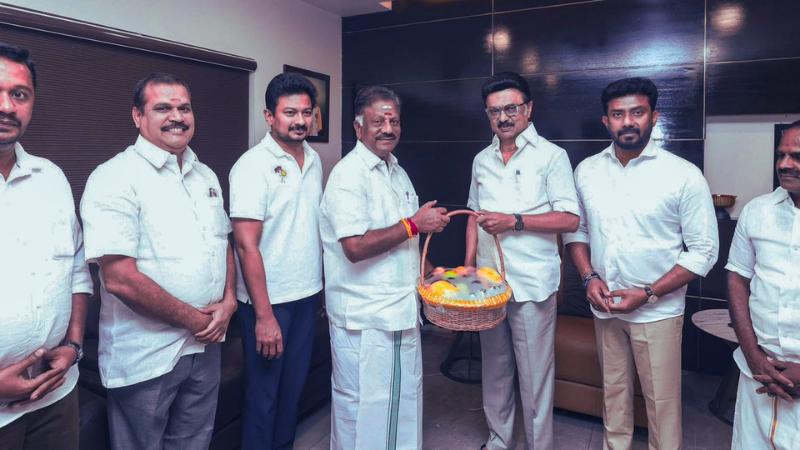
In a significant political development ahead of the 2026 Tamil Nadu Assembly elections, O Panneerselvam (OPS), former Chief Minister of Tamil Nadu and a long-time leader of the AIADMK, has joined the Dravida Munnetra Kazhagam (DMK). This marks the end of a bitter internal feud within the AIADMK and is set to reshape the state's political dynamics. Panneerselvam’s shift to the ruling DMK is likely to weaken AIADMK's influence, particularly in the southern regions, by dividing the Thevar vote base, which has historically been a key support group for the party. Panneerselvam, who was once a loyalist of AIADMK’s late leader J Jayalalithaa, served multiple terms as Chief Minister of Tamil Nadu. However, following Jayalalithaa's death in 2016, a fierce power struggle broke out within the party, with Panneerselvam and Edappadi K Palaniswami (EPS) becoming rivals. This feud eventually led to a split in the party, and Panneerselvam, who had been sidelined in recent years, was eventually expelled. Despite attempts to remain politically relevant by forming a faction and running independent campaigns, his efforts failed to gain significant traction. Panneerselvam’s decision to join the DMK under the leadership of Chief Minister MK Stalin is seen as a strategic move to strengthen the DMK's presence in southern Tamil Nadu, where he has significant influence. In his address, Panneerselvam sharply criticized EPS’s leadership, accusing him of arrogance and dictatorial practices. By joining the ruling party, Panneerselvam could attract disillusioned cadres from AIADMK, further destabilizing the already fragmented support base of his former party. For the DMK, OPS’s entry offers a major opportunity to consolidate support, particularly among Thevar voters, a traditionally influential constituency. Panneerselvam’s political stature and his past loyalty to Jayalalithaa, combined with his established presence in Tamil Nadu politics, add significant weight to the DMK’s bid for re-election in 2026. His move could help the party solidify its position in the southern regions, which will be crucial for securing a second consecutive term in power. The decision has drawn sharp reactions from the BJP, with Tamilisai Soundararajan, the BJP’s Tamil Nadu leader, accusing Panneerselvam of being ungrateful for abandoning his previous allies. BJP critics argue that OPS has undermined his past association with AIADMK and the BJP, while DMK supporters view this as a critical political realignment that could shift the electoral balance in favor of the ruling party.

O Panneerselvam Joins DMK, Marking Major Shift in Tamil Nadu Politics
In a significant political development ahead of the 2026 Tamil Nadu Assembly elections, O Panneerselvam (OPS), former Chief Minister of Tamil Nadu and a long-time leader of the AIADMK, has joined the Dravida Munnetra Kazhagam (DMK). This marks the end of a bitter internal feud within the AIADMK and is set to reshape the state's political dynamics. Panneerselvam’s shift to the ruling DMK is likely to weaken AIADMK's influence, particularly in the southern regions, by dividing the Thevar vote base, which has historically been a key support group for the party. Panneerselvam, who was once a loyalist of AIADMK’s late leader J Jayalalithaa, served multiple terms as Chief Minister of Tamil Nadu. However, following Jayalalithaa's death in 2016, a fierce power struggle broke out within the party, with Panneerselvam and Edappadi K Palaniswami (EPS) becoming rivals. This feud eventually led to a split in the party, and Panneerselvam, who had been sidelined in recent years, was eventually expelled. Despite attempts to remain politically relevant by forming a faction and running independent campaigns, his efforts failed to gain significant traction. Panneerselvam’s decision to join the DMK under the leadership of Chief Minister MK Stalin is seen as a strategic move to strengthen the DMK's presence in southern Tamil Nadu, where he has significant influence. In his address, Panneerselvam sharply criticized EPS’s leadership, accusing him of arrogance and dictatorial practices. By joining the ruling party, Panneerselvam could attract disillusioned cadres from AIADMK, further destabilizing the already fragmented support base of his former party. For the DMK, OPS’s entry offers a major opportunity to consolidate support, particularly among Thevar voters, a traditionally influential constituency. Panneerselvam’s political stature and his past loyalty to Jayalalithaa, combined with his established presence in Tamil Nadu politics, add significant weight to the DMK’s bid for re-election in 2026. His move could help the party solidify its position in the southern regions, which will be crucial for securing a second consecutive term in power. The decision has drawn sharp reactions from the BJP, with Tamilisai Soundararajan, the BJP’s Tamil Nadu leader, accusing Panneerselvam of being ungrateful for abandoning his previous allies. BJP critics argue that OPS has undermined his past association with AIADMK and the BJP, while DMK supporters view this as a critical political realignment that could shift the electoral balance in favor of the ruling party.
Naidu Urges Collaborative Efforts to Resolve Telangana–Andhra Water Sharing Dispute
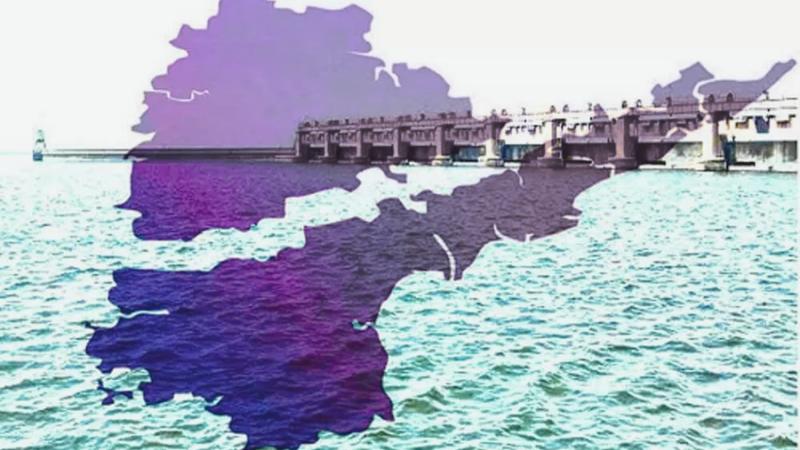
Water sharing between Andhra Pradesh (AP) and Telangana has once again become a hot topic of public discussion, especially when fluctuating reservoir levels or unpredictable rainfall patterns heighten concerns. While the debate often takes on a political tone, causing confusion among farmers and the public, the real issue lies in ensuring stable and equitable access to this shared natural resource. AP Chief Minister N. Chandrababu Naidu has been consistently highlighting the importance of efficient water management and cooperation between the two states. His approach emphasizes administrative clarity, scientific planning, and mutual coordination rather than conflict. Naidu advocates for transparency in data and clear communication between the irrigation departments of both states to avoid misunderstandings and reduce political tensions. Naidu’s stance is straightforward: improved water resource management, such as sharing transparent data on river inflows and disciplined reservoir management, can help both states avoid unnecessary disputes. This strategy depends on the exchange of real-time information on shared river systems like the Krishna and Godavari, which support agriculture, drinking water supply, and industries in both regions. Central to this approach is the modernization of irrigation infrastructure, particularly canal systems, to minimize water loss and ensure fair distribution to farmers, particularly those at the end of irrigation networks. Managing these resources effectively requires both timely updates and long-term planning to meet the needs of farmers in both states. One of the major challenges to water sharing is climate variability. With rainfall patterns becoming increasingly unpredictable, careful planning for both drought and surplus conditions is essential. This requires coordinated efforts, ensuring both states are prepared for any situation. Building public confidence hinges on governments engaging in open dialogue and using verified data to inform decisions. While political debate will always be part of the democratic process, water security depends on stability, foresight, and cooperation. Naidu believes that prioritizing collaboration between AP and Telangana will help protect the interests of farmers and citizens, ensuring that natural resources are managed fairly and efficiently.
Naidu Urges Collaborative Efforts to Resolve Telangana–Andhra Water Sharing Dispute
Water sharing between Andhra Pradesh (AP) and Telangana has once again become a hot topic of public discussion, especially when fluctuating reservoir levels or unpredictable rainfall patterns heighten concerns. While the debate often takes on a political tone, causing confusion among farmers and the public, the real issue lies in ensuring stable and equitable access to this shared natural resource. AP Chief Minister N. Chandrababu Naidu has been consistently highlighting the importance of efficient water management and cooperation between the two states. His approach emphasizes administrative clarity, scientific planning, and mutual coordination rather than conflict. Naidu advocates for transparency in data and clear communication between the irrigation departments of both states to avoid misunderstandings and reduce political tensions. Naidu’s stance is straightforward: improved water resource management, such as sharing transparent data on river inflows and disciplined reservoir management, can help both states avoid unnecessary disputes. This strategy depends on the exchange of real-time information on shared river systems like the Krishna and Godavari, which support agriculture, drinking water supply, and industries in both regions. Central to this approach is the modernization of irrigation infrastructure, particularly canal systems, to minimize water loss and ensure fair distribution to farmers, particularly those at the end of irrigation networks. Managing these resources effectively requires both timely updates and long-term planning to meet the needs of farmers in both states. One of the major challenges to water sharing is climate variability. With rainfall patterns becoming increasingly unpredictable, careful planning for both drought and surplus conditions is essential. This requires coordinated efforts, ensuring both states are prepared for any situation. Building public confidence hinges on governments engaging in open dialogue and using verified data to inform decisions. While political debate will always be part of the democratic process, water security depends on stability, foresight, and cooperation. Naidu believes that prioritizing collaboration between AP and Telangana will help protect the interests of farmers and citizens, ensuring that natural resources are managed fairly and efficiently.