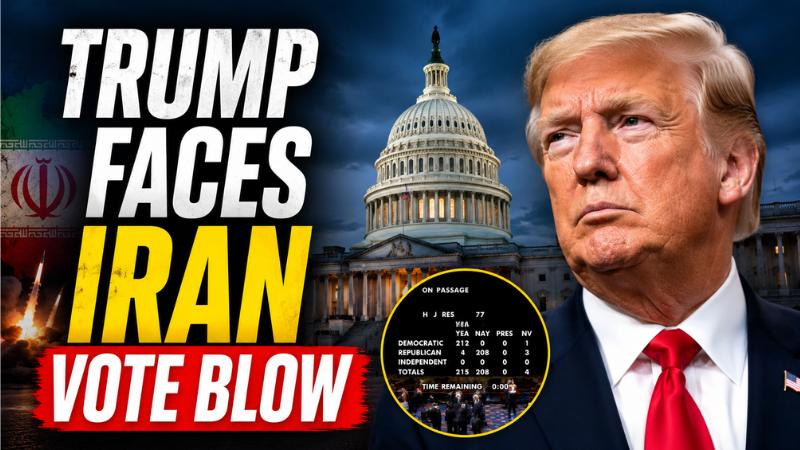
Trump Faces Rare House Pushback As Iran War Vote Passes
US House Iran War Vote Signals Growing Trouble For Trump The US House vote may not immediately stop the Iran conflict, but it has created a rare political warning for Donald Trump. House Backs War Powers Resolution The US House of Representatives has passed a war powers resolution aimed at blocking President Donald Trump from continuing military action in Iran without Congress's approval. The resolution cleared the House by 2
Trump Faces Rare House Pushback As Iran War Vote Passes
US House Iran War Vote Signals Growing Trouble For Trump The US House vote may not immediately stop the Iran conflict, but it has created a rare political warning for Donald Trump. House Backs War Powers Resolution The US House of Representatives has passed a war powers resolution aimed at blocking President Donald Trump from continuing military action in Iran without Congress's approval. The resolution cleared the House by 2
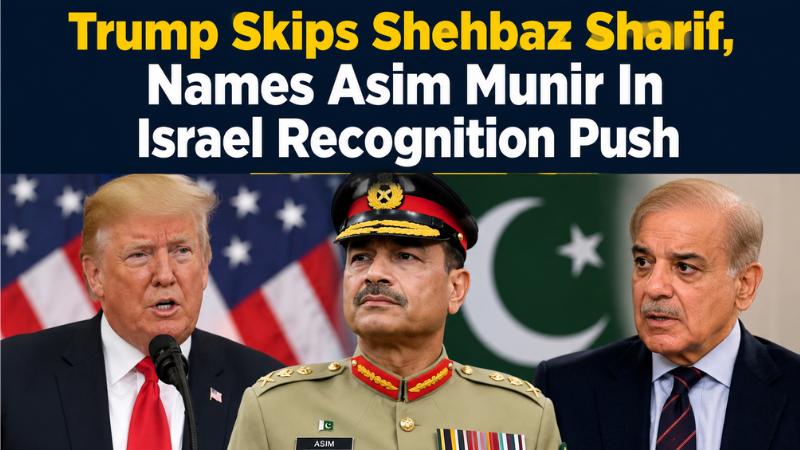
Trump Skips Shehbaz Sharif, Names Asim Munir In Israel Recognition Push
Pakistan Faces Fresh Debate Over Trump’s Abraham Accords Message Trump Post Sparks Pakistan Debate US President Donald Trump’s latest push to expand the Abraham Accords has placed Pakistan in a sensitive diplomatic position. In a Truth Social post on May 25, 2026, Trump urged more Muslim-majority nations to consider joining the Israel normalisation framework as part of a wider regional peace effort linked to Iran talks.
Trump Skips Shehbaz Sharif, Names Asim Munir In Israel Recognition Push
Pakistan Faces Fresh Debate Over Trump’s Abraham Accords Message Trump Post Sparks Pakistan Debate US President Donald Trump’s latest push to expand the Abraham Accords has placed Pakistan in a sensitive diplomatic position. In a Truth Social post on May 25, 2026, Trump urged more Muslim-majority nations to consider joining the Israel normalisation framework as part of a wider regional peace effort linked to Iran talks.
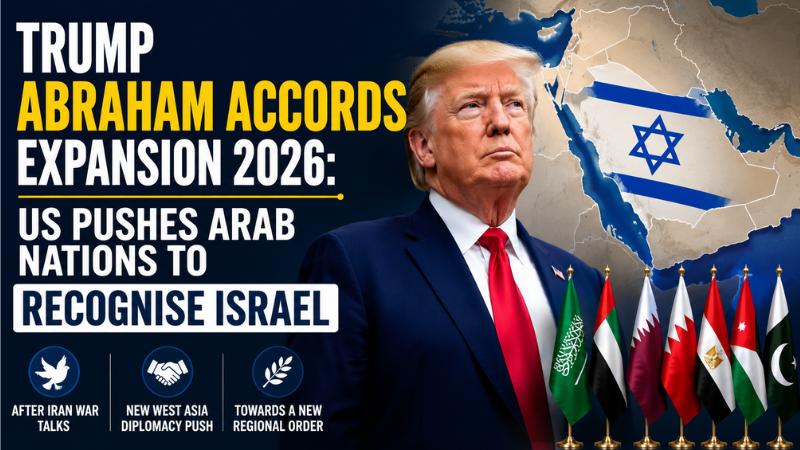
Trump Abraham Accords Expansion 2026: US Pushes Arab Nations To Recognise Israel
Trump’s West Asia Peace Plan Focuses On Israel Recognition After Iran War Trump Pushes New Regional Plan US President Donald Trump is reportedly planning a major diplomatic push in West Asia once the Iran conflict comes to an end. During a high-level call with leaders from Arab and Muslim-majority countries, Trump urged nations that do not recognise Israel to consider joining th
Trump Abraham Accords Expansion 2026: US Pushes Arab Nations To Recognise Israel
Trump’s West Asia Peace Plan Focuses On Israel Recognition After Iran War Trump Pushes New Regional Plan US President Donald Trump is reportedly planning a major diplomatic push in West Asia once the Iran conflict comes to an end. During a high-level call with leaders from Arab and Muslim-majority countries, Trump urged nations that do not recognise Israel to consider joining th
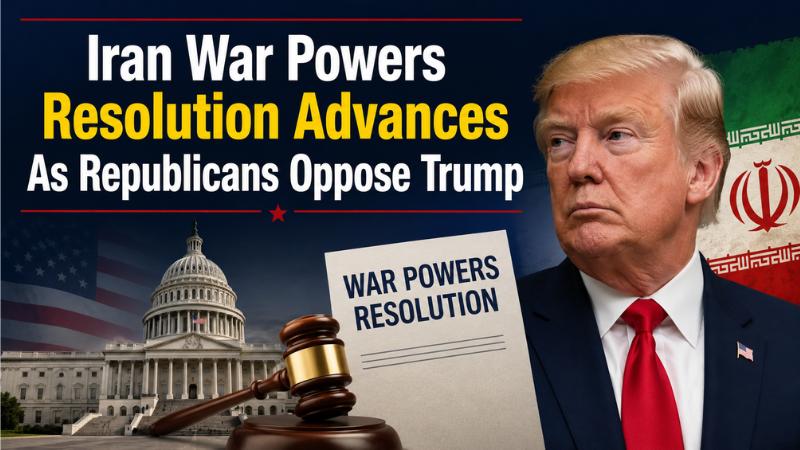
Iran War Powers Resolution Advances As Republicans Oppose Trump
Senate Iran War Vote Puts Trump’s Military Authority Under Pressure The US Senate has moved forward with an Iran war powers resolution that seeks to limit President Donald Trump’s ability to continue military action against Iran without approval from Congress. The procedural vote passed 50-47, with four Republican senators joining most Democrats in support of the measure. Three Republican senators were absent. Senate Vote Challenges Tr
Iran War Powers Resolution Advances As Republicans Oppose Trump
Senate Iran War Vote Puts Trump’s Military Authority Under Pressure The US Senate has moved forward with an Iran war powers resolution that seeks to limit President Donald Trump’s ability to continue military action against Iran without approval from Congress. The procedural vote passed 50-47, with four Republican senators joining most Democrats in support of the measure. Three Republican senators were absent. Senate Vote Challenges Tr
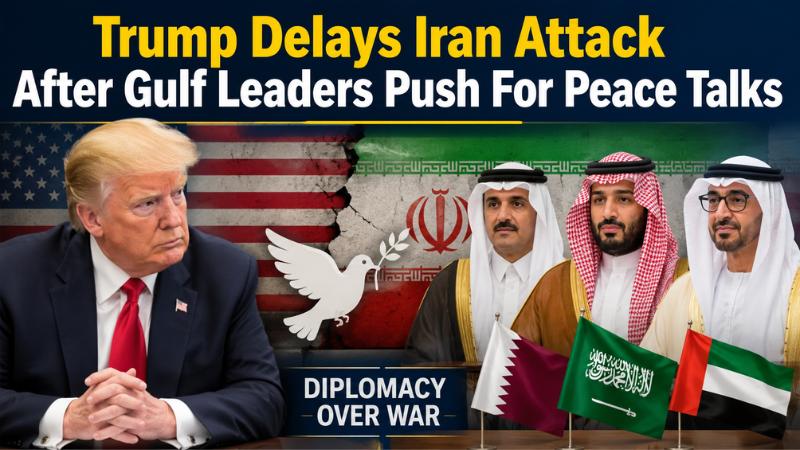
Trump Delays Iran Attack After Gulf Leaders Push For Peace Talks
Qatar, Saudi, UAE Peace Push Delays Trump’s Iran Strike Plan Intro Explanation: US President Donald Trump’s decision to delay a planned Iran strike has opened a fresh diplomatic window in the ongoing US-Iran conflict. The move came after Qatar, Saudi Arabia, and the UAE urged Washington to give peace talks more time, while Pakistan continues mediation efforts behind the scenes. Trump Delays Iran Attack After Gulf Leaders Step In
Trump Delays Iran Attack After Gulf Leaders Push For Peace Talks
Qatar, Saudi, UAE Peace Push Delays Trump’s Iran Strike Plan Intro Explanation: US President Donald Trump’s decision to delay a planned Iran strike has opened a fresh diplomatic window in the ongoing US-Iran conflict. The move came after Qatar, Saudi Arabia, and the UAE urged Washington to give peace talks more time, while Pakistan continues mediation efforts behind the scenes. Trump Delays Iran Attack After Gulf Leaders Step In
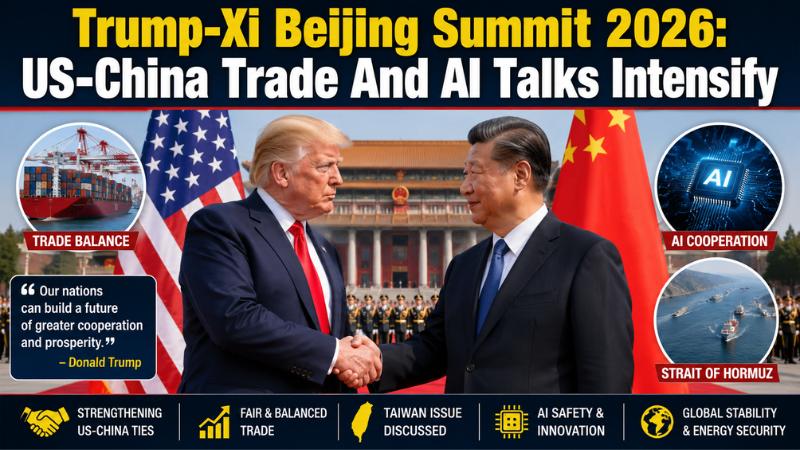
Trump-Xi Beijing Summit 2026: US-China Trade And AI Talks Intensify
Trump-Xi Beijing Summit 2026 Focuses On Trade, Taiwan And AI Talks Trump And Xi Push For Stable US-China Relations US President Donald Trump received a ceremonial welcome in Beijing as he began a closely watched two-day summit with Chinese President Xi Jinping at the Great Hall of the People. Calling it the “biggest summit ever,” Trump praised his personal rapport with Xi and said he believed ties between the United States and China could improve significantly in the coming years. Xi Jinping responded by saying the shared interests between both countries outweigh their differences and stressed that stable relations between Washington and Beijing are important for global peace and economic growth. The summit featured military honours, national anthems, and a state banquet attended by senior officials and business leaders. Trump’s delegation included major technology figures Elon Musk and Jensen Huang, underlining the growing importance of artificial intelligence and semiconductor cooperation in US-China relations. Trump later described his talks with Xi as “extremely positive and constructive” and invited the Chinese president to visit the United States on September 24. Trade, Taiwan And AI Safety Lead Major Discussions Trade balance remained one of the key topics during the summit. Trump urged China to further open its markets and help create fairer trade ties between the two countries. US Treasury Secretary Scott Bessent said Washington’s objective is to rebalance trade either by reducing imports from China or increasing American exports to Chinese markets. The ongoing discussions also addressed Taiwan, with Bessent stating that Trump understands the sensitivities surrounding the issue. Global energy security emerged as another major focus during the Beijing summit live discussions. According to White House officials, Trump and Xi agreed that the Strait of Hormuz must remain open to support international energy supply chains amid tensions linked to the Iran conflict. Xi reportedly opposed imposing tolls on vessels crossing the route. The leaders also discussed US-China AI talks, including the need for AI guardrails involving companies such as OpenAI, Google, and Anthropic. Analysts believe the Trump-China visit today could shape the future of trade, technology, and geopolitical relations between the world’s two largest economies.
Trump-Xi Beijing Summit 2026: US-China Trade And AI Talks Intensify
Trump-Xi Beijing Summit 2026 Focuses On Trade, Taiwan And AI Talks Trump And Xi Push For Stable US-China Relations US President Donald Trump received a ceremonial welcome in Beijing as he began a closely watched two-day summit with Chinese President Xi Jinping at the Great Hall of the People. Calling it the “biggest summit ever,” Trump praised his personal rapport with Xi and said he believed ties between the United States and China could improve significantly in the coming years. Xi Jinping responded by saying the shared interests between both countries outweigh their differences and stressed that stable relations between Washington and Beijing are important for global peace and economic growth. The summit featured military honours, national anthems, and a state banquet attended by senior officials and business leaders. Trump’s delegation included major technology figures Elon Musk and Jensen Huang, underlining the growing importance of artificial intelligence and semiconductor cooperation in US-China relations. Trump later described his talks with Xi as “extremely positive and constructive” and invited the Chinese president to visit the United States on September 24. Trade, Taiwan And AI Safety Lead Major Discussions Trade balance remained one of the key topics during the summit. Trump urged China to further open its markets and help create fairer trade ties between the two countries. US Treasury Secretary Scott Bessent said Washington’s objective is to rebalance trade either by reducing imports from China or increasing American exports to Chinese markets. The ongoing discussions also addressed Taiwan, with Bessent stating that Trump understands the sensitivities surrounding the issue. Global energy security emerged as another major focus during the Beijing summit live discussions. According to White House officials, Trump and Xi agreed that the Strait of Hormuz must remain open to support international energy supply chains amid tensions linked to the Iran conflict. Xi reportedly opposed imposing tolls on vessels crossing the route. The leaders also discussed US-China AI talks, including the need for AI guardrails involving companies such as OpenAI, Google, and Anthropic. Analysts believe the Trump-China visit today could shape the future of trade, technology, and geopolitical relations between the world’s two largest economies.
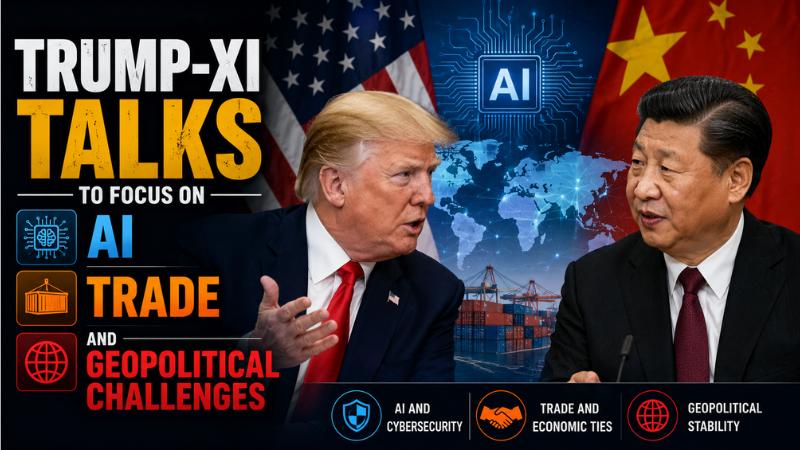
Trump-Xi Talks To Focus On AI, Trade And Geopolitical Challenges
Trump Heads To China For Major Summit With Xi Jinping On Iran And AI Security US President Donald Trump is set to visit Beijing this week for a major summit with Chinese President
Trump-Xi Talks To Focus On AI, Trade And Geopolitical Challenges
Trump Heads To China For Major Summit With Xi Jinping On Iran And AI Security US President Donald Trump is set to visit Beijing this week for a major summit with Chinese President
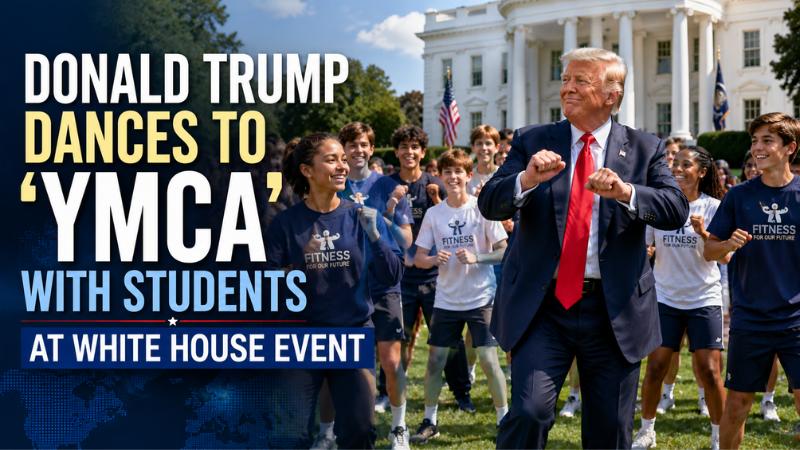
Donald Trump Dances to YMCA with Students at White House Event
Donald Trump Performs ‘YMCA’ Dance with Students at White House Event US President Donald Trump entertained students with his signature “Trump dance” during a youth fitness event held on the White House South Lawn. A video shared by the official White House social media account showed him performing his well-known arm-pumpi
Donald Trump Dances to YMCA with Students at White House Event
Donald Trump Performs ‘YMCA’ Dance with Students at White House Event US President Donald Trump entertained students with his signature “Trump dance” during a youth fitness event held on the White House South Lawn. A video shared by the official White House social media account showed him performing his well-known arm-pumpi
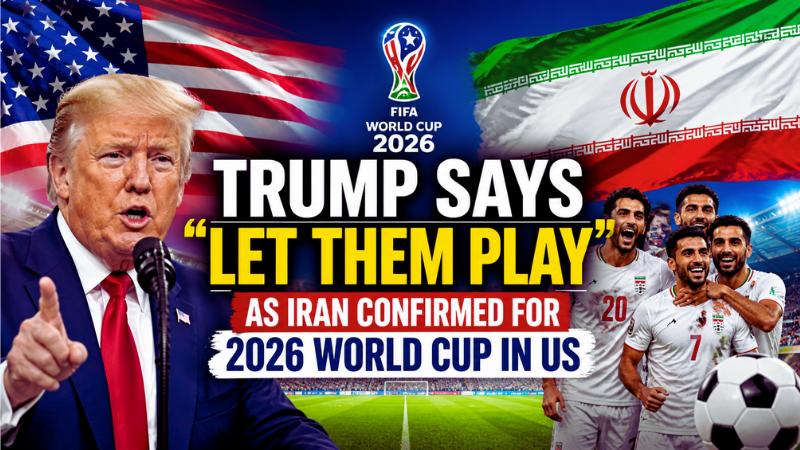
Trump Says Let Them Play as Iran Confirmed for 2026 World Cup in US
Trump Says ‘Let Them Play’ as Iran Confirmed for 2026 FIFA World Cup in US Former US President Donald Trump has backed Iran’s participation in the 2026 FIFA World Cup, saying he is “okay” with the team playing its matches in the United States. His remarks followed confirmation from
Trump Says Let Them Play as Iran Confirmed for 2026 World Cup in US
Trump Says ‘Let Them Play’ as Iran Confirmed for 2026 FIFA World Cup in US Former US President Donald Trump has backed Iran’s participation in the 2026 FIFA World Cup, saying he is “okay” with the team playing its matches in the United States. His remarks followed confirmation from
Legal Immigration Drops Sharply in US; H-1B Visas Fall 25%
Legal immigration to the United States has declined significantly in recent years, outpacing the reduction in illegal border crossings, according to a recent analysis. The findings highlight a major shift in immigration patterns, with legal pathways experiencing a sharper slowdown. The analysis suggests that reductions in legal immigration are substantially higher than the drop in illegal entries. A large portion of the overall decline in immigration is now attributed to cuts in legal routes
Legal Immigration Drops Sharply in US; H-1B Visas Fall 25%
Legal immigration to the United States has declined significantly in recent years, outpacing the reduction in illegal border crossings, according to a recent analysis. The findings highlight a major shift in immigration patterns, with legal pathways experiencing a sharper slowdown. The analysis suggests that reductions in legal immigration are substantially higher than the drop in illegal entries. A large portion of the overall decline in immigration is now attributed to cuts in legal routes
Trump’s Posts Put US-Iran Deal At Risk As Talks Near Breakthrough
A potential breakthrough in talks between the United States and Iran has hit uncertainty after public remarks and social media posts by Donald Trump. Negotiations aimed at ending weeks of conflict had reportedly brought both sides close to a framework agreement through backchannel diplomacy. However, Trump’s public statements about the progress of t
Trump’s Posts Put US-Iran Deal At Risk As Talks Near Breakthrough
A potential breakthrough in talks between the United States and Iran has hit uncertainty after public remarks and social media posts by Donald Trump. Negotiations aimed at ending weeks of conflict had reportedly brought both sides close to a framework agreement through backchannel diplomacy. However, Trump’s public statements about the progress of t
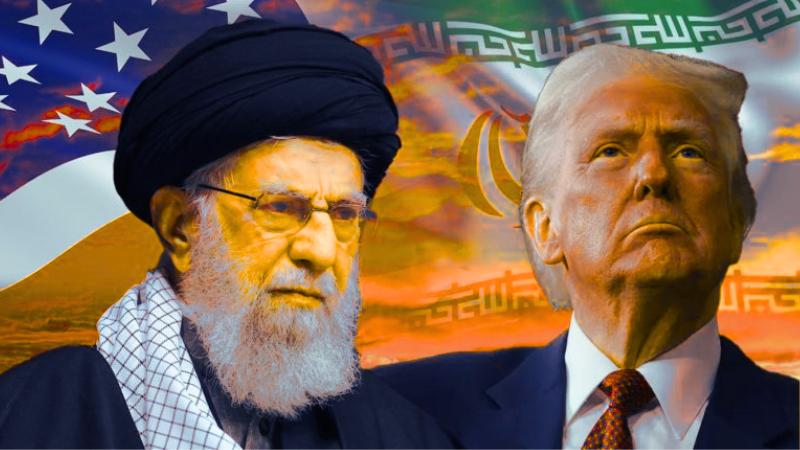
Trump Seeks Peace With Iran, But Tehran Signals Continued Resistance
After four weeks of conflict, U.S. President Donald Trump expressed optimism over the possibility of peace talks with Iran, stating that recent discussions had been "very good and productive." However, Iran quickly dismissed Trump’s claims, with a military spokesperson declaring, "Do not call your defeat an agreement." The strong rebuttal from Tehran suggests any resolution is far from imminent and casts doubt on Trump's diplomatic efforts. While Trump has attempted to engage Iran
Trump Seeks Peace With Iran, But Tehran Signals Continued Resistance
After four weeks of conflict, U.S. President Donald Trump expressed optimism over the possibility of peace talks with Iran, stating that recent discussions had been "very good and productive." However, Iran quickly dismissed Trump’s claims, with a military spokesperson declaring, "Do not call your defeat an agreement." The strong rebuttal from Tehran suggests any resolution is far from imminent and casts doubt on Trump's diplomatic efforts. While Trump has attempted to engage Iran
Indian Cinema Among Hardest Hit as Trump Imposes 100% Movie Tariff
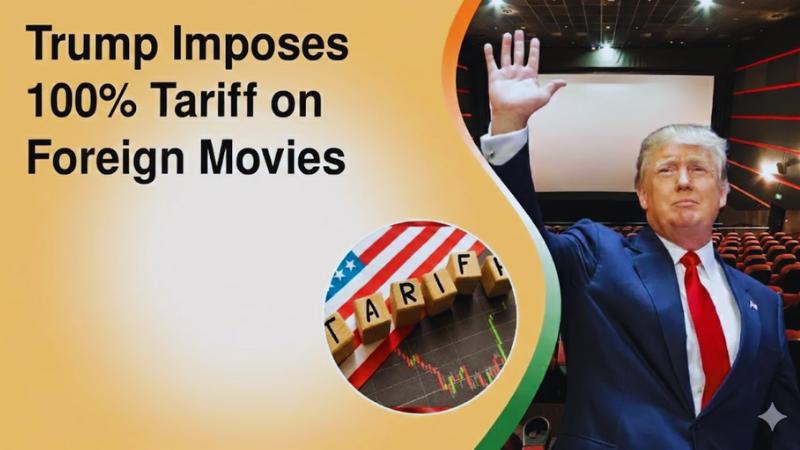
The global entertainment industry is facing significant uncertainty after Donald Trump announced a 100% tariff on foreign films entering the United States. The decision, aimed at strengthening domestic production and protecting American studios from overseas competition, has created serious concerns across international film markets. Among the industries most affected is Indian cinema, which has built a strong and profitable presence in the U.S. over the past two decades. What the 100% Tariff Means for Foreign Films A 100% tariff effectively doubles the import cost of films produced outside the United States. This means that distributors bringing foreign-language or international movies into the American market would need to pay an additional amount equal to the film’s value. As a result, distribution expenses, licensing fees, and theatrical release costs would increase dramatically. Such a move is expected to discourage American exhibitors from screening foreign films unless they are guaranteed to be commercially successful. Smaller productions, independent films, and regional language movies would find it particularly difficult to sustain U.S. releases under the new financial burden. The policy is being viewed by many as a protectionist measure designed to promote American-made content while limiting foreign competition. Why Indian Cinema Is Especially Vulnerable Indian cinema has a substantial presence in the United States, largely due to the large and engaged Indian diaspora. Cities like New York, Dallas, San Francisco, Chicago, and New Jersey consistently record strong box office numbers for major Hindi, Telugu, Tamil, and Malayalam releases. In recent years, several Indian blockbusters have earned millions of dollars in North America within their opening weekends. Overseas revenue from the U.S. often contributes significantly to the total earnings of big-budget Indian films. For many productions, international collections help recover high production and marketing costs. If tariffs double the financial obligations for distributors, fewer Indian films may secure wide theatrical releases. Ticket prices could rise, reducing audience turnout and overall profitability. Regional film industries, which have recently expanded their international reach, may suffer even more. Telugu and Tamil films, for example, have gained strong overseas fan bases, but not every release guarantees a blockbuster performance. Increased financial risk may discourage distributors from acquiring rights to mid-budget or experimental projects. Impact on Production Houses and Distributors Indian production houses frequently rely on overseas distribution agreements to balance budgets and plan future projects. A steep tariff could force distributors to renegotiate contracts or demand lower acquisition costs from producers. This may ultimately reduce profit margins for filmmakers and investors. Independent distributors in the United States who specialize in screening Indian and other foreign-language films could struggle to absorb the additional expenses. Smaller theater chains catering to diaspora communities might cut back on the number of releases or limit screenings to major star-driven projects. As a result, diversity in theatrical programming may decline. Streaming platforms could also face complications if similar tariff principles extend to digital content licensing. Indian producers who depend on global streaming deals for revenue may encounter delays, renegotiations, or reduced valuations for their films. Broader Consequences for the Global Film Industry The film industry operates within a complex network of international co-productions, distribution partnerships, and cross-border investments. A unilateral tariff of this magnitude could strain cultural and trade relations between countries. Nations with strong film export industries may interpret the move as a trade barrier rather than a cultural policy. Film festivals, collaborative projects, and joint ventures between Hollywood and international studios could face uncertainty if market access becomes restricted. Producers might attempt to diversify into alternative territories such as Europe, the Middle East, Australia, and Southeast Asia, but replacing the revenue potential of the U.S. market would be challenging. Audience and Industry Response Indian audiences in the United States have long treated film releases as major cultural events. If ticket prices increase significantly due to tariff-related costs, some viewers may shift toward online streaming options or delay watching films until digital releases. This change in consumption patterns could affect theatrical revenues worldwide. Industry bodies in India are closely monitoring developments and may seek diplomatic discussions to address cultural trade concerns. Producers and trade analysts are evaluating new strategies, including a stronger focus on domestic markets, expanded regional distribution, and innovative release models to offset potential losses in North America. The introduction of a 100% movie tariff marks a turning point for international film trade, with Indian cinema positioned among the industries most exposed to financial and strategic consequences.

Indian Cinema Among Hardest Hit as Trump Imposes 100% Movie Tariff
The global entertainment industry is facing significant uncertainty after Donald Trump announced a 100% tariff on foreign films entering the United States. The decision, aimed at strengthening domestic production and protecting American studios from overseas competition, has created serious concerns across international film markets. Among the industries most affected is Indian cinema, which has built a strong and profitable presence in the U.S. over the past two decades. What the 100% Tariff Means for Foreign Films A 100% tariff effectively doubles the import cost of films produced outside the United States. This means that distributors bringing foreign-language or international movies into the American market would need to pay an additional amount equal to the film’s value. As a result, distribution expenses, licensing fees, and theatrical release costs would increase dramatically. Such a move is expected to discourage American exhibitors from screening foreign films unless they are guaranteed to be commercially successful. Smaller productions, independent films, and regional language movies would find it particularly difficult to sustain U.S. releases under the new financial burden. The policy is being viewed by many as a protectionist measure designed to promote American-made content while limiting foreign competition. Why Indian Cinema Is Especially Vulnerable Indian cinema has a substantial presence in the United States, largely due to the large and engaged Indian diaspora. Cities like New York, Dallas, San Francisco, Chicago, and New Jersey consistently record strong box office numbers for major Hindi, Telugu, Tamil, and Malayalam releases. In recent years, several Indian blockbusters have earned millions of dollars in North America within their opening weekends. Overseas revenue from the U.S. often contributes significantly to the total earnings of big-budget Indian films. For many productions, international collections help recover high production and marketing costs. If tariffs double the financial obligations for distributors, fewer Indian films may secure wide theatrical releases. Ticket prices could rise, reducing audience turnout and overall profitability. Regional film industries, which have recently expanded their international reach, may suffer even more. Telugu and Tamil films, for example, have gained strong overseas fan bases, but not every release guarantees a blockbuster performance. Increased financial risk may discourage distributors from acquiring rights to mid-budget or experimental projects. Impact on Production Houses and Distributors Indian production houses frequently rely on overseas distribution agreements to balance budgets and plan future projects. A steep tariff could force distributors to renegotiate contracts or demand lower acquisition costs from producers. This may ultimately reduce profit margins for filmmakers and investors. Independent distributors in the United States who specialize in screening Indian and other foreign-language films could struggle to absorb the additional expenses. Smaller theater chains catering to diaspora communities might cut back on the number of releases or limit screenings to major star-driven projects. As a result, diversity in theatrical programming may decline. Streaming platforms could also face complications if similar tariff principles extend to digital content licensing. Indian producers who depend on global streaming deals for revenue may encounter delays, renegotiations, or reduced valuations for their films. Broader Consequences for the Global Film Industry The film industry operates within a complex network of international co-productions, distribution partnerships, and cross-border investments. A unilateral tariff of this magnitude could strain cultural and trade relations between countries. Nations with strong film export industries may interpret the move as a trade barrier rather than a cultural policy. Film festivals, collaborative projects, and joint ventures between Hollywood and international studios could face uncertainty if market access becomes restricted. Producers might attempt to diversify into alternative territories such as Europe, the Middle East, Australia, and Southeast Asia, but replacing the revenue potential of the U.S. market would be challenging. Audience and Industry Response Indian audiences in the United States have long treated film releases as major cultural events. If ticket prices increase significantly due to tariff-related costs, some viewers may shift toward online streaming options or delay watching films until digital releases. This change in consumption patterns could affect theatrical revenues worldwide. Industry bodies in India are closely monitoring developments and may seek diplomatic discussions to address cultural trade concerns. Producers and trade analysts are evaluating new strategies, including a stronger focus on domestic markets, expanded regional distribution, and innovative release models to offset potential losses in North America. The introduction of a 100% movie tariff marks a turning point for international film trade, with Indian cinema positioned among the industries most exposed to financial and strategic consequences.