



















#aadhaarcard
Aadhaar Email Update Free Till December 31, 2026: Check Details
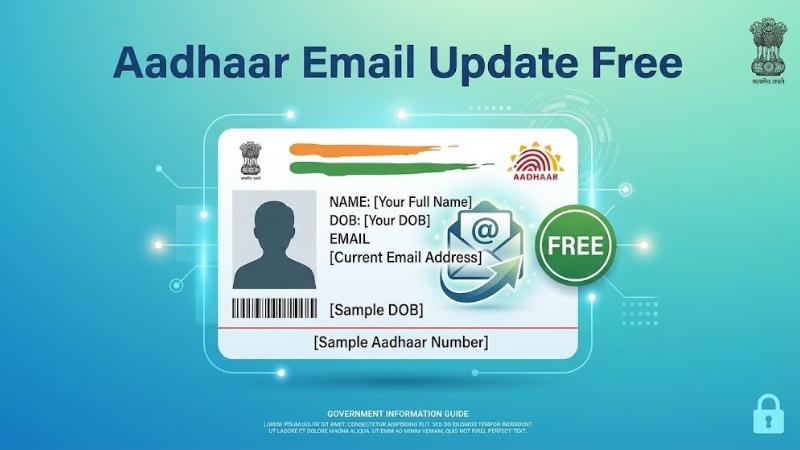
Aadhaar Email Update Free Till December 31: Who Can Benefit Aadhaar users can now update their email address for free through the official Aadhaar mobile app. The Unique Identification Authority of India has waived the earlier ₹75 charge for updating Aadhaar-linked email IDs for a limited period. What Has Changed? The free email update facility started on July 1, 2026, and will remain available till December 31, 2026. Durin
Aadhaar Email Update Free Till December 31, 2026: Check Details
Aadhaar Email Update Free Till December 31: Who Can Benefit Aadhaar users can now update their email address for free through the official Aadhaar mobile app. The Unique Identification Authority of India has waived the earlier ₹75 charge for updating Aadhaar-linked email IDs for a limited period. What Has Changed? The free email update facility started on July 1, 2026, and will remain available till December 31, 2026. Durin
Indian Passport, Aadhaar Not Final Proof of Citizenship: What Counts?
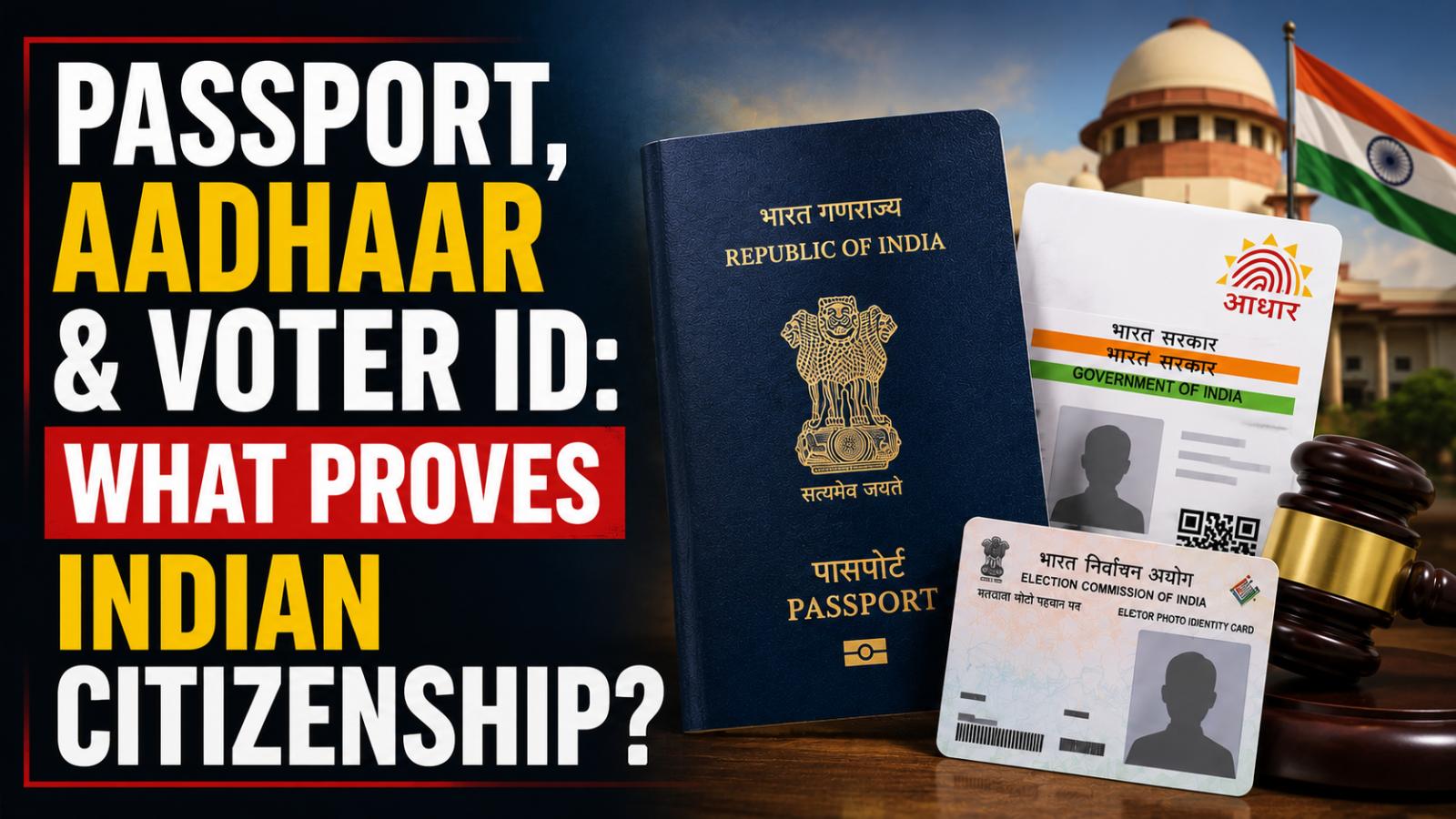
Why Common Identity Documents May Not Be Enough For many Indians, possessing a passport, Aadhaar card, or voter ID has long been considered sufficient evidence of citizenship. However, recent clarifications from government officials have highlighted an important legal distinction: these documents are not always considered conclusive proof of Indian citizenship. An Indian passport serves primarily as an international travel document and carries a strong presumption of nationality, but it does not automatically establish citizenship in every legal situation. Similarly, Aadhaar is officially recognized only as proof of identity and residence, while a voter ID card, although significant for electoral purposes, may not always be the final determining document during complex legal proceedings. The issue becomes particularly important when citizenship is challenged or when authorities require strict legal verification. In such cases, courts and government agencies often rely on historical records, family documentation, and documents issued under the provisions of the Citizenship Act, 1955. Documents That Legally Establish Indian Citizenship The strongest evidence of Indian citizenship includes a Certificate of Registration or Certificate of Naturalisation issued by the Ministry of Home Affairs under the Citizenship Act, 1955. These certificates are granted to individuals who acquire Indian citizenship through legal registration or naturalization procedures. For citizens born in India, a birth certificate can also serve as crucial proof, but its legal validity depends on the date of birth. People born between January 26, 1950, and July 1, 1987, are generally considered citizens solely based on birth in India. Those born between July 1, 1987, and December 3, 2004, must additionally prove that at least one parent was an Indian citizen at the time of birth. For individuals born after December 3, 2004, the requirements became stricter. They must provide evidence that both parents are Indian citizens or that one parent is an Indian citizen while the other is not an illegal migrant. In disputed cases, authorities may also examine ancestral documents, legacy records, land ownership papers, and entries in government registers to establish citizenship claims. The clarification serves as a reminder that while commonly used identity documents are important for everyday purposes, proving citizenship under Indian law may require a broader set of supporting records and historical documentation.
Indian Passport, Aadhaar Not Final Proof of Citizenship: What Counts?
Why Common Identity Documents May Not Be Enough For many Indians, possessing a passport, Aadhaar card, or voter ID has long been considered sufficient evidence of citizenship. However, recent clarifications from government officials have highlighted an important legal distinction: these documents are not always considered conclusive proof of Indian citizenship. An Indian passport serves primarily as an international travel document and carries a strong presumption of nationality, but it does not automatically establish citizenship in every legal situation. Similarly, Aadhaar is officially recognized only as proof of identity and residence, while a voter ID card, although significant for electoral purposes, may not always be the final determining document during complex legal proceedings. The issue becomes particularly important when citizenship is challenged or when authorities require strict legal verification. In such cases, courts and government agencies often rely on historical records, family documentation, and documents issued under the provisions of the Citizenship Act, 1955. Documents That Legally Establish Indian Citizenship The strongest evidence of Indian citizenship includes a Certificate of Registration or Certificate of Naturalisation issued by the Ministry of Home Affairs under the Citizenship Act, 1955. These certificates are granted to individuals who acquire Indian citizenship through legal registration or naturalization procedures. For citizens born in India, a birth certificate can also serve as crucial proof, but its legal validity depends on the date of birth. People born between January 26, 1950, and July 1, 1987, are generally considered citizens solely based on birth in India. Those born between July 1, 1987, and December 3, 2004, must additionally prove that at least one parent was an Indian citizen at the time of birth. For individuals born after December 3, 2004, the requirements became stricter. They must provide evidence that both parents are Indian citizens or that one parent is an Indian citizen while the other is not an illegal migrant. In disputed cases, authorities may also examine ancestral documents, legacy records, land ownership papers, and entries in government registers to establish citizenship claims. The clarification serves as a reminder that while commonly used identity documents are important for everyday purposes, proving citizenship under Indian law may require a broader set of supporting records and historical documentation.


