

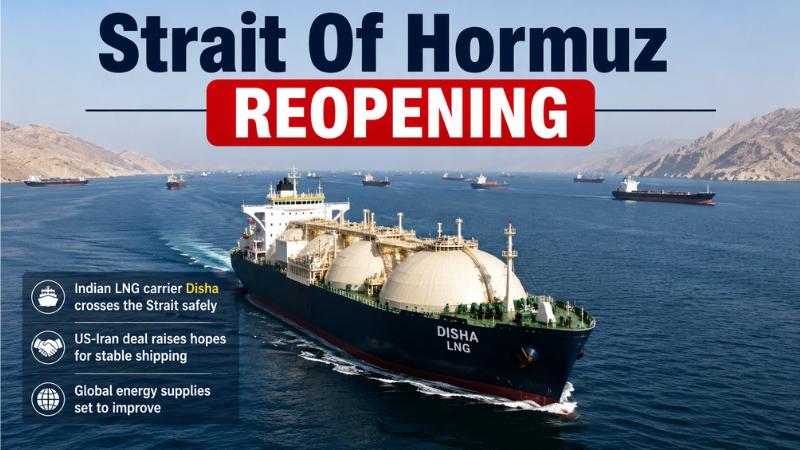
Indian LNG Carrier Disha Crosses Strait Of Hormuz After US-Iran Deal
Indian LNG carrier Disha has safely crossed the Strait of Hormuz, becoming the first Indian-flagged LNG vessel to pass through the conflict-hit waterway in more than three months after the US-Iran agreement raised hopes of reopening the crucial shipping route.
The vessel, managed by a Shipping Corporation of India-led consortium, is carrying 62,370 metric tonnes of liquefied natural gas and is expected to reach Dahej in Gujarat on June 18. Its movement is being seen as an important signal for India’s energy supply chain, which had faced pressure due to tensions around the Strait of Hormuz.
Disha’s Transit Brings Relief For India
The Strait of Hormuz is one of the world’s most important energy routes, carrying a major share of global oil and LNG supplies. Any disruption in the waterway affects shipping costs, fuel prices, insurance rates, and energy-importing countries such as India.
The safe passage of Disha comes after US President Donald Trump announced that Washington and Tehran had reached an agreement and that the US naval blockade would be lifted. The formal signing of the memorandum is expected in Geneva on June 19, with further negotiations likely to continue for 60 days.
Shipping Firms Still Cautious
Even though the deal has created optimism, shipping companies are not rushing back to normal operations. Maritime security experts have warned that mine-clearing and safety checks in the Strait of Hormuz could take weeks before shipowners and insurers fully regain confidence.
Reports said vessel traffic has recovered only partly, while several tankers remain waiting in the Gulf region. Insurance costs and security guarantees will be key factors before regular commercial movement returns to pre-conflict levels.
India Keeps Focus On Seafarer Safety
The development also comes after concerns over the safety of Indian seafarers in the region. Indian authorities have been coordinating with shipping companies, Indian missions abroad, and the Ministry of External Affairs to support sailors affected by the crisis.
According to official updates cited in reports, thousands of Indian seafarers have been helped during the conflict period, including recent repatriations through emergency coordination channels.
Oil Prices Fall, But Full Relief May Take Time
Global oil prices fell after the US-Iran deal announcement, as markets reacted positively to the possibility of renewed traffic through the Strait of Hormuz. However, analysts say energy prices may not return to normal immediately because mine clearance, shipping delays, insurance concerns, and supply-chain disruptions remain.
For India, the reopening of the route could help ease pressure on LNG supply, fuel imports, and trade movement with West Asia. But the final impact will depend on whether the agreement is signed, implemented, and followed by all sides.
Israel’s Position Adds Uncertainty
The deal has also created fresh diplomatic tension because Israel has indicated that it will continue security operations in Gaza, Lebanon, and Syria despite the broader US-Iran understanding. This has raised questions over whether the agreement can bring lasting stability across the region.
For now, Disha’s safe transit is a positive development for India and global energy markets. But the Strait of Hormuz is unlikely to return to normal overnight, with shipping companies waiting for clearer safety guarantees before fully resuming operations.