
Two Resignations, Different Accountability Tests
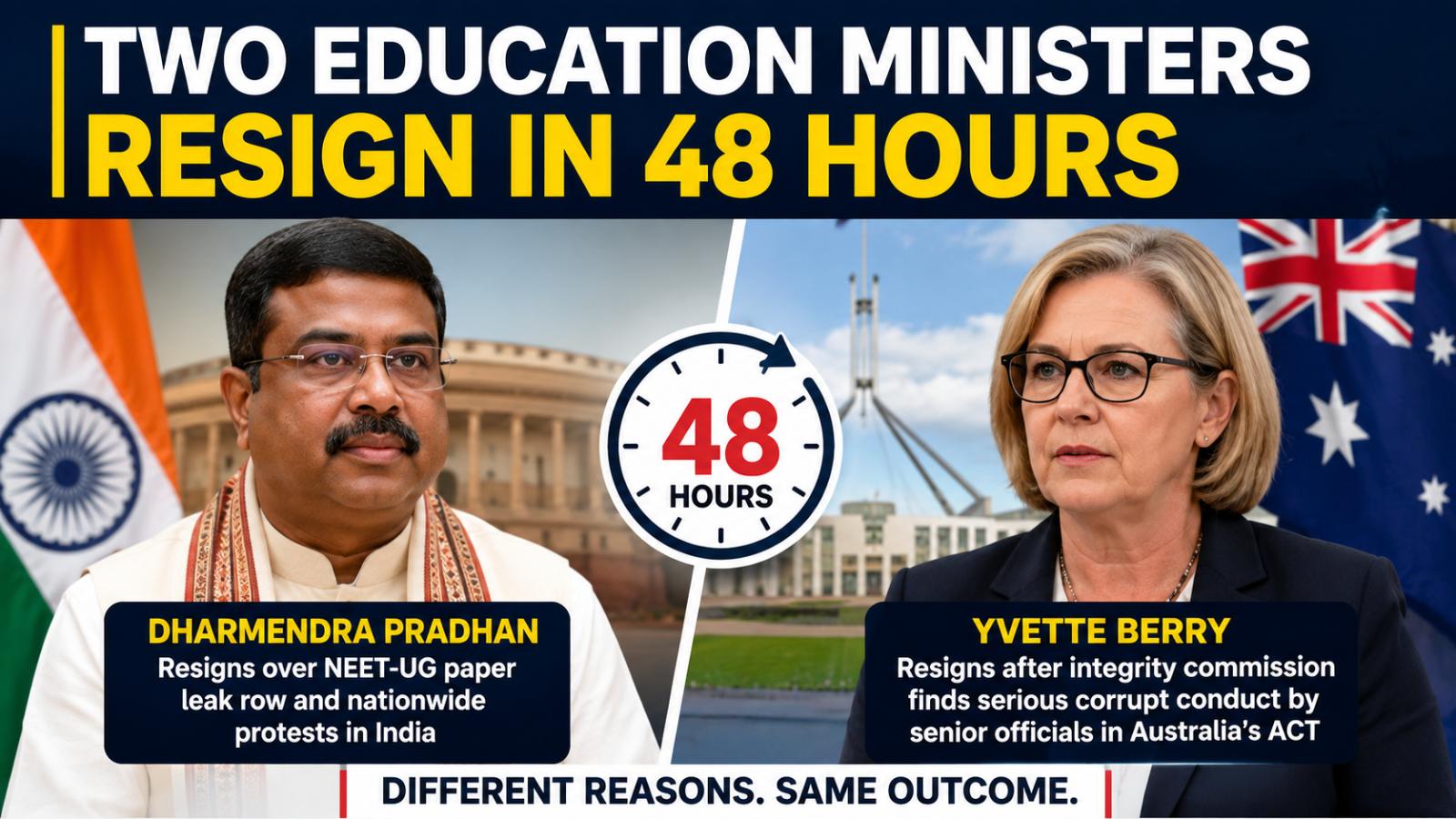
Dharmendra Pradhan and Yvette Berry left their education portfolios within 48 hours, but under very different circumstances. One resignation followed nationwide examination protests in India, while the other came after an integrity investigation in Australia’s ACT.
Dharmendra Pradhan and Yvette Berry Resignations Explained
The Dharmendra Pradhan and Yvette Berry resignations occurred within two days of each other, placing political responsibility in education departments under an international spotlight.
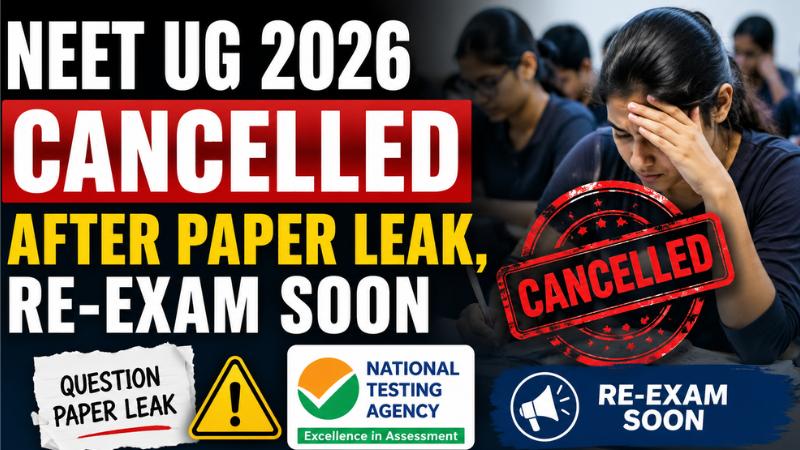
India’s Union Education Minister Dharmendra Pradhan resigned on July 25, 2026, following weeks of protests over the alleged NEET-UG paper leak and wider concerns about the management of public examinations. Two days earlier, Australian Capital Territory Education Minister Yvette Berry had stepped down from the ACT cabinet after an integrity investigation found serious corrupt conduct by two officials connected to her portfolio.
Although the timing was striking, the circumstances behind the two departures were substantially different.
It is also important to clarify that Berry was the education minister of the Australian Capital Territory and its deputy chief minister, not Australia’s federal education minister. Therefore, she and Pradhan were not direct national counterparts.
Dharmendra Pradhan Resigns After NEET-UG Protests
Dharmendra Pradhan’s resignation followed sustained pressure from students, youth organisations, opposition parties, and civil society groups over the handling of the NEET-UG 2026 controversy.
The protests were triggered by allegations that the medical entrance examination paper had been leaked. Demonstrators also raised concerns about other competitive examination irregularities, accountability within examination agencies and the authorities’ response to protesters.
The Cockroach Janta Party, or CJP, became one of the prominent groups leading the agitation. Its members maintained that administrative changes alone would not be sufficient and demanded responsibility at the ministerial level.
Pradhan was not accused of personally participating in the alleged paper leak. The demand for his resignation was instead based on political and administrative accountability as the minister responsible for the country’s education system.
President Droupadi Murmu accepted Pradhan’s resignation from the Union Council of Ministers on the advice of Prime Minister Narendra Modi. Union Minister Pralhad Joshi was subsequently assigned additional charge of the Ministry of Education.
Why Yvette Berry Resigned From the ACT Cabinet
Yvette Berry resigned on July 23 after the ACT Integrity Commission released its Operation Kingfisher investigation into the Campbell Primary School Modernisation Project.
The investigation examined whether the procurement process for the school project, valued at approximately A$18 million, had been conducted honestly and impartially.
The commission found that former ACT Education Directorate head Katy Haire and Berry’s former chief of staff, Joshua Ceramidas, had engaged in serious corrupt conduct. It concluded that they had provided a “back door” through which the strategic interests of the Construction, Forestry and Maritime Employees Union were given priority during the procurement process.
The report said the process had been unfairly influenced and that efforts were subsequently made to conceal what had happened.
However, the commission did not make an adverse finding against Berry herself. ABC reported that the investigation made no finding that she had engaged in wrongdoing or knowingly directed the officials’ conduct.
Berry nevertheless accepted political responsibility for the conduct of senior officials working within her department and ministerial office. She said she did not want the commission’s findings to become a prolonged parliamentary “public circus” and maintained that she was leaving with her “integrity and moral compass intact.”
She resigned from the cabinet but indicated that she would continue serving as a member of the ACT Legislative Assembly.
How the Two Education Minister Resignations Differed
Pradhan’s resignation was primarily the result of nationwide public and political pressure over failures associated with a major examination controversy. It followed prolonged demonstrations demanding accountability at the highest level of the Education Ministry.
Berry’s departure came after an independent integrity investigation documented serious misconduct by officials in her portfolio, even though no adverse finding was made against her personally.
The Indian case, therefore, centred on responsibility for systemic examination failures and the government’s response to public protests. The ACT case concerned responsibility for the conduct of senior staff and the integrity of a government procurement process.
What the Resignations Mean for Ministerial Accountability
The two resignations demonstrate that political responsibility does not always require proof of personal misconduct.
Ministers may leave office when serious failures occur within departments they supervise, when public confidence has been damaged, or when remaining in office could prevent an administration from addressing the controversy.
However, resignations alone cannot resolve the institutional problems behind either case. India still faces the challenge of making entrance examinations secure, transparent and fair. The ACT government must address weaknesses in procurement oversight and determine what further administrative or legal action should follow the integrity commission’s findings.
The departures of Pradhan and Berry may have happened within 48 hours, but they represent two distinct tests of how democratic governments respond when public trust in education administration is weakened.