
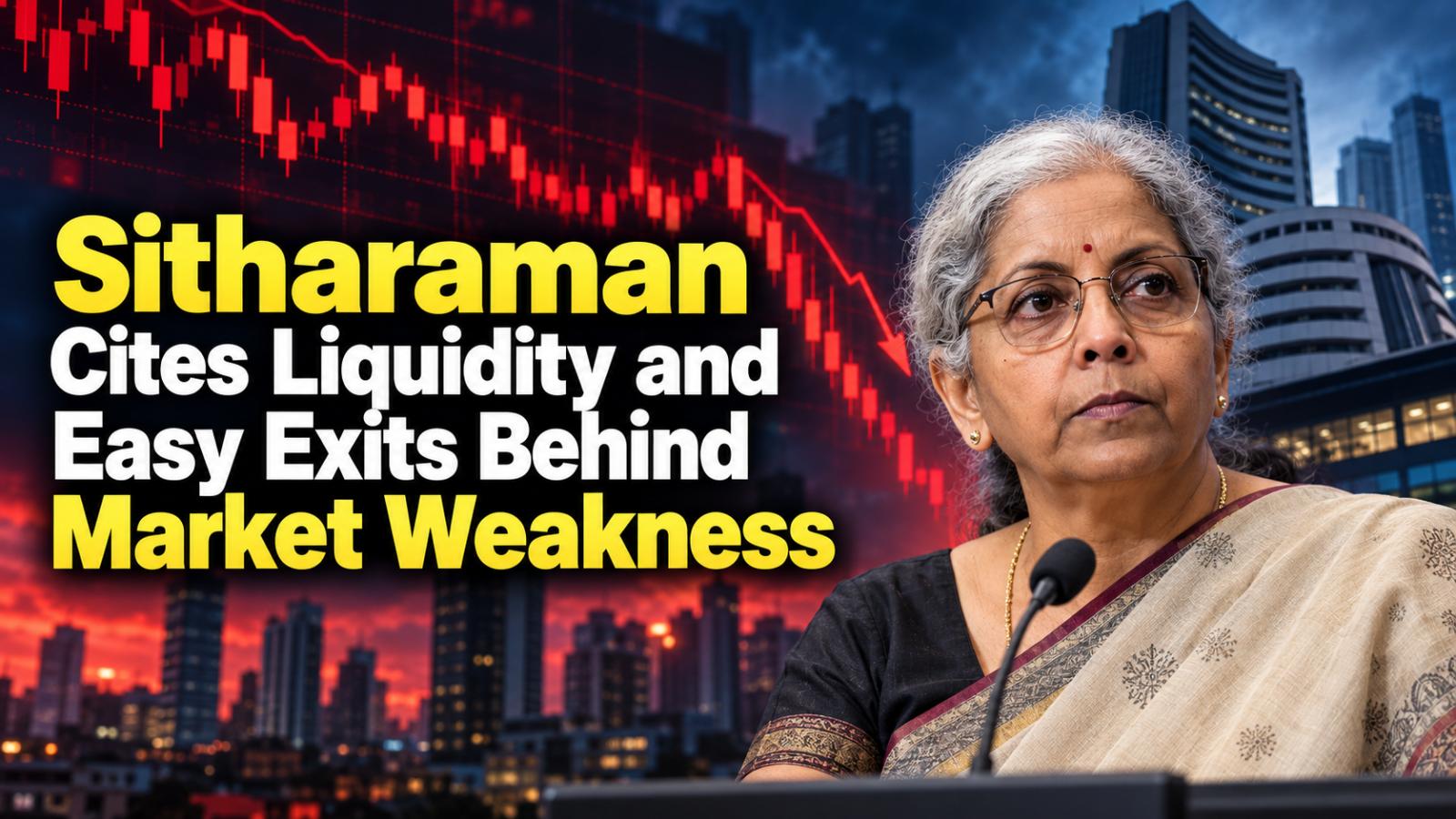
Finance Minister Nirmala Sitharaman has linked the Indian stock market’s recent underperformance to abundant liquidity and investors’ ability to exit quickly. She also identified sustained capital outflows as a major risk for India in 2027, while saying the country’s economic fundamentals remain sound.
Sitharaman Points to Easy Exits and Market Liquidity
Speaking to CNBC in Bangkok on the sidelines of the IMF–World Bank annual meetings, Sitharaman said that liquidity is readily available in the equity market, making it easier for investors to sell their holdings. “Because of the ease of liquidity, ease of availability, people are even exiting easily,” she said. Her remarks addressed why Indian equities have lagged despite resilient economic growth. She described liquidity and easy exits as contributing factors, not the sole explanation for market declines.
Finance Minister Flags Capital Outflows as a 2027 Risk
Sitharaman said continued capital outflows were among India’s biggest risks for 2027. Her comments come as foreign portfolio investors (FPIs) have been selling Indian shares, adding pressure to benchmark indices. As of October 19, FPIs had withdrawn about ₹52,100 crore from Indian equities in October, while their net equity outflows for 2026 had reached roughly ₹3.12 lakh crore, according to reported depository data.
Foreign Selling and Global Factors Add to Market Pressure
The latest selling follows withdrawals of ₹35,861 crore in September. Reports have linked foreign investor caution to factors including higher crude oil prices, rising US bond yields and a stronger US dollar. These pressures influence investment decisions alongside domestic market conditions. The Nifty and Sensex have also faced a prolonged period of weak performance; one recent report put their declines at nearly 12% since the start of 2026.
Sitharaman’s comments highlight liquidity and investor exits as one explanation for market weakness. They do not establish that easy exits alone caused the declines; foreign selling, global economic conditions and investor sentiment are also relevant. India’s economic growth and stock-market performance do not always move in tandem.