
UEFA Blasts FIFA After Balogun Red Card Ban Reversal Sparks World Cup Row
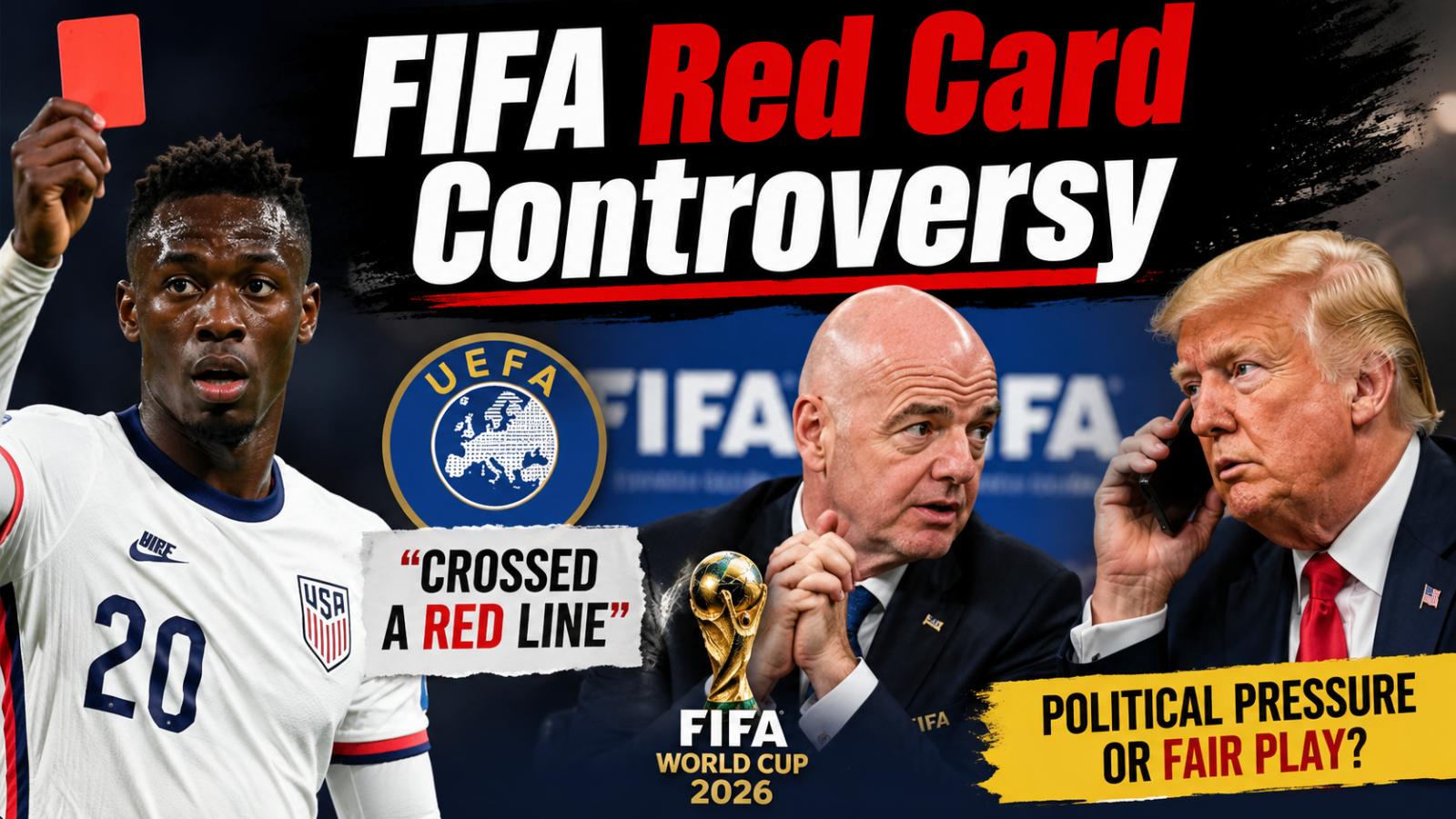
UEFA has strongly criticised FIFA after the governing body suspended the automatic red-card ban of United States striker Folarin Balogun during the FIFA World Cup 2026, allowing him to be available for the Round of 16 clash against Belgium. The decision has triggered a major football controversy, with UEFA warning that the move could damage the integrity and credibility of the tournament.
The issue began after Balogun received a straight red card during the USA’s Round of 32 win over Bosnia and Herzegovina. Under normal disciplinary practice, a red card leads to an automatic one-match suspension. However, FIFA later converted the ban into a one-year probationary period, clearing Balogun to play in the knockout match against Belgium.
UEFA Calls Decision A Red Line
UEFA said FIFA’s move had “crossed a red line” and argued that rules must remain clear, consistent, and fair for every team in a major international tournament. The European body said a minimum one-match suspension after a red card should not be treated as optional, especially when other players in the same tournament had already served similar bans.
The sharp reaction has turned the disciplinary decision into one of the biggest talking points of the World Cup. UEFA also warned that making exceptions in the middle of a tournament could create a dangerous precedent and lead other teams to demand similar treatment in future cases.
Trump Intervention Adds Political Heat
The controversy intensified after reports said US President Donald Trump had contacted FIFA President Gianni Infantino and requested a review of Balogun’s red card. Reports also said US officials publicly pushed for the suspension to be reconsidered, adding a political angle to what was originally a football disciplinary matter.
This has raised wider questions about whether football decisions should remain free from political pressure. Former FIFA chief Sepp Blatter and several football figures have also criticised the move, saying disciplinary rules should not be influenced by outside intervention.
Belgium Questions Fair Play
Belgium, who are set to face the United States in the Round of 16, has also expressed concern over the decision. The Belgian football association reportedly said it was astonished by FIFA’s ruling and was exploring possible options to protect fair play.
For Belgium, the concern is not only about Balogun’s availability but also about consistency. If one player’s suspension can be delayed during a knockout match, other teams may question whether the same rules apply equally to all sides.
Why This Row Matters
The Balogun red card ban reversal has become more than a single-player disciplinary issue. It has opened a larger debate about FIFA’s rulebook, political influence in sport, and the credibility of decision-making during the World Cup.
For FIFA, the challenge now is to explain its decision clearly and restore confidence among teams, fans and football authorities. For UEFA and Belgium, the concern is simple: World Cup rules must be applied equally, without exceptions that appear to favour one team during a crucial knockout stage.