
Strait Of Hormuz Opens, But Petrol And Diesel Relief May Take Time
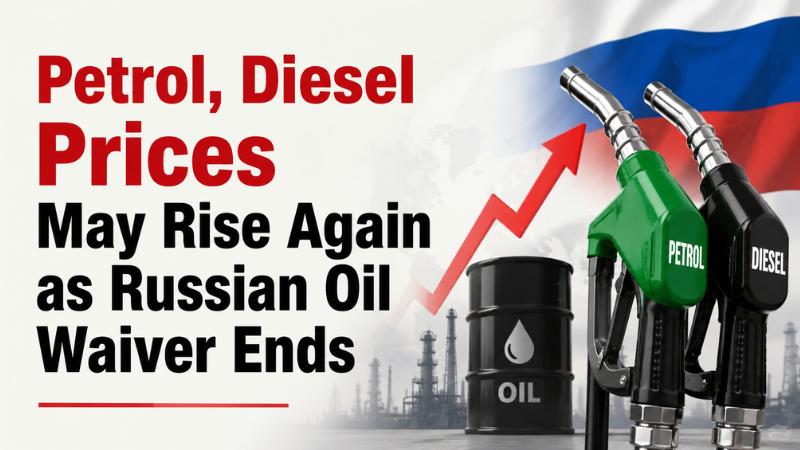
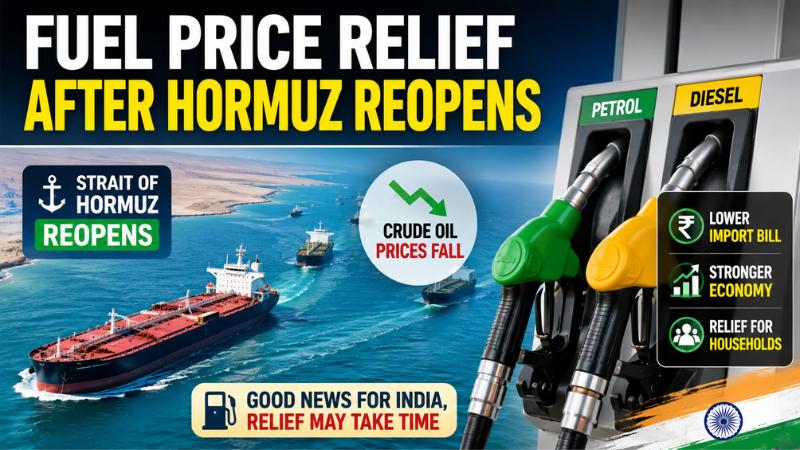
The reopening of the Strait of Hormuz after a reported US-Iran understanding has eased fears of a major oil supply shock. Crude oil prices have started cooling, but Indian consumers may not see an immediate drop in petrol, diesel, or LPG prices.
The development is important for India because the Strait of Hormuz is one of the world’s most crucial oil shipping routes. A large share of global crude oil and LNG supplies passes through this narrow passage, making any disruption a major concern for oil-importing countries.
India depends heavily on imported crude oil, so a sharp rise in global prices can increase the import bill, weaken the rupee and add pressure on inflation. The reopening of the route is therefore positive for India’s economy, but the benefit for household fuel bills may take time.
Why Fuel Prices May Not Fall Immediately
A fall in crude oil prices does not automatically lead to cheaper petrol and diesel at Indian fuel stations. Retail fuel prices depend on several factors, including global crude rates, taxes, currency movement, oil marketing company margins, and government policy.
Oil marketing companies may also use the period of lower crude prices to recover earlier losses and improve their financial position. Because of this, any petrol or diesel price cut is likely to be cautious rather than sudden.
Experts cited in the source report said meaningful relief may come only if crude oil remains lower for a longer period. A short-term fall in crude prices may not be enough to bring a major reduction in retail fuel prices.
What About LPG Cylinder Prices?
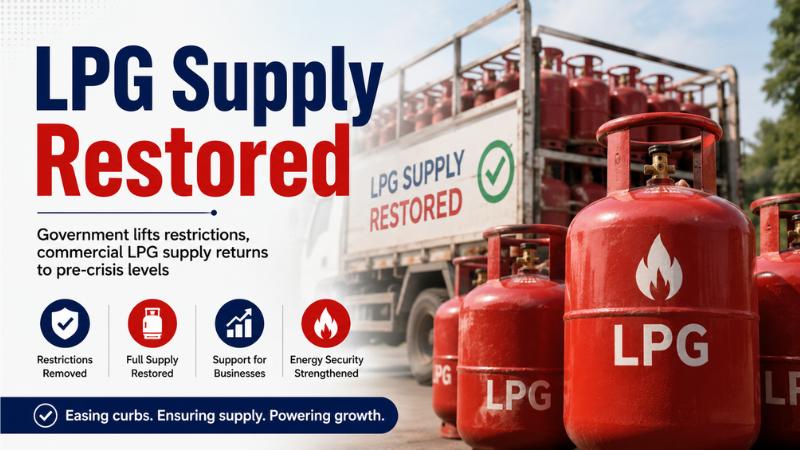
LPG cylinder prices may also see only limited relief. Lower global crude and gas prices can reduce the government’s subsidy burden, especially for households under welfare schemes such as the Pradhan Mantri Ujjwala Yojana.
However, any broad LPG price cut will depend on international energy prices, government finances and policy priorities. This means relief may be targeted rather than given equally to all consumers.
For ordinary households, the impact may be slow and partial. Lower crude prices can reduce pressure on transport and cooking fuel costs, but they may not immediately offset rising expenses in food, education, healthcare, and other daily needs.
How This Helps India’s Economy
The reopening of the Strait of Hormuz can still help India in several ways. Lower crude oil prices can reduce India’s import bill, support the rupee, and ease inflation worries. It can also improve market sentiment, especially for sectors that benefit from cheaper oil, such as aviation, paints, tyres, and logistics.
At the same time, fuel consumers should keep expectations realistic. Petrol and diesel prices are unlikely to fall sharply unless crude oil remains at lower levels for a sustained period.
For now, the Strait of Hormuz reopening is good news for India’s economy, but direct savings for households may be gradual, limited, and dependent on future crude oil trends.