

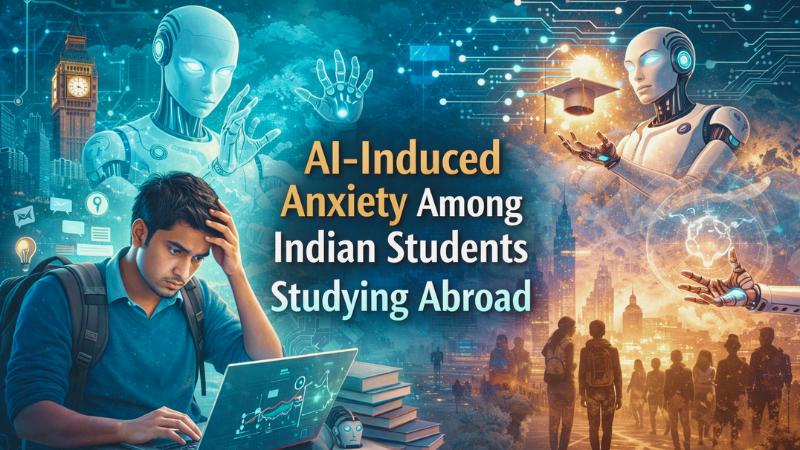










As artificial intelligence (AI) continues to reshape industries and societies worldwide, it’s also creating new challenges for individuals, particularly students. For Indian students studying abroad, the rise of AI technologies has introduced not just exciting opportunities, but also significant sources of stress and anxiety. Whether it’s the pressure of keeping up with rapidly changing technology, the fear of AI replacing human jobs, or the uncertainty surrounding AI’s role in educatio
As the world rapidly advances into the age of artificial intelligence (AI), countries and businesses around the globe are exploring ways to leverage this transformative technology to gain a competitive edge. From healthcare and finance to retail and manufacturing, AI is proving to be a game-changer in virtually every sector. However, as India emerges as a global leader in technology and innovation, there is a pressing question that needs to be addressed: Are Indian businesses falling
As technology continues to evolve at a rapid pace, many are asking profound questions about its impact on traditional cultures and values. In India, a country rich in spiritual and philosophical heritage, there is growing concern about the potential consequences of robotics and artificial intelligence (AI) on its deeply rooted spiritual practices. The question that arises is: Will Indian spiritual values be lost in a robotic future?
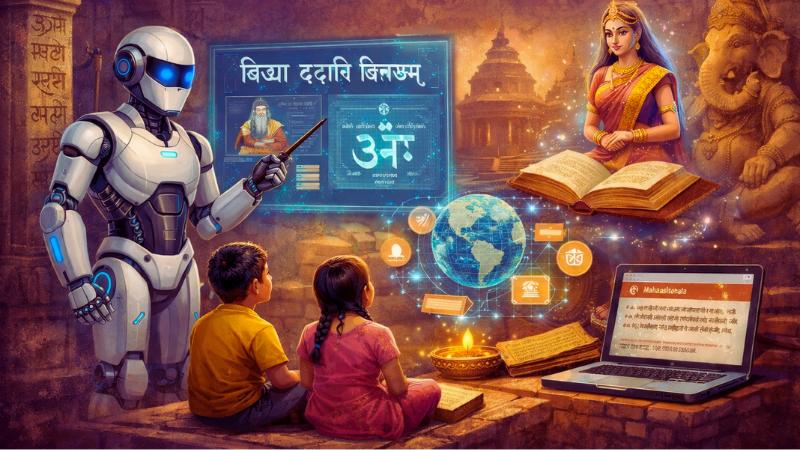
As technology advances at an unprecedented pace, one of the most intriguing possibilities is the role artificial intelligence (AI) can play in preserving and promoting ancient languages. One such language is Sanskrit, a classical language of India, historically significant for its cultural, religious, and literary contributions. But with fewer speakers and fewer learning resources, can robots, through AI, help teach Sanskrit and preserve this ancient language?