
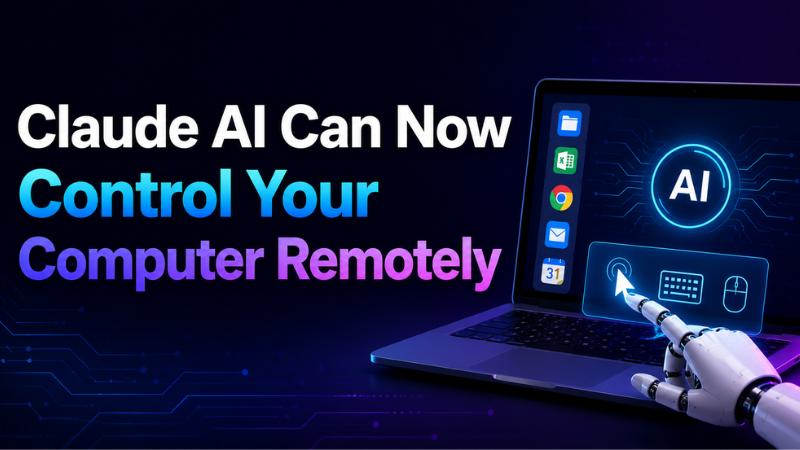
Anthropic has introduced a major Claude AI update that allows the assistant to control a user’s computer, operate apps, and complete tasks remotely with permission.
Claude Gets Computer Control Feature
Anthropic has introduced a powerful new feature for Claude, its advanced artificial intelligence assistant, allowing it to take control of a user’s computer with permission. This update moves Claude beyond basic chatbot responses and gives it the ability to operate a mouse, keyboard, apps, and browser-based tools. The development marks a major step toward practical agentic AI, where digital assistants can complete real tasks independently instead of only giving suggestions.
With this feature, Claude can help users manage work directly on their devices. It can open apps, navigate files, handle spreadsheets, access calendars, browse websites, and perform other computer-based actions. The goal is to reduce manual effort and make productivity easier for users who want AI to complete routine tasks on their behalf.
AI Assistant Can Work While Users Are Away
The new Claude computer control feature is designed to help users continue work even when they are away from their laptops. Instead of sitting in front of a screen to complete repetitive tasks, users can give Claude instructions remotely through its desktop or mobile app. Once the task is assigned, Claude can use the computer environment to complete the requested work.
Anthropic researcher Alex Albert highlighted the potential of this update on X, saying that the future where people may not need to open their laptops to get work done is becoming real very quickly. His comment reflects how fast AI-powered automation is moving from experimental demos to real productivity tools. For professionals, this could mean delegating basic digital tasks to AI and returning later to completed work.
Dispatch Feature Expands Claude’s Power
The update works closely with Anthropic’s Dispatch feature, which allows users to remotely control and guide Claude. Through this integration, Claude can start with approved apps such as Slack or Calendar and then request access to other tools required for a specific task. This permission-based model is important because computer control involves sensitive access to apps, files, and user data.
Once paired and properly configured, Claude can receive prompts from a user’s phone or desktop app and then carry out actions on the connected computer. For example, a user may ask Claude to check a schedule, organize a document, update a spreadsheet, or manage communication tasks. The assistant can then navigate the required apps and complete the workflow step by step.
Paid Claude Users Get Early Access
Currently, this advanced computer control capability is available only to paid users of Claude Cowork and Claude Code. The feature is also limited to macOS users for now. To use it, both Claude desktop and mobile apps must be updated and paired correctly. This limited rollout suggests Anthropic is introducing the feature carefully while testing real-world performance, safety, and user experience.
The restriction to paid users and macOS may also help Anthropic monitor early adoption and refine the system before a wider release. Since the feature allows an AI assistant to interact directly with a computer, strong safeguards, user permissions, and activity controls will be essential. Users will likely expect clear visibility into what Claude is doing and the ability to stop or limit access whenever needed.
Agentic AI Race Gains Speed
Claude’s new capability reflects the growing industry push toward agentic AI. Unlike traditional AI chatbots that respond to questions, agentic AI systems are designed to take action, manage workflows, and complete tasks with minimal human involvement. Anthropic’s latest update positions Claude as a serious competitor in this fast-moving space.
Other major technology companies are also developing similar AI systems. Nvidia’s NemoClaw, OpenAI, Meta, and other firms are working on AI agents that can automate tasks, support business operations, and act more independently across software environments. This competition shows that AI assistants are quickly evolving into active digital workers.
The rise of computer-controlling AI also raises important questions about privacy, security, and trust. While the technology can save time and improve productivity, users must be confident that AI tools will act safely and only within approved limits. As these systems become more capable, companies will need to balance convenience with strong protection for personal and professional data.
Anthropic’s Claude update signals a future where AI assistants may become part of everyday work routines. From managing calendars to handling documents and operating apps, Claude’s computer control feature could reshape how people interact with technology. While still limited in access, the feature shows how quickly AI is moving from answering questions to performing meaningful tasks on behalf of users.