Plot:
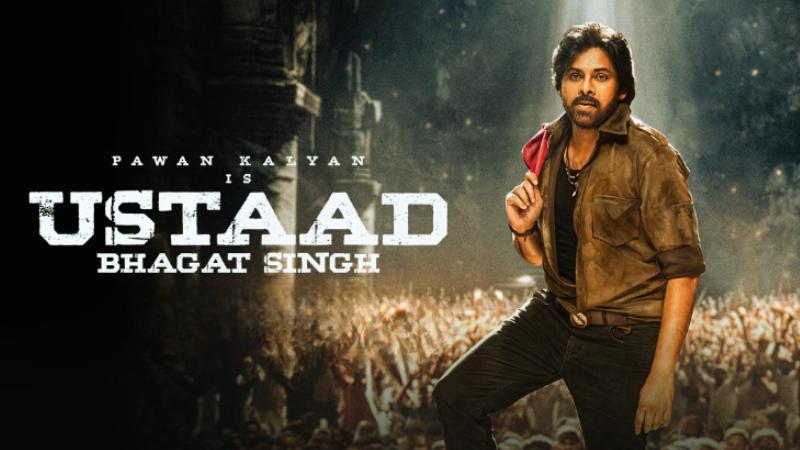
Ustaad Bhagat Singh follows the journey of a tribal boy named Bhagat, who is mentored by a noble teacher, Ustaad (played by K. S. Ravikumar). Bhagat is educated and develops a strong sense of social responsibility. Eventually, he becomes a police officer while his teacher rises to the position of Chief Minister of Andhra Pradesh. The film's central conflict revolves around Bhagat's fight against corruption, led by the villainous politician Chadala Marri Nalla Nagappa (R. Parthiban), and an assassination plot against the Chief Minister.
Overview:
The film explores Bhagat's transformation from an uneducated tribal boy to a brave and principled police officer. His teacher, who has a significant impact on his life, becomes a powerful political figure. The movie blends action, drama, and social issues as Bhagat navigates his path, facing both personal and professional challenges. It also delves into his relationship with Geetha (Sreeleela), a radio jockey, and his confrontations with the corrupt political forces led by Nagappa. Despite its engaging second half, the film struggles with outdated execution and a formulaic narrative.
Performances:
Pawan Kalyan shines in his role with a strong screen presence, delivering emotional and mass-appeal moments. R. Parthiban portrays the crooked politician convincingly, while K. S. Ravikumar brings maturity to his role. Sreeleela does well as the Radio Jockey, and although Raashii Khanna’s role is limited, she makes her presence felt. Other supporting actors, including Ramki and Gautami, add value to the film.
Technical Aspects:
The cinematography by Ayananka Bose effectively captures the scenic beauty and sets. The editing, especially in the first half, could have been improved. Devi Sri Prasad’s music is mediocre, but the background score by Thaman S. is standard. The production values are high, with Mythri Movie Makers ensuring the film looks rich.
Music:
The music for Ustaad Bhagat Singh is composed by Devi Sri Prasad, but it fails to live up to the expectations set by Pawan Kalyan’s previous collaborations with him. Apart from the song "Dekhlenge Saala," the album lacks memorable tracks. The music does not add much value to elevate the film, and the overall soundtrack feels mediocre. The background score, composed by Thaman S., is also standard and does not provide the intensity or depth needed to support the film's narrative.
Editing:
Editing by Karthika Srinivas is uneven, with the first half of the film being particularly weak. The pacing during the initial 30 minutes feels slow and outdated, and some of the comedy and drama sequences lack impact. While the second half improves, with better action and emotional sequences, the overall editing could have been tighter to enhance the film's flow. More attention to detail in editing could have made the narrative more engaging throughout.
Positives:
- Pawan Kalyan's strong screen presence.
- Three engaging action blocks in the second half.
- Dialogues that resonate well with the situations.
- Effective use of "Nee Manase" from Tholiprema.
Negatives:
- Template-driven screenplay with outdated execution.
- Mediocre music and poor initial setup.
- Some sequences resembling other films.
Analysis:
While Ustaad Bhagat Singh has a few solid moments, especially for Pawan Kalyan’s fans, the film falters due to its predictable screenplay and lack of originality in its execution. The director fails to bring freshness to the protagonist's characterization, relying too heavily on the star's real-life traits and vintage references. The second half, however, redeems the film with gripping episodes, and the dialogues help elevate some sequences.
Bottomline: Uninspired
Rating: 2.5/5