
International Day Against Drug Abuse 2026: Theme, History And India’s Anti-Drug Efforts
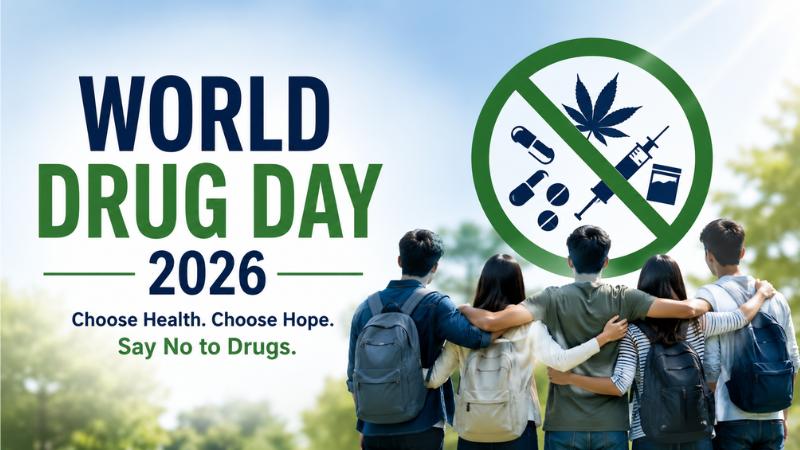
The International Day Against Drug Abuse and Illicit Trafficking 2026, also known as World Drug Day, is observed on June 26 to raise awareness about drug abuse, addiction, prevention, and illegal drug trafficking.
The day highlights the need for stronger action by governments, communities, schools, healthcare systems, and families to protect people, especially young people, from the harmful effects of drugs.
Theme Of International Day Against Drug Abuse 2026
The 2026 focus is linked to the theme “World Drug Problem: Persisting Issues, New Challenges, Innovative Responses.”
The theme underlines that drug abuse and illicit trafficking continue to remain serious global challenges. It also points to new risks, including synthetic drugs, online trafficking networks, and changing patterns of substance use.
The message is clear: prevention, treatment, rehabilitation, and law enforcement must work together. Countries need evidence-based policies, public awareness, and innovative methods to reduce both drug demand and illegal supply.
Why June 26 Is Observed As World Drug Day
The United Nations General Assembly declared June 26 as the International Day Against Drug Abuse and Illicit Trafficking in 1987.
The aim was to strengthen global cooperation and build a society free from the harmful impact of drug abuse. Since then, the day has been observed every year through awareness campaigns, public programmes, educational events, and anti-drug initiatives across the world.
Significance Of Anti Drug Day 2026
World Drug Day 2026 is important because drug abuse affects not only individuals but also families, communities, and national security.
Drug addiction can damage physical health, mental well-being, education, employment, and relationships. It can also increase crime, violence, money laundering, and organised trafficking networks.
The observance encourages people to understand addiction as a serious health and social issue. It also promotes early prevention, counselling, medical treatment, and rehabilitation instead of stigma.
Global Drug Challenge
The global drug problem has become more complex in recent years. Synthetic drugs are easier to manufacture and harder to detect. Cocaine production and seizures have also continued to rise in many regions.
Drug trafficking networks are increasingly using technology to reach new users, hide illegal operations, and expand their criminal activities. These networks often have links with violence, corruption, money laundering, and other organised crimes.
This makes international cooperation essential. No country can address drug trafficking alone, especially when supply chains, online networks, and financial channels cross borders.
Role Of UNODC
The United Nations Office on Drugs and Crime plays a major role in monitoring drug trends and supporting countries in their anti-drug efforts.
UNODC publishes research, including the World Drug Report, and works with member countries to improve drug control policies, strengthen justice systems, and promote public health-based responses.
Its work focuses on prevention, treatment, rehabilitation, international cooperation, and action against organised crime.
India’s Efforts Against Drug Abuse
India has taken several steps to prevent drug abuse and fight illegal drug trafficking. One of the key initiatives is the Nasha Mukt Bharat Abhiyan, which focuses on awareness, prevention, and community participation.
The campaign has reached crores of people, including youth and women, through awareness programmes, volunteers, and institutional outreach.
India also has Integrated Rehabilitation Centres for Addicts, Community-based Peer-led Intervention centres, Outreach and Drop-In Centres, Addiction Treatment Facilities, and District De-addiction Centres to support treatment and rehabilitation.
A toll-free helpline, 14446, is also available for counselling and immediate support related to drug abuse.
Law Enforcement And Anti-Trafficking Measures In India
India has strengthened its law enforcement structure to combat narcotics trafficking.
The Narco-Coordination Centre mechanism helps improve coordination between central and state agencies. Anti-Narcotics Task Forces have also been set up in states and Union Territories.
Agencies such as the Narcotics Control Bureau, National Investigation Agency, border forces, Railway Protection Force, and maritime security bodies play important roles in checking illegal drug movement through land, rail, and sea routes.
India also works with international agencies and countries to share information and fight cross-border drug trafficking.
Why Awareness Matters
Awareness is one of the strongest tools in preventing drug abuse. Schools, colleges, families, and local communities can help young people understand the risks of substance abuse early.
Prevention should include open conversations, mental health support, life skills education, and access to counselling. People struggling with addiction need treatment and support, not shame or isolation.
International Day Against Drug Abuse and Illicit Trafficking 2026 reminds everyone that the drug problem is not only a law enforcement issue, but also a public health, social welfare, education, and community responsibility.