
RBI Bank Mis-Selling Rules 2027: What Customers Must Know
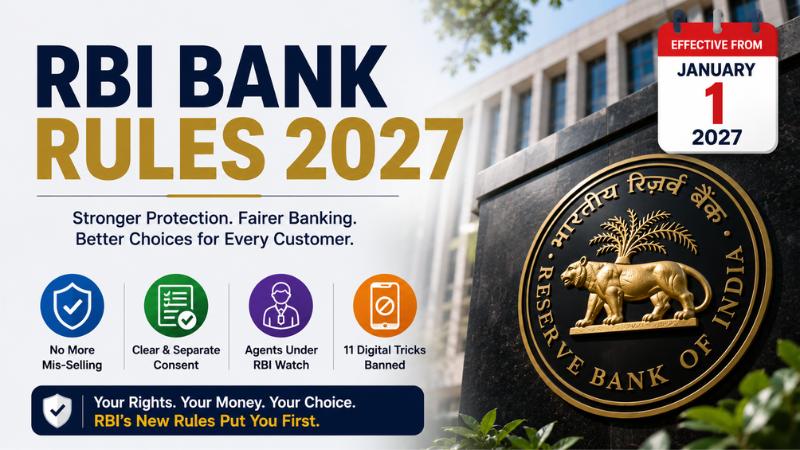
From January 1, 2027, bank customers in India will get stronger protection against forced insurance sales, hidden charges, confusing consent screens, and manipulative app pop-ups. The Reserve Bank of India has issued new directions to stop commercial banks from pushing financial products that customers did not ask for or may not need.
The RBI issued the Reserve Bank of India (Commercial Banks — Responsible Business Conduct) Second Amendment Directions, 2026, on June 15, 2026. The rules give banks time until the end of 2026 to review their sales practices, digital platforms, agent networks, and customer consent systems.
The new rules are important because they cover both offline and online banking behaviour. They deal with mis-selling at bank branches, forced bundling of products such as loan-linked insurance, misleading sales by agents, and digital dark patterns used on banking apps and websites.
What Is Bank Mis-Selling?
Mis-selling happens when a bank sells a financial product unfairly or misleadingly. This may include selling a product that does not suit the customer’s financial profile, giving incomplete information, taking unclear consent, or forcing a customer to buy one product to get another.
For example, if a customer applies for a home loan or personal loan and is pressured to buy insurance from the bank’s preferred partner, it can fall under unfair selling practices. Under the new framework, banks cannot make one product compulsory as a condition for another unless there is a genuine risk-related requirement.
Even when insurance is required as a safeguard, the customer must be free to choose the insurance provider. A bank cannot force the customer to buy only from its own partner company.
Refunds And Compensation For Customers
The RBI’s new rules also create stronger accountability for banks. If mis-selling is established, the bank may have to refund the full amount paid by the customer. It may also have to compensate the customer for any financial loss suffered because of the unfair sale.
This makes the new framework more serious than a simple advisory. Banks will now have to prove that the customer understood the product, agreed to it clearly, and was not forced or misled into buying it.
Consent Must Be Clear And Separate
The RBI has also tightened the rules around consent. Banks can no longer use one approval from the customer for multiple products or purposes.
If a customer agrees to take a loan, that does not mean the bank can automatically treat it as consent for insurance, promotional calls, credit card offers, or third-party financial products. Each product must have a separate and recorded consent.
Digital consent screens must also be designed fairly. The default option should not push the customer into saying yes. Fees, charges, interest rates, risks, lock-in periods, and exit penalties must be clearly shown before the customer agrees to buy a product.
Why This Matters For Bank Customers
Many customers have complained over the years that they were sold insurance, investment products, or credit cards without fully understanding the cost or conditions. Senior citizens, loan borrowers, and first-time banking customers are often more vulnerable to such pressure.
The new RBI directions are expected to reduce these practices by making banks responsible for what they sell and how they sell it. Banks must also assess whether a complex financial product is suitable for the customer based on factors such as age, income, risk profile, and financial understanding.
Agents Under RBI Watch
The rules also cover Direct Selling Agents and Direct Marketing Agents. These agents often contact customers for loans, credit cards, insurance, and other financial products on behalf of banks.
Banks must maintain an updated list of their agents and ensure that they follow a proper code of conduct. Agents cannot misrepresent themselves as bank employees. They also cannot visit a customer’s home or office without permission.
Customer contact by agents will have to follow clear rules. Banks will remain responsible if their agents use pressure tactics, false promises, or misleading information to sell products.
11 Digital Tricks Banks Can No Longer Use
A major part of the new RBI directions focuses on digital dark patterns. These are design tricks used on websites and mobile apps to influence customer decisions unfairly.
The RBI has listed 11 such practices that banks and their agents must remove from digital platforms.
False urgency is one such practice. This includes countdown timers, “Act Now” messages or “Offer Ends Soon” banners that create artificial pressure on customers to take loans or buy financial products quickly.
Basket sneaking is another banned tactic. This happens when insurance, protection cover or another paid service is added by default during a loan or banking transaction without clear customer choice.
Confirm that shaming is also prohibited. Banks cannot make customers feel guilty for rejecting a product by using phrases such as “No, I do not want extra security for my account.”
Forced action is when a customer cannot close a pop-up or continue using an app without being redirected to another product page. For example, if a banking app takes the user to a personal loan page even after clicking the close button, it can be treated as a dark pattern.
Subscription traps are also banned. Banks cannot make it easy to sign up for a credit card, insurance plan or paid service while making cancellation difficult, hidden, or time-consuming.
Interface interference is another area of concern. Banks cannot highlight the option they prefer in bright colours while hiding the customer’s real choice in small or unclear text.
The RBI has also flagged bait and switch, where a bank advertises a lower interest rate but shows a higher rate during actual application. Drip pricing, where processing fees or charges are revealed late in the process, is also prohibited.
Disguised advertisements will not be allowed either. Banks cannot send promotional messages that look like urgent account alerts. Nagging customers repeatedly after they have refused a non-essential option is also banned.
The final category is trick wording. Banks cannot use confusing language or double negatives in consent boxes to make customers accidentally agree to offers or data sharing.
Banks Must Audit Their Apps And Websites
Banks will now have to conduct internal audits of their digital interfaces to identify and remove dark patterns. This includes mobile banking apps, websites, consent screens, pop-ups, product pages, and cancellation journeys.
The RBI’s move means that banks must focus not only on the product being sold, but also on the design of the customer journey. A confusing app screen, a hidden cancellation option, or a misleading button can now become a compliance problem.
How Customers Can Complain
From January 1, 2027, customers who believe their bank has used mis-selling or dark patterns can first raise a complaint with the bank’s grievance redressal officer.
If the bank does not resolve the complaint properly, the customer can escalate the matter to the RBI Ombudsman. Customers should keep records such as screenshots, emails, loan documents, consent forms, call details, and payment receipts to support their complaint.
A Major Consumer Protection Step
The RBI’s new rules mark a major shift in Indian banking regulation. They make banks more accountable for forced bundling, unclear consent, agent behaviour, and manipulative digital design.
For customers, the message is simple. A bank cannot push unwanted products through pressure, confusion, or hidden charges. Saying no should become easier, costs should be clearer, and consent should become more meaningful.
The real test will begin on January 1, 2027, when banks must show whether they have truly changed their sales practices, digital platforms, and customer protection systems.