
Inside EC War Room: How Bengal Votes Were Tracked Hour by Hour in Real Time
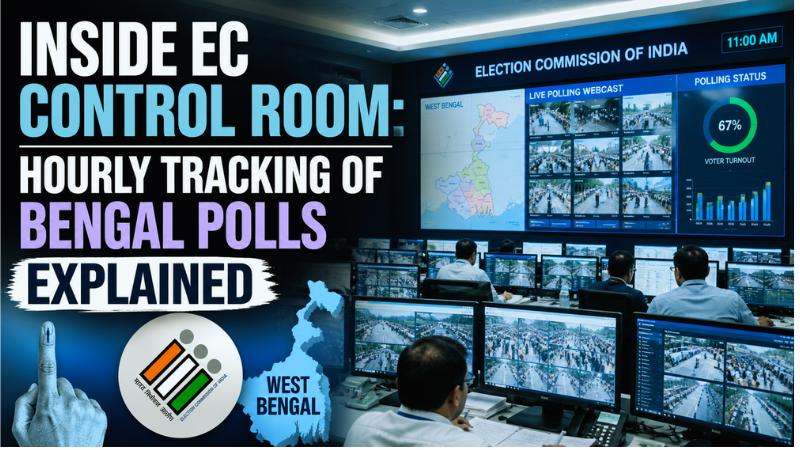
The Election Commission of India set up a high-tech war room at its Delhi headquarters to closely monitor polling during the 2026 Assembly elections in West Bengal. Led by Chief Election Commissioner Gyanesh Kumar, the system enabled real-time tracking of voting activity across the state, aimed at ensuring a free and fair electoral process.
From early morning on polling days, the war room was fully operational, with live feeds from polling stations displayed on large screens. Officials continuously monitored sensitive locations, flagging any irregularities within seconds. The setup allowed authorities to oversee developments happening over 1,400 kilometres away, significantly reducing response time.
A key feature of the system was hourly reviews conducted by senior officials, including the Chief Election Commissioner. These checks analysed voter turnout patterns, verified ground reports, and triggered alerts based on live webcasts. Any suspicious activity prompted immediate communication with local authorities for swift action.
The monitoring relied heavily on 100% webcasting at polling stations, with cameras placed at entry points to ensure transparency while maintaining voter secrecy. This approach helped deter booth capturing, intimidation, and other irregularities, strengthening trust in the electoral process.
Even after polling concluded, the Commission maintained heightened vigilance, deploying central forces to preserve law and order and prevent post-poll violence. With counting day approaching, the war room is expected to remain active, ensuring strict oversight until the final results are declared.