
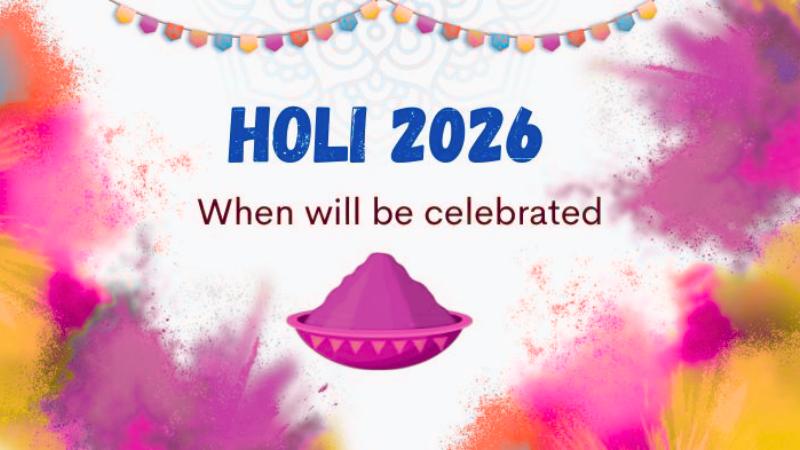
Holi, one of India’s most beloved festivals, is more than just a day of celebration. The festival, which marks the arrival of spring and celebrates the victory of good over evil, is also a time for family gatherings, vibrant street celebrations, and joyous color play. However, this year, the date of Holi has confused due to a rare astronomical event—a lunar eclipse.
In 2026, Holi is set to be celebrated on different dates across India, with some regions observing it on March 3 and others on March 4. This split in the celebrations is mainly due to the occurrence of a lunar eclipse, which is expected to have a significant impact on the timing of religious rituals related to the festival.
The Lunar Eclipse Impact
According to Drik Panchang, a well-known Hindu calendar, the total lunar eclipse will take place on the evening of March 3, 2026. The eclipse will trigger the ‘sutak’ period, during which auspicious religious activities are avoided. Holika Dahan, the traditional bonfire lighting that precedes the festival of colors, must be performed after sunset and during a time when neither the ‘bhadra’ nor the ‘sutak’ period is active. This has led to a split in the celebration dates for Holi.
Date Confusion: March 3 or March 4?
- States Celebrating Holi on March 3:
- Maharashtra (including Mumbai, Pune, and Pimpri)
- Gujarat (including Ahmedabad, Surat, and Rajkot)
- Rajasthan (in Jaisalmer)
- Karnataka (in Mangalore)
- States Celebrating Holi on March 4:
- Uttar Pradesh and New Delhi
- Rajasthan (in Jaipur and Kota)
- Maharashtra (in Nagpur)
- Karnataka (in Bengaluru and Mysore)
- Telangana, Tamil Nadu, Andhra Pradesh, West Bengal, and Odisha
The lunar eclipse has prompted several states to shift the date for Holika Dahan. While the Purnima tithi (full moon night) runs from March 3 into March 4, the eclipse on March 3 makes it unsuitable for Holika Dahan in many regions, pushing the celebrations to March 4 in some states.
Why Does the Lunar Eclipse Matter?
The lunar eclipse is a significant event in the Hindu calendar, influencing the timing of rituals. The 'sutak' period that accompanies the eclipse is considered an inauspicious time for any religious rituals, making it difficult for many regions to celebrate Holika Dahan on March 3. As a result, some states are moving the festival celebrations to the following day, March 4.
Spirit of Holi Remains Unchanged
Despite the differing dates, the essence of Holi—the vibrant celebration of colors and the joyous welcoming of spring—remains the same. Whether celebrated on March 3 or March 4, Holi will continue to symbolize the triumph of good over evil, the joy of the changing seasons, and the spirit of unity across India.