
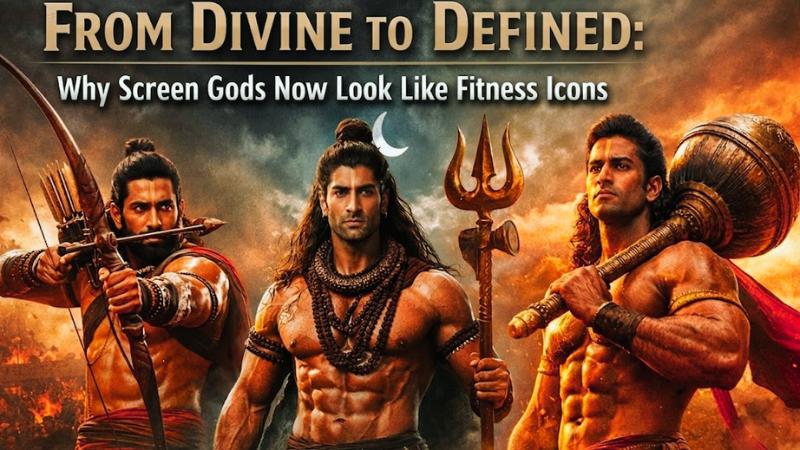
Recent portrayals of mythological characters in Indian cinema and television—including adaptations of the Ramayana and films like Adipurush—have sparked debate over how gods are visually represented on screen. Actors playing divine figures such as Lord Rama, Mahadev, and other epic characters are increasingly depicted with sharply defined, gym-built physiques. This marks a clear shift from traditional portrayals, where deities were shown with softer, more graceful forms that emphasised serenity and spiritual depth.
Changing visual language of mythology
The transformation reflects a broader cinematic trend, with mythological characters now styled through a lens influenced by global superhero imagery. High-end visual effects, stylised action, and fitness-driven aesthetics have become central to presenting these stories for modern audiences. Filmmakers are reinterpreting ancient narratives to align with contemporary tastes, blending cultural storytelling with visually striking presentation. Muscular builds and action-oriented characterisation are often used to enhance screen presence, particularly in large-scale sequences.
However, this shift has sparked mixed reactions. While some viewers appreciate the modernised, cinematic appeal, others argue it distances these revered figures from their traditional symbolism and spiritual essence. As Indian cinema continues to revisit mythological stories for new generations, the challenge lies in balancing visual innovation with the cultural and philosophical depth that defines these timeless epics.