










Celebrating Dharmendra: Family Roots, Film Achievements, and Political Journey
Few names in Indian cinema command as much respect and admiration as Dharmendra. Fondly known as the “He-Man” of Bollywood, Dharmendra’s journey from a small-town boy to one of India’s most celebrated actors is a story of perseverance, passion, and timeless charisma. Beyond the silver screen, his life reflects strong family values, national recognition,
Celebrating Dharmendra: Family Roots, Film Achievements, and Political Journey
Few names in Indian cinema command as much respect and admiration as Dharmendra. Fondly known as the “He-Man” of Bollywood, Dharmendra’s journey from a small-town boy to one of India’s most celebrated actors is a story of perseverance, passion, and timeless charisma. Beyond the silver screen, his life reflects strong family values, national recognition,

Nandamuri Tejeswini Joins Siddhartha Fine Jewellers: A Blend of Tradition and Glamour
In a move that beautifully merges heritage with modern sophistication, Nandamuri Tejeswini has been announced as the brand ambassador for Siddhartha Fine Jewellers. The collaboration brings together timeless craftsmanshi
Nandamuri Tejeswini Joins Siddhartha Fine Jewellers: A Blend of Tradition and Glamour
In a move that beautifully merges heritage with modern sophistication, Nandamuri Tejeswini has been announced as the brand ambassador for Siddhartha Fine Jewellers. The collaboration brings together timeless craftsmanshi

Bill Gates Makes Surprise Appearance in Kyunki Saas Bhi Kabhi Bahu Thi
In a moment that left television audiences both stunned and excited, global tech leader Bill Gates made a surprise appearance in the iconic Indian television serial Kyunki Saas Bhi Kabhi Bahu Thi. The unexpected cameo quickly became a trending topic across social media platforms, blending the worlds of technology and Indian entertainment in a way few could have predicted. A Crossover No One Saw Coming Kyunki Saas Bhi Kabhi Bahu Thi has long been regarded as one of India’s most influential and beloved television dramas. Known for its emotional storylines, strong family themes, and unforgettable characters, the show has maintained a special place in Indian pop culture. The surprise inclusion of Bill Gates added an entirely new layer of intrigue and global attention. Viewers tuning in for their regular dose of drama were pleasantly surprised to see the Microsoft co-founder appear in a brief but impactful segment. While the appearance was short, it was carefully woven into the storyline, making it feel both natural and memorable. Why the Cameo Matters Bill Gates is widely recognized for his contributions to technology, innovation, and global philanthropy. His presence in an Indian daily soap signifies more than just a celebrity cameo. It highlights the growing influence of Indian television on a global stage and reflects the interconnected nature of entertainment and technology in today’s world. The cameo also symbolizes how Indian media platforms are expanding their reach beyond traditional audiences. With streaming services and digital platforms bringing Indian content to viewers worldwide, such crossovers are becoming increasingly possible and impactful. Social Media Buzz and Audience Reactions Within minutes of the episode airing, clips and screenshots of Bill Gates’ appearance began circulating online. Fans expressed excitement and disbelief, praising the show’s creators for pulling off such an unexpected collaboration. Hashtags related to the episode trended across multiple platforms, sparking conversations among both television enthusiasts and tech followers. Many viewers described the moment as historic, calling it one of the most surprising guest appearances in Indian television history. The combination of a global tech icon and a household Indian serial created a unique cultural moment that resonated with diverse audiences. Bridging Entertainment and Innovation The appearance also underscores the growing synergy between entertainment and technology. Television shows increasingly rely on digital engagement, online fan communities, and global streaming networks. By featuring a figure like Bill Gates, the show indirectly highlights themes of innovation, progress, and global connectivity. Indian television has evolved significantly over the years, moving from traditional broadcast formats to digital-first strategies. High-profile appearances like this one demonstrate how storytelling continues to adapt in a rapidly changing media landscape. A Memorable Television Moment While cameos by celebrities are not uncommon, appearances by internationally recognized business leaders are rare, especially in daily soap operas. Bill Gates’ guest appearance added a fresh dimension to Kyunki Saas Bhi Kabhi Bahu Thi, reminding audiences that television still has the power to surprise and create buzzworthy moments. The episode will likely be remembered as a standout chapter in the show’s history, marking a unique intersection of global influence and Indian storytelling.
Bill Gates Makes Surprise Appearance in Kyunki Saas Bhi Kabhi Bahu Thi
In a moment that left television audiences both stunned and excited, global tech leader Bill Gates made a surprise appearance in the iconic Indian television serial Kyunki Saas Bhi Kabhi Bahu Thi. The unexpected cameo quickly became a trending topic across social media platforms, blending the worlds of technology and Indian entertainment in a way few could have predicted. A Crossover No One Saw Coming Kyunki Saas Bhi Kabhi Bahu Thi has long been regarded as one of India’s most influential and beloved television dramas. Known for its emotional storylines, strong family themes, and unforgettable characters, the show has maintained a special place in Indian pop culture. The surprise inclusion of Bill Gates added an entirely new layer of intrigue and global attention. Viewers tuning in for their regular dose of drama were pleasantly surprised to see the Microsoft co-founder appear in a brief but impactful segment. While the appearance was short, it was carefully woven into the storyline, making it feel both natural and memorable. Why the Cameo Matters Bill Gates is widely recognized for his contributions to technology, innovation, and global philanthropy. His presence in an Indian daily soap signifies more than just a celebrity cameo. It highlights the growing influence of Indian television on a global stage and reflects the interconnected nature of entertainment and technology in today’s world. The cameo also symbolizes how Indian media platforms are expanding their reach beyond traditional audiences. With streaming services and digital platforms bringing Indian content to viewers worldwide, such crossovers are becoming increasingly possible and impactful. Social Media Buzz and Audience Reactions Within minutes of the episode airing, clips and screenshots of Bill Gates’ appearance began circulating online. Fans expressed excitement and disbelief, praising the show’s creators for pulling off such an unexpected collaboration. Hashtags related to the episode trended across multiple platforms, sparking conversations among both television enthusiasts and tech followers. Many viewers described the moment as historic, calling it one of the most surprising guest appearances in Indian television history. The combination of a global tech icon and a household Indian serial created a unique cultural moment that resonated with diverse audiences. Bridging Entertainment and Innovation The appearance also underscores the growing synergy between entertainment and technology. Television shows increasingly rely on digital engagement, online fan communities, and global streaming networks. By featuring a figure like Bill Gates, the show indirectly highlights themes of innovation, progress, and global connectivity. Indian television has evolved significantly over the years, moving from traditional broadcast formats to digital-first strategies. High-profile appearances like this one demonstrate how storytelling continues to adapt in a rapidly changing media landscape. A Memorable Television Moment While cameos by celebrities are not uncommon, appearances by internationally recognized business leaders are rare, especially in daily soap operas. Bill Gates’ guest appearance added a fresh dimension to Kyunki Saas Bhi Kabhi Bahu Thi, reminding audiences that television still has the power to surprise and create buzzworthy moments. The episode will likely be remembered as a standout chapter in the show’s history, marking a unique intersection of global influence and Indian storytelling.
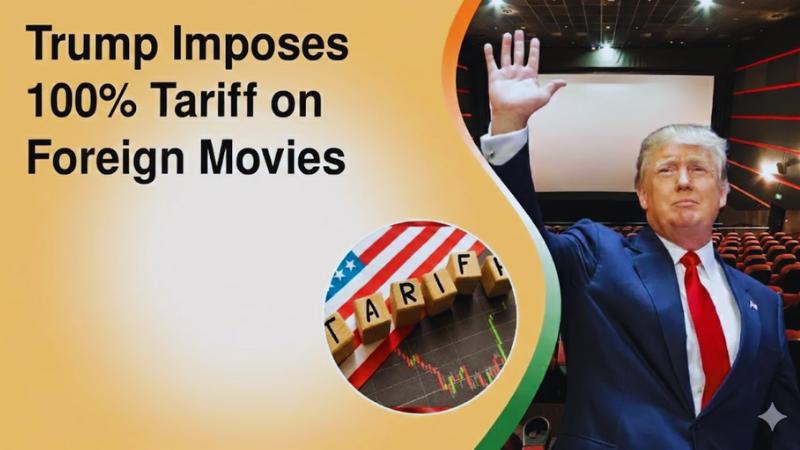
Indian Cinema Among Hardest Hit as Trump Imposes 100% Movie Tariff
The global entertainment industry is facing significant uncertainty after Donald Trump announced a 100% tariff on foreign films entering the United States. The decision, aimed at strengthening domestic production and protecting American studios from overseas competition, has created serious concerns across international film markets. Among the industries most affected is Indian cinema, which has built a strong and profitable presence in the U.S. over the past two decades. What the 100% Tariff Means for Foreign Films A 100% tariff effectively doubles the import cost of films produced outside the United States. This means that distributors bringing foreign-language or international movies into the American market would need to pay an additional amount equal to the film’s value. As a result, distribution expenses, licensing fees, and theatrical release costs would increase dramatically. Such a move is expected to discourage American exhibitors from screening foreign films unless they are guaranteed to be commercially successful. Smaller productions, independent films, and regional language movies would find it particularly difficult to sustain U.S. releases under the new financial burden. The policy is being viewed by many as a protectionist measure designed to promote American-made content while limiting foreign competition. Why Indian Cinema Is Especially Vulnerable Indian cinema has a substantial presence in the United States, largely due to the large and engaged Indian diaspora. Cities like New York, Dallas, San Francisco, Chicago, and New Jersey consistently record strong box office numbers for major Hindi, Telugu, Tamil, and Malayalam releases. In recent years, several Indian blockbusters have earned millions of dollars in North America within their opening weekends. Overseas revenue from the U.S. often contributes significantly to the total earnings of big-budget Indian films. For many productions, international collections help recover high production and marketing costs. If tariffs double the financial obligations for distributors, fewer Indian films may secure wide theatrical releases. Ticket prices could rise, reducing audience turnout and overall profitability. Regional film industries, which have recently expanded their international reach, may suffer even more. Telugu and Tamil films, for example, have gained strong overseas fan bases, but not every release guarantees a blockbuster performance. Increased financial risk may discourage distributors from acquiring rights to mid-budget or experimental projects. Impact on Production Houses and Distributors Indian production houses frequently rely on overseas distribution agreements to balance budgets and plan future projects. A steep tariff could force distributors to renegotiate contracts or demand lower acquisition costs from producers. This may ultimately reduce profit margins for filmmakers and investors. Independent distributors in the United States who specialize in screening Indian and other foreign-language films could struggle to absorb the additional expenses. Smaller theater chains catering to diaspora communities might cut back on the number of releases or limit screenings to major star-driven projects. As a result, diversity in theatrical programming may decline. Streaming platforms could also face complications if similar tariff principles extend to digital content licensing. Indian producers who depend on global streaming deals for revenue may encounter delays, renegotiations, or reduced valuations for their films. Broader Consequences for the Global Film Industry The film industry operates within a complex network of international co-productions, distribution partnerships, and cross-border investments. A unilateral tariff of this magnitude could strain cultural and trade relations between countries. Nations with strong film export industries may interpret the move as a trade barrier rather than a cultural policy. Film festivals, collaborative projects, and joint ventures between Hollywood and international studios could face uncertainty if market access becomes restricted. Producers might attempt to diversify into alternative territories such as Europe, the Middle East, Australia, and Southeast Asia, but replacing the revenue potential of the U.S. market would be challenging. Audience and Industry Response Indian audiences in the United States have long treated film releases as major cultural events. If ticket prices increase significantly due to tariff-related costs, some viewers may shift toward online streaming options or delay watching films until digital releases. This change in consumption patterns could affect theatrical revenues worldwide. Industry bodies in India are closely monitoring developments and may seek diplomatic discussions to address cultural trade concerns. Producers and trade analysts are evaluating new strategies, including a stronger focus on domestic markets, expanded regional distribution, and innovative release models to offset potential losses in North America. The introduction of a 100% movie tariff marks a turning point for international film trade, with Indian cinema positioned among the industries most exposed to financial and strategic consequences.
Indian Cinema Among Hardest Hit as Trump Imposes 100% Movie Tariff
The global entertainment industry is facing significant uncertainty after Donald Trump announced a 100% tariff on foreign films entering the United States. The decision, aimed at strengthening domestic production and protecting American studios from overseas competition, has created serious concerns across international film markets. Among the industries most affected is Indian cinema, which has built a strong and profitable presence in the U.S. over the past two decades. What the 100% Tariff Means for Foreign Films A 100% tariff effectively doubles the import cost of films produced outside the United States. This means that distributors bringing foreign-language or international movies into the American market would need to pay an additional amount equal to the film’s value. As a result, distribution expenses, licensing fees, and theatrical release costs would increase dramatically. Such a move is expected to discourage American exhibitors from screening foreign films unless they are guaranteed to be commercially successful. Smaller productions, independent films, and regional language movies would find it particularly difficult to sustain U.S. releases under the new financial burden. The policy is being viewed by many as a protectionist measure designed to promote American-made content while limiting foreign competition. Why Indian Cinema Is Especially Vulnerable Indian cinema has a substantial presence in the United States, largely due to the large and engaged Indian diaspora. Cities like New York, Dallas, San Francisco, Chicago, and New Jersey consistently record strong box office numbers for major Hindi, Telugu, Tamil, and Malayalam releases. In recent years, several Indian blockbusters have earned millions of dollars in North America within their opening weekends. Overseas revenue from the U.S. often contributes significantly to the total earnings of big-budget Indian films. For many productions, international collections help recover high production and marketing costs. If tariffs double the financial obligations for distributors, fewer Indian films may secure wide theatrical releases. Ticket prices could rise, reducing audience turnout and overall profitability. Regional film industries, which have recently expanded their international reach, may suffer even more. Telugu and Tamil films, for example, have gained strong overseas fan bases, but not every release guarantees a blockbuster performance. Increased financial risk may discourage distributors from acquiring rights to mid-budget or experimental projects. Impact on Production Houses and Distributors Indian production houses frequently rely on overseas distribution agreements to balance budgets and plan future projects. A steep tariff could force distributors to renegotiate contracts or demand lower acquisition costs from producers. This may ultimately reduce profit margins for filmmakers and investors. Independent distributors in the United States who specialize in screening Indian and other foreign-language films could struggle to absorb the additional expenses. Smaller theater chains catering to diaspora communities might cut back on the number of releases or limit screenings to major star-driven projects. As a result, diversity in theatrical programming may decline. Streaming platforms could also face complications if similar tariff principles extend to digital content licensing. Indian producers who depend on global streaming deals for revenue may encounter delays, renegotiations, or reduced valuations for their films. Broader Consequences for the Global Film Industry The film industry operates within a complex network of international co-productions, distribution partnerships, and cross-border investments. A unilateral tariff of this magnitude could strain cultural and trade relations between countries. Nations with strong film export industries may interpret the move as a trade barrier rather than a cultural policy. Film festivals, collaborative projects, and joint ventures between Hollywood and international studios could face uncertainty if market access becomes restricted. Producers might attempt to diversify into alternative territories such as Europe, the Middle East, Australia, and Southeast Asia, but replacing the revenue potential of the U.S. market would be challenging. Audience and Industry Response Indian audiences in the United States have long treated film releases as major cultural events. If ticket prices increase significantly due to tariff-related costs, some viewers may shift toward online streaming options or delay watching films until digital releases. This change in consumption patterns could affect theatrical revenues worldwide. Industry bodies in India are closely monitoring developments and may seek diplomatic discussions to address cultural trade concerns. Producers and trade analysts are evaluating new strategies, including a stronger focus on domestic markets, expanded regional distribution, and innovative release models to offset potential losses in North America. The introduction of a 100% movie tariff marks a turning point for international film trade, with Indian cinema positioned among the industries most exposed to financial and strategic consequences.
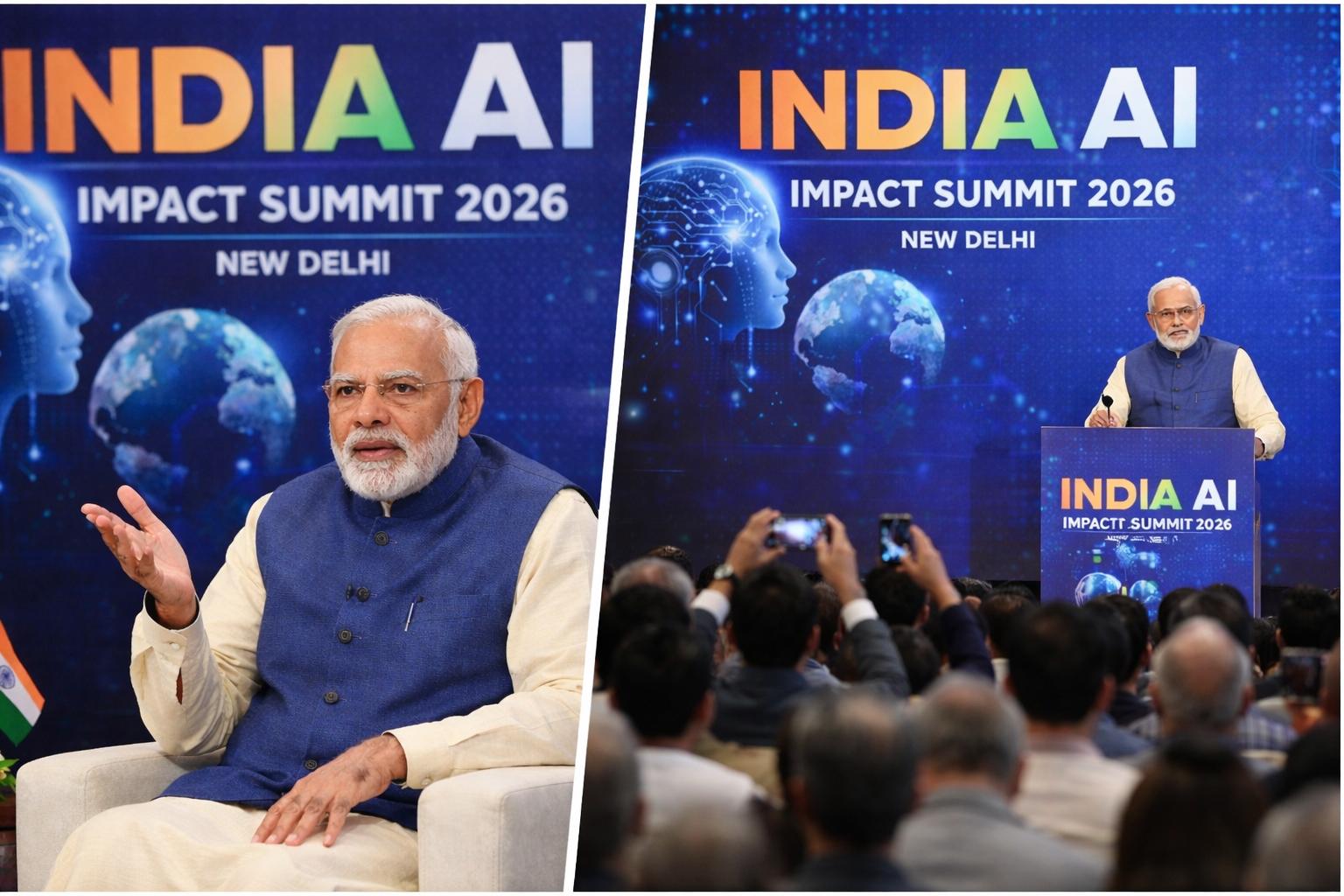
PM Modi pushes for India to become AI powerhouse at 2026 summit
Prime Minister Narendra Modi on Tuesday called for India to emerge as a global leader in artificial intelligence, stressing that the country must move beyond merely using imported technologies and instead focus on developing its own advanced AI solutions. Speaking during the ongoing India AI Impact Summit 2026 in New Delhi, Modi said the moment presents a major opportunity for India to shape the future of the global technology landscape. The high-profile summit, being hosted in the Global So
PM Modi pushes for India to become AI powerhouse at 2026 summit
Prime Minister Narendra Modi on Tuesday called for India to emerge as a global leader in artificial intelligence, stressing that the country must move beyond merely using imported technologies and instead focus on developing its own advanced AI solutions. Speaking during the ongoing India AI Impact Summit 2026 in New Delhi, Modi said the moment presents a major opportunity for India to shape the future of the global technology landscape. The high-profile summit, being hosted in the Global So
Reliance Unveils Massive 1 GW AI Infrastructure Plan in Andhra Pradesh
In a significant development for India’s digital economy, Reliance Industries has announced plans to establish a massive 1 gigawatt AI-powered data infrastructure project in Andhra Pradesh. The move signals a strong push toward strengthening India’s artificial intelligence capabilities while positioning the state as a fast-emerging technology hub. The announcement comes at a time when global demand for AI computing power, cloud services, and advanced data processing facilities is growing rapidly. With this large-scale infrastructure commitment, Reliance aims to build one of the most powerful AI-focused data ecosystems in the country. Strengthening India’s AI and Digital Ecosystem Artificial intelligence requires enormous computing capacity, energy supply, and high-speed connectivity. A 1 GW data infrastructure project represents a significant scale of operation, capable of supporting AI research, machine learning workloads, enterprise cloud services, and large-scale digital platforms. Reliance’s investment is expected to enhance India’s ability to host AI models domestically, reducing dependence on overseas data infrastructure. This move aligns with India’s broader digital transformation strategy and ambition to become a global leader in artificial intelligence and advanced technologies. Andhra Pradesh, with its expanding industrial base, coastal connectivity, and proactive policy framework, has been positioning itself as a preferred destination for technology infrastructure projects. The state’s growing appeal among global and domestic investors reflects its focus on future-ready sectors such as AI, renewable energy, and digital services. Economic and Employment Impact Large-scale AI data centers create significant economic ripple effects. Construction, power infrastructure, cooling systems, fiber connectivity, cybersecurity services, and facility management all contribute to job creation and industrial growth. The project is expected to generate direct and indirect employment opportunities across technical and non-technical sectors. In addition to employment, such infrastructure attracts startups, SaaS companies, fintech firms, and cloud-driven enterprises that rely on strong computing capabilities. The presence of hyperscale AI infrastructure can accelerate innovation ecosystems and strengthen the region’s reputation as a technology destination. Energy, Sustainability, and Future Expansion A 1 GW facility requires robust power management and sustainable energy integration. With India increasing its renewable energy capacity, integrating clean power sources into data center operations will be crucial for long-term sustainability. Reliance’s broader focus on energy transition and digital expansion suggests that sustainability considerations will likely play a role in the project’s design. The infrastructure plan also reflects a larger strategic vision. AI is rapidly transforming industries including healthcare, finance, manufacturing, logistics, and telecommunications. By investing heavily in AI computing infrastructure, Reliance is positioning itself at the center of this technological shift. Andhra Pradesh’s Rising Tech Profile With multiple large-scale technology investments flowing into the state, Andhra Pradesh is emerging as a strong contender in India’s evolving tech landscape. The addition of a 1 GW AI infrastructure project strengthens its ambition to become a leading digital and data hub. Reliance’s announcement signals confidence in the state’s potential and in India’s expanding AI market. As artificial intelligence becomes increasingly central to economic growth and innovation, infrastructure investments of this scale may redefine regional competitiveness. The coming years will determine how effectively this ambitious AI infrastructure plan translates into innovation, job creation, and technological leadership. What is clear is that Andhra Pradesh is rapidly positioning itself as a significant player in India’s digital future.
Reliance Unveils Massive 1 GW AI Infrastructure Plan in Andhra Pradesh
In a significant development for India’s digital economy, Reliance Industries has announced plans to establish a massive 1 gigawatt AI-powered data infrastructure project in Andhra Pradesh. The move signals a strong push toward strengthening India’s artificial intelligence capabilities while positioning the state as a fast-emerging technology hub. The announcement comes at a time when global demand for AI computing power, cloud services, and advanced data processing facilities is growing rapidly. With this large-scale infrastructure commitment, Reliance aims to build one of the most powerful AI-focused data ecosystems in the country. Strengthening India’s AI and Digital Ecosystem Artificial intelligence requires enormous computing capacity, energy supply, and high-speed connectivity. A 1 GW data infrastructure project represents a significant scale of operation, capable of supporting AI research, machine learning workloads, enterprise cloud services, and large-scale digital platforms. Reliance’s investment is expected to enhance India’s ability to host AI models domestically, reducing dependence on overseas data infrastructure. This move aligns with India’s broader digital transformation strategy and ambition to become a global leader in artificial intelligence and advanced technologies. Andhra Pradesh, with its expanding industrial base, coastal connectivity, and proactive policy framework, has been positioning itself as a preferred destination for technology infrastructure projects. The state’s growing appeal among global and domestic investors reflects its focus on future-ready sectors such as AI, renewable energy, and digital services. Economic and Employment Impact Large-scale AI data centers create significant economic ripple effects. Construction, power infrastructure, cooling systems, fiber connectivity, cybersecurity services, and facility management all contribute to job creation and industrial growth. The project is expected to generate direct and indirect employment opportunities across technical and non-technical sectors. In addition to employment, such infrastructure attracts startups, SaaS companies, fintech firms, and cloud-driven enterprises that rely on strong computing capabilities. The presence of hyperscale AI infrastructure can accelerate innovation ecosystems and strengthen the region’s reputation as a technology destination. Energy, Sustainability, and Future Expansion A 1 GW facility requires robust power management and sustainable energy integration. With India increasing its renewable energy capacity, integrating clean power sources into data center operations will be crucial for long-term sustainability. Reliance’s broader focus on energy transition and digital expansion suggests that sustainability considerations will likely play a role in the project’s design. The infrastructure plan also reflects a larger strategic vision. AI is rapidly transforming industries including healthcare, finance, manufacturing, logistics, and telecommunications. By investing heavily in AI computing infrastructure, Reliance is positioning itself at the center of this technological shift. Andhra Pradesh’s Rising Tech Profile With multiple large-scale technology investments flowing into the state, Andhra Pradesh is emerging as a strong contender in India’s evolving tech landscape. The addition of a 1 GW AI infrastructure project strengthens its ambition to become a leading digital and data hub. Reliance’s announcement signals confidence in the state’s potential and in India’s expanding AI market. As artificial intelligence becomes increasingly central to economic growth and innovation, infrastructure investments of this scale may redefine regional competitiveness. The coming years will determine how effectively this ambitious AI infrastructure plan translates into innovation, job creation, and technological leadership. What is clear is that Andhra Pradesh is rapidly positioning itself as a significant player in India’s digital future.
Andhra Pradesh Lands ₹82,000 Crore Renewable Energy Deal for Solar and Hydrogen
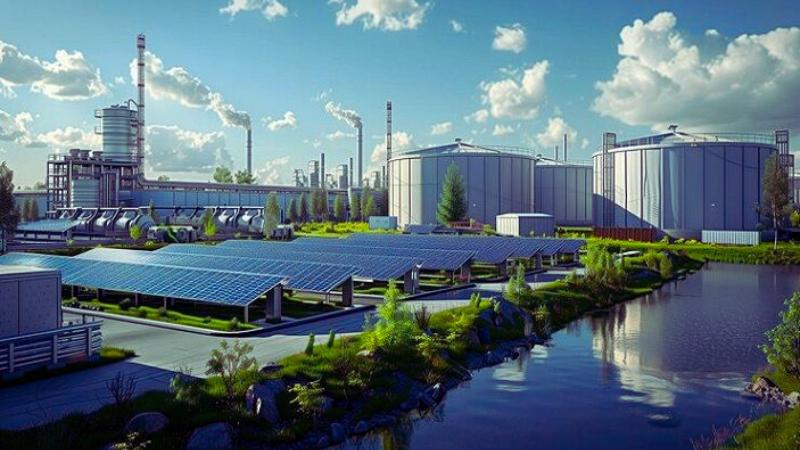
In a major boost to India’s clean energy ambitions, Andhra Pradesh has secured a massive ₹82,000 crore renewable energy investment focused on solar power and green hydrogen development. The landmark deal is expected to transform the state into a leading hub for next-generation energy infrastructure while strengthening India’s commitment to sustainable growth and carbon reduction The investment marks one of the largest renewable energy commitments in the region and reflects growing confidence in Andhra Pradesh as a strategic destination for green energy projects. Strengthening Andhra Pradesh’s Green Energy Vision Andhra Pradesh has been actively positioning itself as a renewable energy powerhouse. With abundant sunlight, vast land availability, and supportive policy frameworks, the state offers strong potential for large-scale solar and hydrogen projects. The ₹82,000 crore deal further accelerates its renewable energy roadmap by attracting long-term infrastructure development and global investor attention. The solar component of the project will significantly enhance electricity generation capacity, helping meet rising energy demand while reducing reliance on fossil fuels. At the same time, green hydrogen production is expected to play a critical role in decarbonizing industrial sectors and supporting India’s broader clean energy transition. Solar Expansion and Energy Security Solar energy remains central to India’s renewable strategy. By expanding solar capacity through this large-scale investment, Andhra Pradesh can improve grid stability, reduce carbon emissions, and strengthen energy independence. Solar projects under this agreement are expected to create large employment opportunities during construction and operations, benefiting local communities and supporting economic growth. In addition to power generation, the solar infrastructure will likely attract ancillary industries, boosting manufacturing, logistics, and technology sectors within the state. Green Hydrogen: The Future of Clean Energy Green hydrogen is emerging as a transformative energy solution worldwide. Produced using renewable electricity, green hydrogen offers a clean alternative for industries such as steel, transportation, and heavy manufacturing. Andhra Pradesh’s focus on hydrogen production aligns with India’s national mission to become a global leader in green hydrogen exports. The ₹82,000 crore investment positions the state to participate in the rapidly growing global hydrogen economy. By integrating solar energy with hydrogen production, Andhra Pradesh can create a sustainable energy ecosystem that reduces emissions and enhances industrial competitiveness. Economic Impact and Job Creation Large renewable energy projects generate widespread economic benefits. Beyond direct employment in plant construction and operations, supporting industries such as equipment manufacturing, engineering services, transportation, and maintenance are expected to see growth. The deal also strengthens investor confidence in Andhra Pradesh’s infrastructure and governance capabilities. A successful rollout could attract further domestic and international investments in renewable energy, positioning the state as a long-term clean energy investment destination. Supporting India’s Net Zero Goals India has set ambitious renewable energy and carbon neutrality targets for the coming decades. Projects of this scale contribute directly to national goals by increasing renewable capacity and accelerating the adoption of green technologies. The ₹82,000 crore renewable energy initiative reflects a broader shift in India’s economic strategy toward sustainability, innovation, and climate responsibility. By investing heavily in solar and hydrogen infrastructure, Andhra Pradesh is aligning itself with the global transition to clean energy. As renewable energy investments continue to grow, Andhra Pradesh’s latest achievement signals a turning point in the state’s energy landscape. The success of this ambitious project could redefine its role in India’s clean energy future and strengthen its position as a leading renewable energy hub.
Andhra Pradesh Lands ₹82,000 Crore Renewable Energy Deal for Solar and Hydrogen
In a major boost to India’s clean energy ambitions, Andhra Pradesh has secured a massive ₹82,000 crore renewable energy investment focused on solar power and green hydrogen development. The landmark deal is expected to transform the state into a leading hub for next-generation energy infrastructure while strengthening India’s commitment to sustainable growth and carbon reduction The investment marks one of the largest renewable energy commitments in the region and reflects growing confidence in Andhra Pradesh as a strategic destination for green energy projects. Strengthening Andhra Pradesh’s Green Energy Vision Andhra Pradesh has been actively positioning itself as a renewable energy powerhouse. With abundant sunlight, vast land availability, and supportive policy frameworks, the state offers strong potential for large-scale solar and hydrogen projects. The ₹82,000 crore deal further accelerates its renewable energy roadmap by attracting long-term infrastructure development and global investor attention. The solar component of the project will significantly enhance electricity generation capacity, helping meet rising energy demand while reducing reliance on fossil fuels. At the same time, green hydrogen production is expected to play a critical role in decarbonizing industrial sectors and supporting India’s broader clean energy transition. Solar Expansion and Energy Security Solar energy remains central to India’s renewable strategy. By expanding solar capacity through this large-scale investment, Andhra Pradesh can improve grid stability, reduce carbon emissions, and strengthen energy independence. Solar projects under this agreement are expected to create large employment opportunities during construction and operations, benefiting local communities and supporting economic growth. In addition to power generation, the solar infrastructure will likely attract ancillary industries, boosting manufacturing, logistics, and technology sectors within the state. Green Hydrogen: The Future of Clean Energy Green hydrogen is emerging as a transformative energy solution worldwide. Produced using renewable electricity, green hydrogen offers a clean alternative for industries such as steel, transportation, and heavy manufacturing. Andhra Pradesh’s focus on hydrogen production aligns with India’s national mission to become a global leader in green hydrogen exports. The ₹82,000 crore investment positions the state to participate in the rapidly growing global hydrogen economy. By integrating solar energy with hydrogen production, Andhra Pradesh can create a sustainable energy ecosystem that reduces emissions and enhances industrial competitiveness. Economic Impact and Job Creation Large renewable energy projects generate widespread economic benefits. Beyond direct employment in plant construction and operations, supporting industries such as equipment manufacturing, engineering services, transportation, and maintenance are expected to see growth. The deal also strengthens investor confidence in Andhra Pradesh’s infrastructure and governance capabilities. A successful rollout could attract further domestic and international investments in renewable energy, positioning the state as a long-term clean energy investment destination. Supporting India’s Net Zero Goals India has set ambitious renewable energy and carbon neutrality targets for the coming decades. Projects of this scale contribute directly to national goals by increasing renewable capacity and accelerating the adoption of green technologies. The ₹82,000 crore renewable energy initiative reflects a broader shift in India’s economic strategy toward sustainability, innovation, and climate responsibility. By investing heavily in solar and hydrogen infrastructure, Andhra Pradesh is aligning itself with the global transition to clean energy. As renewable energy investments continue to grow, Andhra Pradesh’s latest achievement signals a turning point in the state’s energy landscape. The success of this ambitious project could redefine its role in India’s clean energy future and strengthen its position as a leading renewable energy hub.
Double Glory in London: Bhuvaneshwari Naidu Receives Two Major Honours
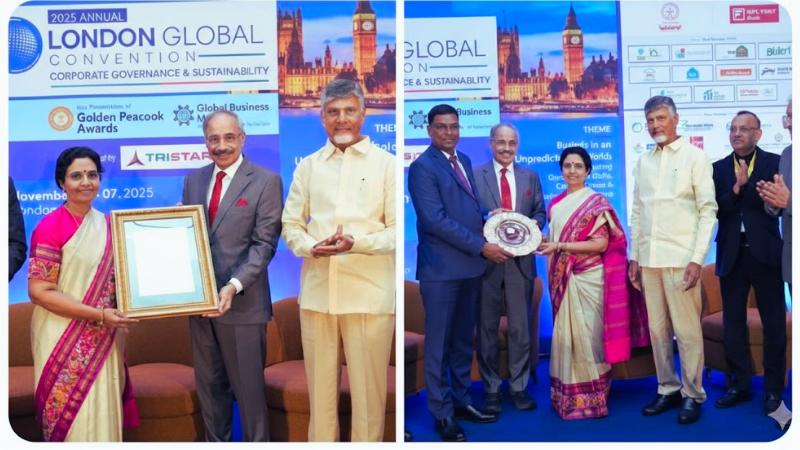
In a proud moment of international recognition, Bhuvaneshwari Naidu has been honoured with two major awards in London, marking a significant milestone in her professional journey. The prestigious accolades celebrate her outstanding contributions and leadership, placing her firmly on the global stage. The twin honours not only reflect personal excellence but also highlight the growing global recognition of Indian achievers across various fields.
Double Glory in London: Bhuvaneshwari Naidu Receives Two Major Honours
In a proud moment of international recognition, Bhuvaneshwari Naidu has been honoured with two major awards in London, marking a significant milestone in her professional journey. The prestigious accolades celebrate her outstanding contributions and leadership, placing her firmly on the global stage. The twin honours not only reflect personal excellence but also highlight the growing global recognition of Indian achievers across various fields.

PM Modi to visit Israel on February 25–26 to strengthen India ties
Prime Minister Narendra Modi is set to undertake a two-day visit to Israel from February 25 to 26, in what is expected to be another significant step in strengthening India’s strategic engagement with the West Asian nation. According to official sources, the final programme is being worked out, with the visit likely to feature high-level discussions focused on expanding cooperation in key sectors. Modi is also expected to address the Israeli parliament, the Knesset, during the trip.
PM Modi to visit Israel on February 25–26 to strengthen India ties
Prime Minister Narendra Modi is set to undertake a two-day visit to Israel from February 25 to 26, in what is expected to be another significant step in strengthening India’s strategic engagement with the West Asian nation. According to official sources, the final programme is being worked out, with the visit likely to feature high-level discussions focused on expanding cooperation in key sectors. Modi is also expected to address the Israeli parliament, the Knesset, during the trip.

Property Shift: Why Middle-Class Indians Are Choosing Dubai for Investment
In recent years, there has been a notable shift in property investment trends among middle-class Indians. While traditionally, Indian investors preferred putting their money into real estate within the country, a growing number are now eyeing Dubai as their go-to destination for property investment. This shift is driven by a combination of factors, ranging from economic conditions to the appeal of Dubai’s thriving real estate market. But what exactly makes Dubai so attractive for middle-cla
Property Shift: Why Middle-Class Indians Are Choosing Dubai for Investment
In recent years, there has been a notable shift in property investment trends among middle-class Indians. While traditionally, Indian investors preferred putting their money into real estate within the country, a growing number are now eyeing Dubai as their go-to destination for property investment. This shift is driven by a combination of factors, ranging from economic conditions to the appeal of Dubai’s thriving real estate market. But what exactly makes Dubai so attractive for middle-cla

Family Offices: The Go-To Solution for India’s Ultra-Rich Wealth Management Needs
In recent years, family offices have become increasingly popular among India’s ultra-wealthy. These private wealth management firms are now the go-to solution for managing the intricate financial needs of high-net-worth families, offering a wide array of services that extend beyond traditional investment advice. For India’s elite, family offices offer bespoke solutions to preserve wealth, navigate complex tax laws, and plan for future generations. But what exactly are family offices, and
Family Offices: The Go-To Solution for India’s Ultra-Rich Wealth Management Needs
In recent years, family offices have become increasingly popular among India’s ultra-wealthy. These private wealth management firms are now the go-to solution for managing the intricate financial needs of high-net-worth families, offering a wide array of services that extend beyond traditional investment advice. For India’s elite, family offices offer bespoke solutions to preserve wealth, navigate complex tax laws, and plan for future generations. But what exactly are family offices, and

How Indian Designers Use AI to Create Global Fashion Trends
Fashion is an ever-evolving industry, and designers are continually seeking new ways to stay ahead of the curve. In recent years, Indian designers have embraced Artificial Intelligence (AI) to redefine fashion by integrating innovative technologies into their creative process. AI is helping them create cutting-edge designs, predict trends, and improve customer experience. Here's a look at how Indian designers are using AI to create global fashion trends.
How Indian Designers Use AI to Create Global Fashion Trends
Fashion is an ever-evolving industry, and designers are continually seeking new ways to stay ahead of the curve. In recent years, Indian designers have embraced Artificial Intelligence (AI) to redefine fashion by integrating innovative technologies into their creative process. AI is helping them create cutting-edge designs, predict trends, and improve customer experience. Here's a look at how Indian designers are using AI to create global fashion trends.

India’s Surprising Reproductive Shift Due to GLP-1 Weight Loss Drugs
India is witnessing an unexpected reproductive shift as GLP-1 weight loss drugs such as Mounjaro, Wegovy, and Ozempic gain popularity across the country. Doctors in major cities are reporting a rise in unexpected pregnancies among women who had previously struggled with infertility. These surprise pregnancies, often referred to as "Ozempic babies" globally, are now being observed in India, just months after GLP-1 injectables entered the market. Originally designed for managing type 2 diabetes
India’s Surprising Reproductive Shift Due to GLP-1 Weight Loss Drugs
India is witnessing an unexpected reproductive shift as GLP-1 weight loss drugs such as Mounjaro, Wegovy, and Ozempic gain popularity across the country. Doctors in major cities are reporting a rise in unexpected pregnancies among women who had previously struggled with infertility. These surprise pregnancies, often referred to as "Ozempic babies" globally, are now being observed in India, just months after GLP-1 injectables entered the market. Originally designed for managing type 2 diabetes
AI Induced Anxiety Among Indian Students Studying Abroad
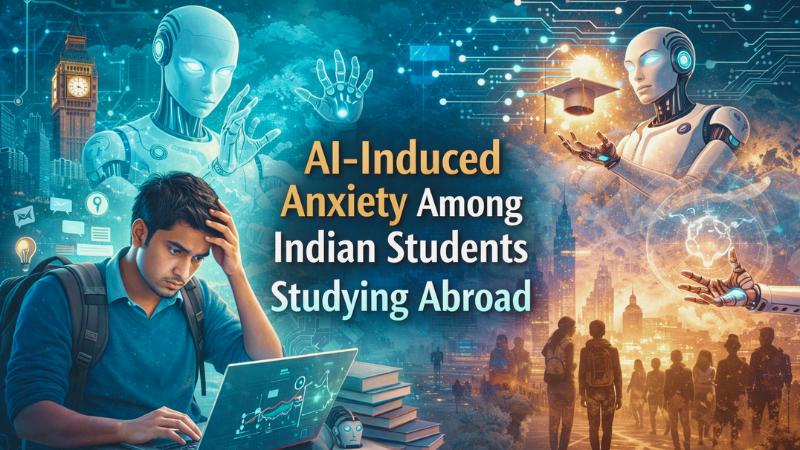
As artificial intelligence (AI) continues to reshape industries and societies worldwide, it’s also creating new challenges for individuals, particularly students. For Indian students studying abroad, the rise of AI technologies has introduced not just exciting opportunities, but also significant sources of stress and anxiety. Whether it’s the pressure of keeping up with rapidly changing technology, the fear of AI replacing human jobs, or the uncertainty surrounding AI’s role in educatio
AI Induced Anxiety Among Indian Students Studying Abroad
As artificial intelligence (AI) continues to reshape industries and societies worldwide, it’s also creating new challenges for individuals, particularly students. For Indian students studying abroad, the rise of AI technologies has introduced not just exciting opportunities, but also significant sources of stress and anxiety. Whether it’s the pressure of keeping up with rapidly changing technology, the fear of AI replacing human jobs, or the uncertainty surrounding AI’s role in educatio
Are Indian Businesses Falling Behind in the AI Race
As the world rapidly advances into the age of artificial intelligence (AI), countries and businesses around the globe are exploring ways to leverage this transformative technology to gain a competitive edge. From healthcare and finance to retail and manufacturing, AI is proving to be a game-changer in virtually every sector. However, as India emerges as a global leader in technology and innovation, there is a pressing question that needs to be addressed: Are Indian businesses falling
Are Indian Businesses Falling Behind in the AI Race
As the world rapidly advances into the age of artificial intelligence (AI), countries and businesses around the globe are exploring ways to leverage this transformative technology to gain a competitive edge. From healthcare and finance to retail and manufacturing, AI is proving to be a game-changer in virtually every sector. However, as India emerges as a global leader in technology and innovation, there is a pressing question that needs to be addressed: Are Indian businesses falling