
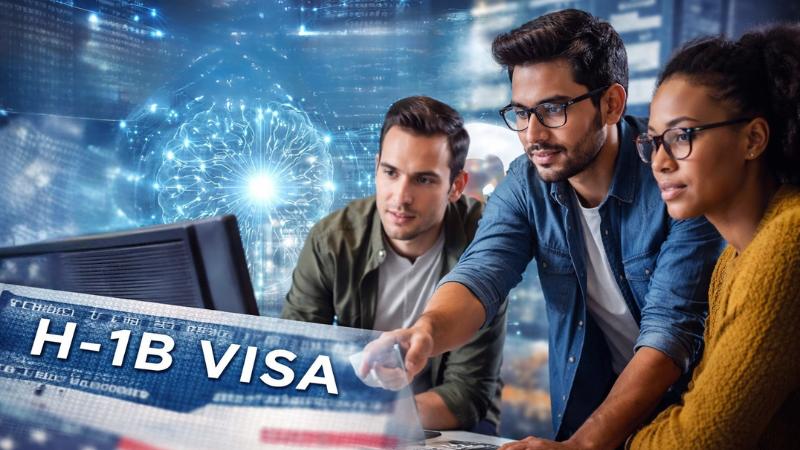
As major US technology companies accelerate their investments in artificial intelligence (AI) and digital infrastructure, they are increasingly turning to the H-1B visa program to recruit skilled foreign professionals. New data reveals that a significant portion of visa petitions filed by leading tech firms is directly tied to AI-related roles, underscoring the growing reliance on global talent to fuel innovation and maintain a competitive edge in the digital economy.
An analysis of labor condition applications shows that over 80% of H-1B petitions filed in fiscal year 2025 by companies like Amazon, Meta Platforms, Microsoft, Google, and Apple were linked to AI and advanced technology positions. This trend highlights how hiring priorities in the tech industry have shifted toward highly specialized engineering, data science, and AI-focused roles, rather than general recruitment. These positions are essential to building, training, and deploying AI systems at scale.
Software development roles dominate the H-1B filings, accounting for nearly 60% of the petitions at the top five tech employers. This is a significant increase compared to the 25% of H-1B positions filled by software developers across the broader US job market. Other key roles in high demand include computer and information research scientists, data scientists, business intelligence analysts, and IT project managers, reflecting the specialized technical expertise required for AI advancements.
Among the leading employers, Amazon recorded the highest number of approved H-1B petitions for initial employment, followed closely by Meta, Microsoft, and Google. Apple also ranked among the top sponsors of these visas. This surge in H-1B filings coincides with a period of heavy capital investments in AI tools, cloud computing, and advanced chips. Industry projections suggest that these AI-related investments will cross hundreds of billions of dollars annually, emphasizing the growing need for highly specialized talent.
The data also highlight the rising importance of international students in the US talent pipeline. A majority of graduate students in computer and information sciences—as well as a significant portion in electrical and computer engineering—come from abroad. Many of these students transition to the workforce through the H-1B visa, filling roles that tech companies find difficult to staff with domestic workers. This trend has made the H-1B visa system an essential bridge between higher education and high-tech employment.
Economists have long pointed to foreign-born professionals in science and engineering as a driving force behind productivity gains and innovation across the US economy. With AI investments fueling business growth and research output, experts argue that the H-1B visa program plays a crucial role in maintaining America’s position as a global leader in technology. However, this trend comes amid ongoing debates about immigration policies and work authorization rules, with proposed regulatory changes creating uncertainty. Employers warn that restrictions could slow recruitment efforts or push some operations overseas.
In conclusion, the growing reliance on H-1B visas for AI-related roles signals a broader shift in workforce demand and immigration dynamics in the tech industry. As companies race to develop the next generation of tools and platforms, their continued dependence on global expertise highlights the critical role of skilled foreign talent in sustaining America’s innovation ecosystem and competitiveness in an increasingly digital world.