
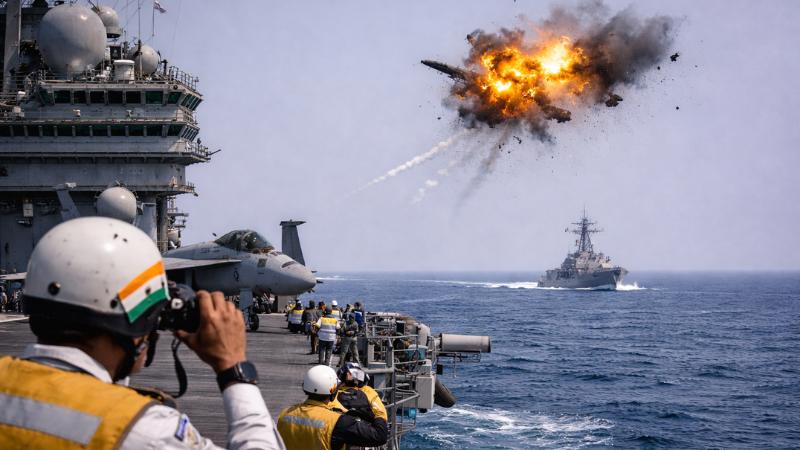
Tensions between Iran and the United States escalated sharply this week after the US military shot down an Iranian drone that it said approached the aircraft carrier USS Abraham Lincoln in an aggressive manner in the Arabian Sea. The development has drawn attention in New Delhi as well, given India’s heavy dependence on energy imports and trade routes that pass through the Persian Gulf and the Strait of Hormuz, areas now witnessing renewed military activity and diplomatic strain.
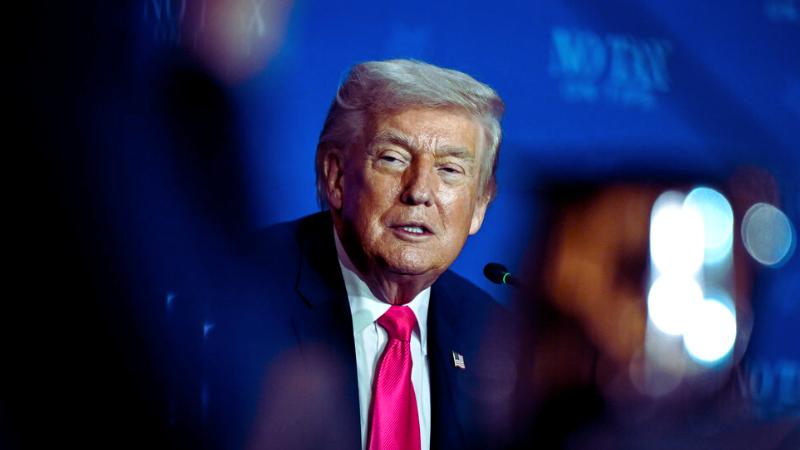
According to US officials, the drone was intercepted after it moved dangerously close to the carrier strike group operating in international waters. The Pentagon described the action as a defensive measure to protect personnel and assets at sea. The incident came days after President Donald Trump warned that “bad things” could happen if Tehran failed to reach a nuclear agreement with Washington, adding that powerful American warships were moving closer to the region to ensure security.
Despite the escalation, diplomatic engagement has not been completely ruled out. The White House said a senior US envoy is expected to hold talks with Iranian representatives later this week, indicating that backchannel conversations are still under way. Washington has repeatedly stated that it is open to negotiations, even as it maintains a strong military posture in the Gulf.
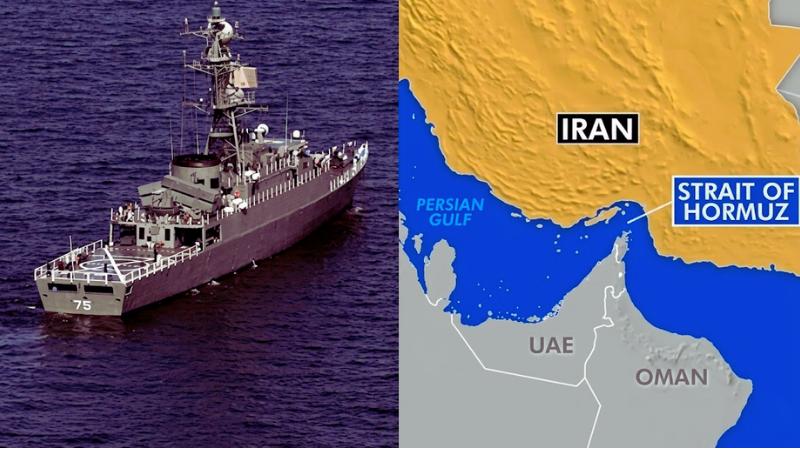
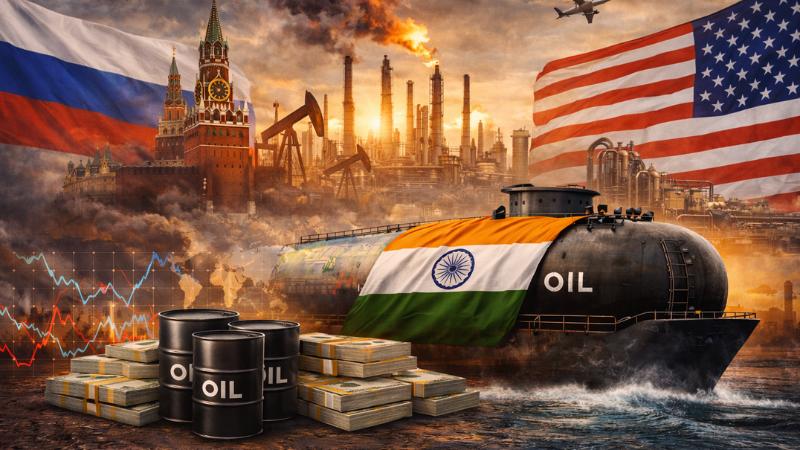
For India, the rising Iran-US tension carries significant strategic and economic implications. Nearly two-thirds of India’s crude oil imports transit through the Strait of Hormuz, one of the world’s busiest shipping lanes. Any disruption in this narrow corridor can push up global oil prices, increase freight costs, and affect domestic fuel prices and inflation. Indian policymakers are closely monitoring the situation, as instability in the Gulf directly impacts energy security and the safety of Indian vessels and expatriate workers in the region.
Iran’s Islamic Revolutionary Guard Corps confirmed the loss of the drone and said it is investigating what it termed an interruption to the aircraft’s mission. Iranian media reports suggested that the drone had managed to transmit surveillance images before contact was lost. President Masoud Pezeshkian has signalled readiness for talks but insisted that negotiations should occur in a non-threatening environment, with Oman suggested as a neutral venue.
The maritime standoff follows earlier reports that Iranian forces attempted to detain a US-flagged tanker in the Strait of Hormuz, further underlining the fragile security environment. The United States has also targeted Iranian nuclear facilities in recent years, with Washington claiming major damage to Tehran’s programme. However, Iran maintains that its nuclear activities are peaceful and continues to resist external pressure.
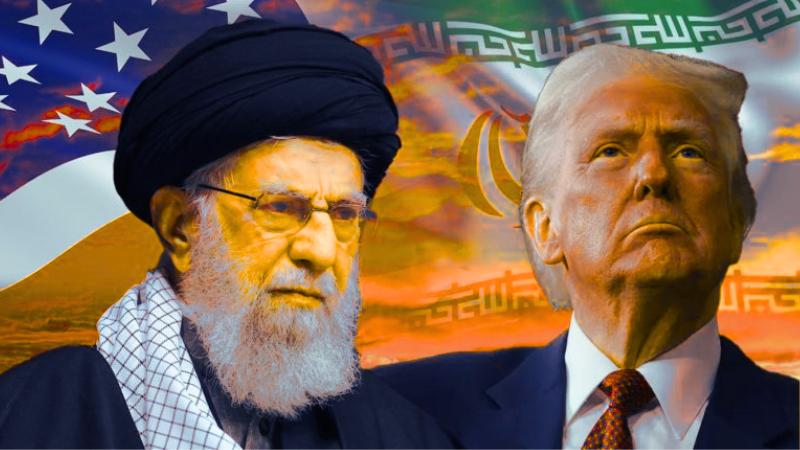
Amid these developments, Tehran has hinted at the possibility of returning to nuclear talks and reviewing proposals from regional countries to reduce tensions. Some Iranian officials have privately suggested that parts of the nuclear programme could be suspended or scaled back if sanctions are eased. At the same time, Iran’s Supreme Leader Ayatollah Ali Khamenei accused the United States and Israel of encouraging unrest within the country, linking external forces to recent protests over economic hardship.
Analysts note that the current phase reflects a familiar cycle of confrontation and negotiation between the two sides. For India, the priority remains stability in the Gulf, uninterrupted energy supplies, and safe sea lanes. As diplomatic efforts continue alongside military manoeuvres, the situation remains fluid, with regional powers and major economies watching closely to prevent a broader conflict that could ripple across global markets.