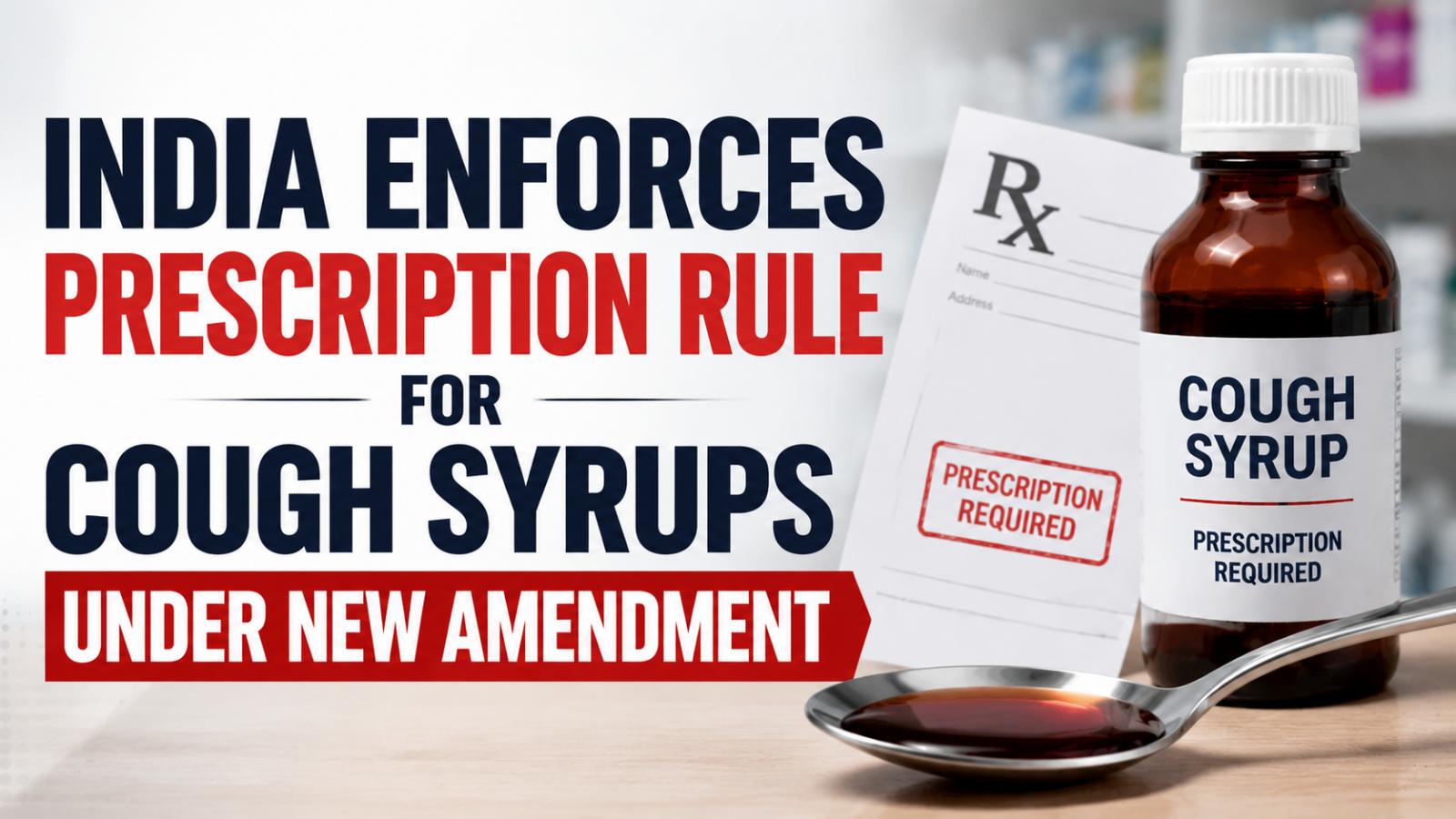
Government restricts cough syrup sales under revised drug rules
The Government of India has implemented a new regulatory update that requires a valid prescription from a registered medical practitioner for purchasing cough syrups and other syrup-based medicines. The change has been introduced through an amendment to the Drugs Rules, 1945, marking a significant shift in how over-the-counter medicines are regulated across the country.
This decision comes in the wake of serious public health concerns, including reported cases where contaminated cough syrups were linked to the deaths of children in states such as Madhya Pradesh and Rajasthan. These incidents raised concerns about drug quality monitoring, retail distribution practices, and the easy availability of liquid medicines without medical supervision.
The official notification dated June 9, 2026, modifies Schedule K of the Drugs Rules, 1945, by removing “syrups” from the list of medicines previously allowed for over-the-counter sale. The government issued the amendment under the authority of the Drugs and Cosmetics Act, 1940, which governs pharmaceutical regulation in India.
The rule change follows a structured consultation process. Draft amendments were released in December 2025 for public feedback, and after reviewing responses from stakeholders, the final notification was issued by the Ministry of Health and Family Welfare. The new rule comes into effect immediately upon publication in the Official Gazette, making it legally binding across all states and union territories.
What changes for pharmacies and patients
With this update, pharmacies are no longer permitted to sell cough syrups without verifying a valid prescription. This effectively ends routine over-the-counter availability of commonly used syrup-based medicines for cough and cold symptoms.
For patients, this means medical consultation will now be required even for mild respiratory issues where syrups were previously purchased directly from pharmacies. While the rule is intended to improve safety and prevent misuse, it may also increase dependence on healthcare access, particularly in rural and semi-urban regions.
For pharmacists, compliance requirements have become stricter. Retailers must ensure proper prescription verification before dispensing syrup-based medicines. Non-compliance may result in penalties or regulatory action under existing drug control laws.
The government’s objective behind this amendment is to strengthen patient safety, improve drug quality oversight, and reduce risks associated with uncontrolled medicine distribution. However, the overall impact will depend on enforcement effectiveness and public awareness across different regions.