Plot
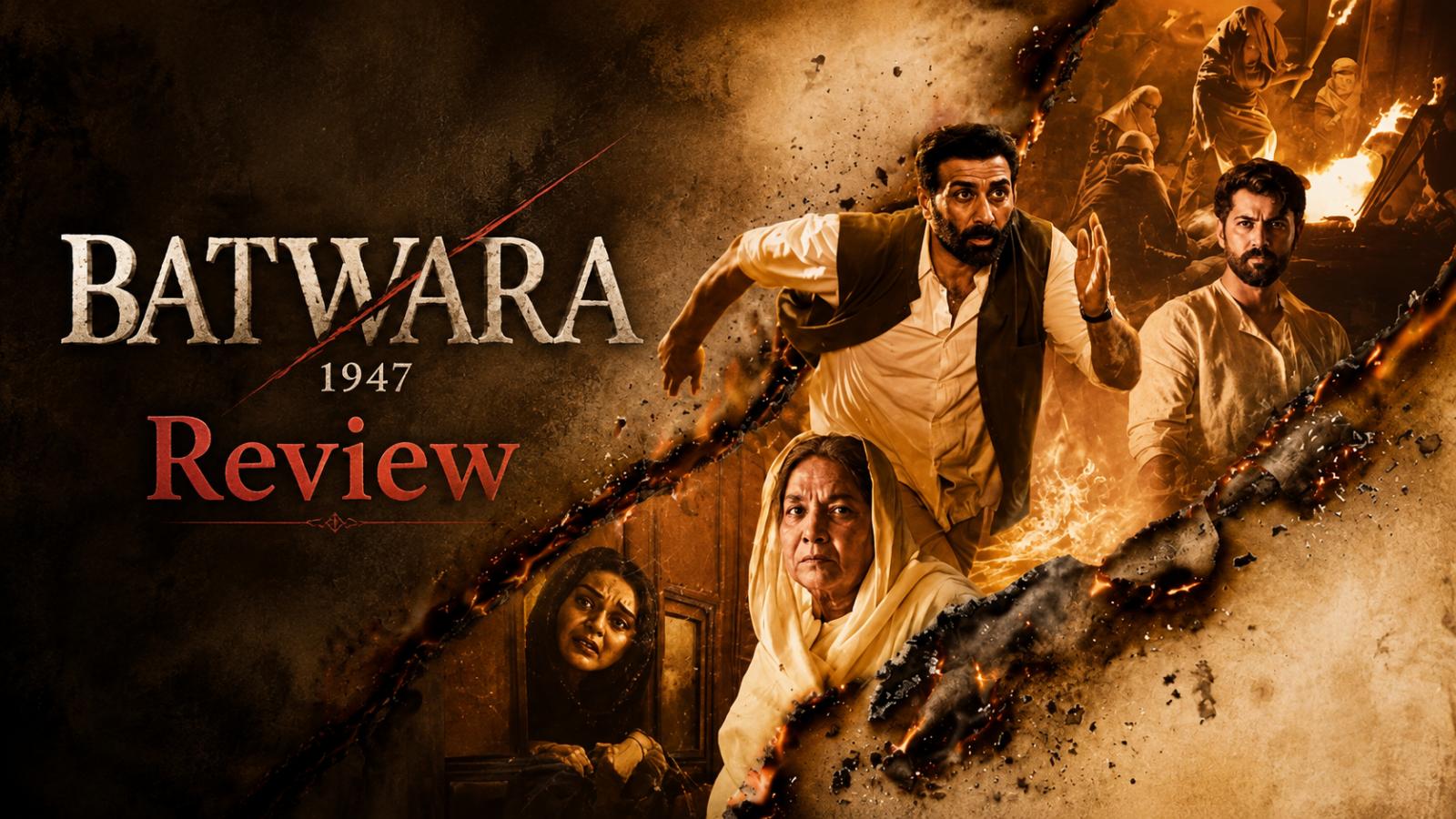
The story follows Sikandar Mirza, played by Sunny Deol, who is forced to leave India for Pakistan after Partition changes his life overnight. While trying to rebuild his family’s future in a relief camp, he struggles to secure a home and reconnect with the son left behind. His situation changes when Habib, played by Ali Fazal, helps him find a house already occupied by a Hindu woman, played by Shabana Azmi. Initially, Mirza’s family wants her to leave, but their hostility gradually turns into affection and mutual respect. As communal tension rises around them, Mirza ultimately decides to protect her and defend her right to practise her faith.
Performances
Sunny Deol carries the film with his familiar intensity and strong screen presence, especially in the confrontational and dialogue-heavy scenes. However, the supporting cast does not always match that energy. Preity Zinta’s performance feels emotionally restrained despite her character dealing with personal loss. Shabana Azmi brings dignity to her role but is not given enough emotional depth. Ali Fazal is effective as Habib, while Karan Deol shows promise but struggles to create a strong individual impact. Abhimanyu Singh’s villain feels exaggerated and more conventional than historically grounded.
Technical Aspects
The film’s biggest technical weakness is its production design. The sets often feel artificial and fail to create a convincing lived-in Partition-era atmosphere. Rajkumar Santoshi stages several scenes with dramatic intent, but the visual world lacks the texture needed for a period drama. The film’s strongest technical element lies in its dialogue-driven confrontations and thematic staging.
Music
The music and background score support the emotional tone of the story but do not leave a strong independent impression. The score works best during scenes of communal tension, family bonding and the climactic message of unity, though it does not consistently elevate the weaker dramatic portions.
Editing
The editing contributes to the film’s emotional disconnect. Key relationships, especially the bond between Mirza’s family and Shabana Azmi’s character, develop too quickly. The transition from hostility to affection feels abrupt and underexplored. More breathing space and smaller bonding moments could have made the emotional journey far more convincing.
Positives
- Strong message of communal harmony
- Powerful central metaphor of a shared home
- Sunny Deol’s commanding presence
- Relevant themes of secularism and coexistence
- Effective Diwali sequence
- Strong source material
- Meaningful dialogues
Negatives
- Weak emotional transitions
- Uneven supporting performances
- Artificial-looking sets
- Caricatured villain
- Underwritten Shabana Azmi role
- Historical world lacks authenticity
- Film often tells rather than makes viewers feel
Analysis
Batwara 1947 has an important and timely idea at its core. Adapted from Jis Lahore Nai Vekhya, O Jamya E Nai, the story argues that faith does not have to exist in opposition and that protecting another person’s religion does not weaken one’s own. The house shared by Muslims and a Hindu woman becomes the film’s strongest metaphor for coexistence.
The problem is execution. The screenplay understands what it wants to say, but the film rarely gives its relationships enough time to breathe. Emotional shifts happen too suddenly, and the performances do not consistently carry the weight of the writing. The result is a film that is intellectually clear but emotionally distant. It has strong ideas, relevant themes and a sincere message, but lacks the lived-in humanity needed to make them truly powerful.
Bottomline: Powerful Intent
Rating: 2.5/5