

- 08 May 2026
- 17 posts
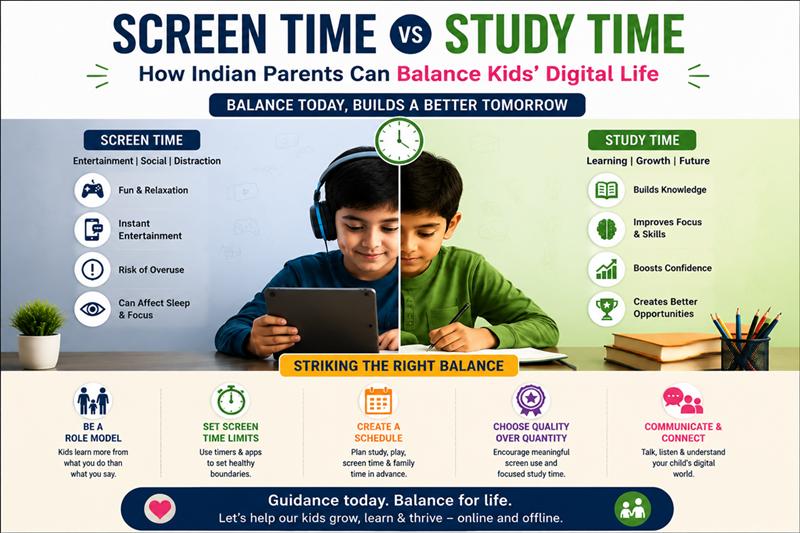
In today’s digital age, managing screen time and ensuring kids focus on their studies has become a significant challenge for Indian parents. While technology plays an essential role in education, entertainment, and communication, it can also pose risks to a child’s mental health, academic performance, and overall well-being if not monitored carefully. As the world becomes increasingly interconnected, finding a balance between screen time and study time is crucial for both parents and children.
The Growing Influence of Screen Time
Technology has become an integral part of daily life, and children are spending more time on screens than ever before. Whether it’s online classes, video games, social media, or streaming content, kids today are constantly exposed to screens. The problem arises when the amount of screen time exceeds what is considered healthy for development.
In India, where online education has surged in popularity, particularly post-pandemic, kids now spend extended hours in front of digital devices. This can sometimes blur the line between studying and using technology for leisure, making it hard for children to concentrate solely on academics.
The Importance of Balancing Screen Time and Study Time
As much as digital devices provide valuable learning opportunities, unregulated screen time can hinder academic performance and physical health. Prolonged screen use has been linked to eye strain, headaches, poor posture, and sleep disorders. Additionally, excessive screen time can negatively affect children’s social skills, creativity, and critical thinking abilities.
Parents need to realize that a child’s development isn’t just about learning facts and figures; it’s about fostering creativity, improving social skills, and developing an interest in activities beyond screens. Parents should focus on balancing screen time by encouraging outdoor activities, reading, and other hobbies that contribute to the child’s cognitive and emotional growth.
Effective Strategies to Balance Screen Time and Study Time
- Set Clear Screen Time Limits - Establishing a specific time frame for recreational screen use is one of the most effective ways to manage screen time. For instance, children can be allowed a set amount of screen time after completing their homework or other educational tasks.
- Encourage Active Screen Time - Rather than allowing passive activities like binge-watching TV shows or aimlessly scrolling through social media, parents can encourage their kids to engage in educational apps, interactive learning tools, and educational YouTube channels. This turns screen time into a more productive experience.
- Create a Study Schedule - Design a balanced daily routine that prioritizes study time while incorporating breaks for physical activities, meals, and relaxation. A study schedule helps children know when it's time for schoolwork and when it's time to unwind with their favorite digital content.
- Use Technology as a Tool for Learning - While too much screen time is detrimental, using technology as an educational tool is highly beneficial. Parents can introduce children to apps and websites that enhance learning in subjects like mathematics, science, and language.
- Monitor and Discuss Content - It’s important for parents to actively monitor the content their kids consume. Many platforms now offer parental controls that can restrict content based on age and suitability. Encourage open discussions with your child about the kind of content they watch and the potential effects of online activities.
- Encourage Other Forms of Engagement - Encourage kids to spend time on hobbies that don’t require screens, such as reading, drawing, sports, and spending time with friends and family. These activities help develop essential life skills and reduce reliance on screens for entertainment.
- Model Good Digital Habits - Children often mimic their parents’ behavior. Therefore, it is crucial for parents to set an example by managing their own screen time. Avoid excessive phone use around kids, especially during study hours or family time.
- Provide Physical Activities - Engaging in physical activities like outdoor games, sports, or exercise not only gives children a break from screens but also helps improve their focus, energy levels, and overall health.
- Reward System for Screen Time - A reward-based system can be effective. For example, children can earn additional screen time as a reward for completing homework or participating in physical activities. This creates a sense of accomplishment and accountability.
- Foster Open Communication - Maintain an open line of communication with your child about their screen use. Understanding their perspective on digital content can help parents set better boundaries and encourage a healthy relationship with technology.
Conclusion
Striking the right balance between screen time and study time is essential for the mental and physical well-being of children. By setting limits, using technology for educational purposes, and encouraging physical activities, Indian parents can help their children build a healthy relationship with digital devices while still excelling academically. Parents must act as role models and guide their kids in making wise choices about screen time, ensuring their overall development and future success.