

4 Mukhi Rudraksha Benefits, Meaning, Rules and Significance
- 07 Aug 2026
- 4mukhirudraksha, rudraksha, fourfacedrudraksha, lordbrahma, mercury, vedicastrology, spiritualbenefits, rudrakshabenefits
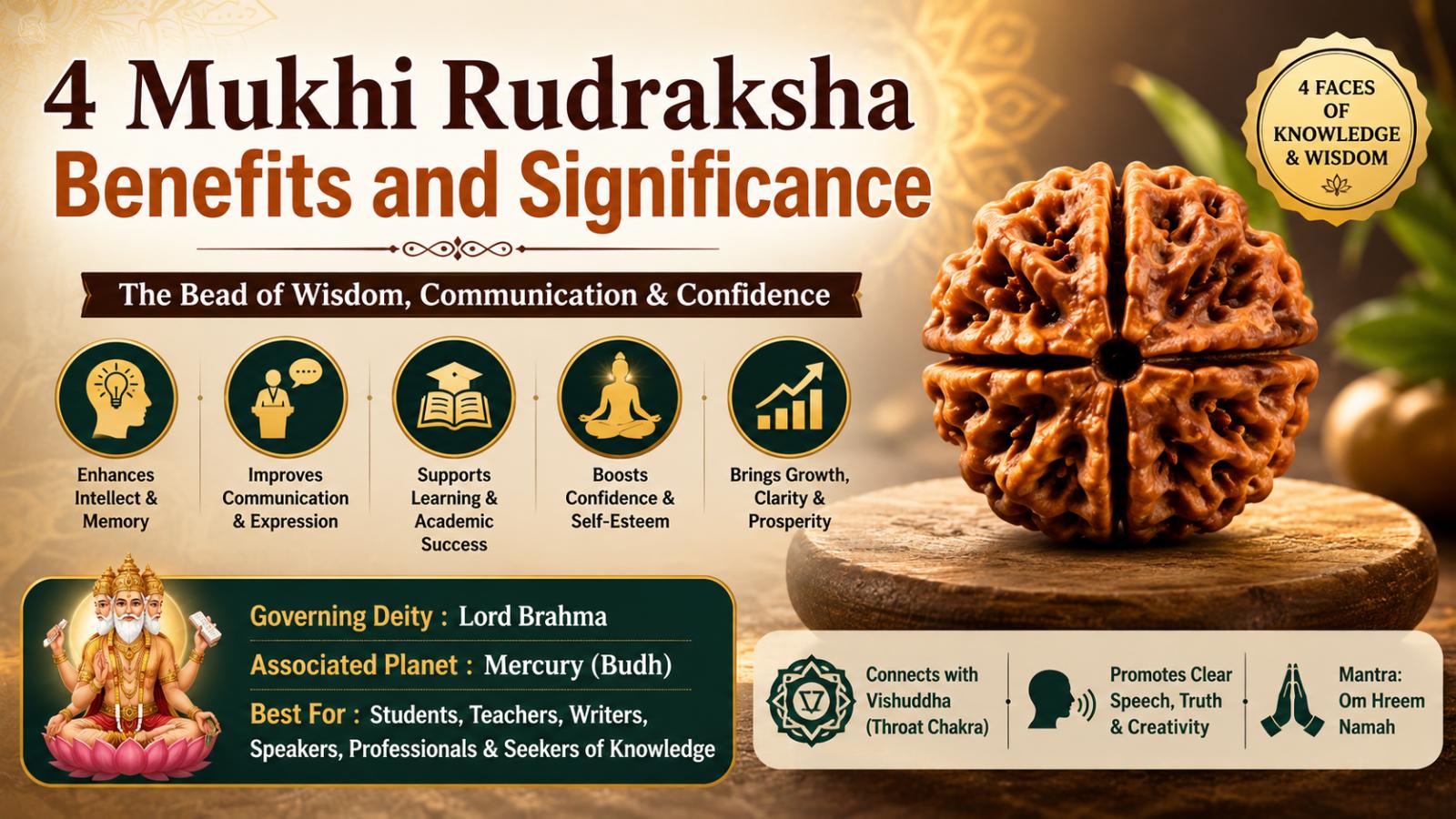
The 4 Mukhi Rudraksha, also known as the Four Faced Rudraksha, is a sacred bead with an important place in Hindu spiritual traditions and Vedic astrology. It can be identified by four natural lines, or mukhis, running vertically across its surface.
Traditionally associated with Lord Brahma, the creator and source of knowledge, the 4 Mukhi Rudraksha is regarded as a symbol of intelligence, learning, creativity, communication, and self-expression.
Spiritual Significance of 4 Mukhi Rudraksha
The 4 Mukhi Rudraksha is closely connected with Lord Brahma, who represents creation, wisdom, knowledge, and intellectual development in Hindu tradition.
Because of this association, the bead is traditionally believed to encourage clearer thinking, creativity, confidence, and the ability to communicate ideas effectively.
It is particularly popular among students, teachers, writers, speakers, researchers, and professionals whose work depends on knowledge and communication.
4 Mukhi Rudraksha Meaning and Energy
The main spiritual qualities associated with the 4 Mukhi Rudraksha are knowledge, mental clarity, communication, creativity, and learning ability.
According to traditional belief, wearing the bead may help reduce confusion and hesitation while encouraging the wearer to express thoughts with greater confidence.
It is also believed to support memory, concentration, analytical ability, and intellectual growth.
Astrological Importance of 4 Mukhi Rudraksha
In Vedic astrology, the 4 Mukhi Rudraksha is commonly associated with Mercury, or Budh Graha.
Mercury represents intelligence, communication, speech, reasoning, business skills, memory, and analytical thinking.
Traditional astrologers may recommend the bead when Mercury is considered weak or unfavourably placed in a birth chart.
A weak Mercury is traditionally associated with challenges such as:
- Difficulty expressing thoughts clearly
- Lack of confidence while speaking
- Poor concentration
- Confusion in decision-making
- Difficulty with learning or memory
- Hesitation in social or professional communication
The 4 Mukhi Rudraksha is believed to help strengthen the positive qualities traditionally associated with Mercury.
Benefits of Wearing 4 Mukhi Rudraksha
According to spiritual and astrological traditions, the 4 Mukhi Rudraksha may provide several benefits.
Improves Communication
The bead is believed to support clearer speech and better self-expression. It may be especially appealing to people involved in public speaking, teaching, writing, journalism, marketing, or communication-based careers.
Supports Memory and Learning
Students and learners traditionally wear the 4 Mukhi Rudraksha with the belief that it may improve concentration, memory retention, and understanding.
Encourages Confidence
The bead is associated with reducing hesitation and encouraging greater confidence when expressing opinions or communicating with others.
Promotes Mental Clarity
Traditional belief holds that the Rudraksha can help reduce mental confusion and encourage more logical and balanced thinking.
Encourages Creativity
Because of its connection with Lord Brahma, the bead is also associated with imagination, originality, and creative expression.
4 Mukhi Rudraksha and Throat Chakra
The 4 Mukhi Rudraksha is sometimes spiritually associated with the Vishuddha Chakra, or throat chakra, which is linked with communication, truth, and self-expression.
A balanced throat chakra is traditionally believed to support honest communication, confidence, and the ability to express ideas clearly.
These associations belong to spiritual traditions and should not be considered scientifically established medical effects.
Traditional Health Associations
Some traditional practices associate the 4 Mukhi Rudraksha with support for speech clarity, throat comfort, and respiratory balance.
However, Rudraksha beads should not be used as a substitute for medical diagnosis or treatment. Anyone experiencing health concerns should consult a qualified healthcare professional.
Who Can Wear 4 Mukhi Rudraksha?
The 4 Mukhi Rudraksha is traditionally considered suitable for:
- Students and learners
- Teachers and educators
- Writers and journalists
- Public speakers and presenters
- Researchers and academics
- Business professionals
- People seeking better concentration
- Individuals wanting greater confidence in communication
- People interested in spiritual and intellectual development
Some practitioners recommend consulting a knowledgeable astrologer before wearing a Rudraksha based on individual horoscope considerations.
How to Wear 4 Mukhi Rudraksha
Traditionally, the 4 Mukhi Rudraksha may be worn after purification and prayer.
Many practitioners prefer wearing it on Wednesday, the day traditionally associated with Mercury.
Before wearing the Rudraksha:
- Take a bath and wear clean clothes.
- Clean the Rudraksha gently with clean water.
- Sit in a peaceful place, preferably facing east or north.
- Offer prayers according to your personal spiritual tradition.
- Chant “Om Hreem Namah” or another traditionally recommended mantra 108 times.
- Wear the bead as a pendant, bracelet, or mala.
It may be threaded using silk or cotton thread or mounted in silver or gold, depending on personal preference and tradition.
How to Care for 4 Mukhi Rudraksha
To maintain the bead properly, keep it clean and avoid exposing it frequently to harsh chemicals, soaps, perfumes, or excessive moisture.
It should be handled respectfully and stored in a clean place when not being worn.
Natural Rudraksha beads may occasionally be lightly conditioned according to traditional care practices to prevent excessive drying.
Important Points Before Wearing
Rudraksha beads are sacred objects within several Hindu traditions, and practices regarding their use may differ between communities and spiritual lineages.
Buy Rudraksha only from a trusted source and check that the natural mukhi lines are clearly visible. Anyone seeking astrological benefits may also consider consulting an experienced astrologer or spiritual practitioner.
Claims regarding health, planetary influence, chakras, or spiritual benefits are based on traditional beliefs and should not be treated as scientifically proven outcomes.
Conclusion
The 4 Mukhi Rudraksha is traditionally regarded as a powerful bead for knowledge, communication, concentration, creativity, and intellectual development.
Its association with Lord Brahma and Mercury makes it particularly popular among students, teachers, writers, speakers, researchers, and professionals involved in communication-based work.
While Rudraksha holds deep spiritual significance, its benefits are best viewed as part of personal faith and traditional practice. Education, consistent effort, professional guidance, and healthy lifestyle choices remain equally important for personal and professional growth.
Horoscopes




8 Mukhi Rudraksha Meaning, Benefits and Ketu Remedies
The 8 Mukhi Rudraksha, also known as the Eight-Faced Rudraksha, is a sacred bead distinguished by eight natural vertical lines running from one end of the bead to the other. In Hindu tradition, it is associated with Lord Ganesha, the deity of wisdom, intelligence, prosperity and new beginnings. Lord Ganesha is widely known as Vighnaharta, the remover of obstacles. For this reason, the 8 Mukhi Rudraksha is traditionally believed to help devotees overcome delays, difficulties and unexpected challenges in life. In Vedic astrology, the bead is associated with Ketu and is also linked with the Muladhara, or Root Chakra, which represents stability, security and grounding. Traditional beliefs also connect the bead with the eight Vasus, divine feminine energies and the sacred river Ganga, adding to its spiritual significance. 8 Mukhi Rudraksha and Ketu Effects Ketu is considered an important shadow planet in Vedic astrology and is associated with spirituality, detachment, sudden changes and uncertainty. When Ketu is considered unfavourably placed in a birth chart, astrologers may associate it with confusion, delays or instability in different areas of life. The 8 Mukhi Rudraksha is traditionally recommended as one of the spiritual remedies for managing challenging Ketu influences. Some practitioners also suggest it for people experiencing difficulties associated with Kaal Sarp Dosha, Rahu or Saturn. However, the suitability of any Rudraksha may differ according to an individual’s horoscope, and those following astrological practices may choose to consult a qualified astrologer before wearing one. Benefits of Wearing 8 Mukhi Rudraksha According to traditional spiritual and astrological beliefs, the 8 Mukhi Rudraksha is associated with removing obstacles and improving confidence, determination and mental clarity. Devotees believe that wearing the bead may help them remain calm and focused while dealing with unexpected problems. It is also traditionally associated with wisdom, greater awareness, positive thinking, stronger willpower and emotional stability. The bead is sometimes worn by people involved in business, investments and professions that require frequent decision-making because of its traditional connection with judgment and overcoming uncertainty. These beliefs, however, should not be viewed as a guarantee of financial success. The 8 Mukhi Rudraksha is also associated with balancing the Muladhara Chakra, which spiritual traditions link with feelings of security, stability and groundedness. Some traditional sources attribute physical health benefits to Rudraksha beads. Such claims have not been established as medical treatments, and Rudraksha should not replace professional medical diagnosis or care. How to Wear 8 Mukhi Rudraksha Devotees traditionally cleanse and energize the 8 Mukhi Rudraksha through prayer or puja before wearing it. Wednesday is commonly considered an auspicious day for beginning to wear the bead. A person may bathe in the morning, wear clean clothes and sit facing east while offering prayers to Lord Ganesha. The Rudraksha may then be worn around the neck or wrist using a clean silk or wool thread. Some devotees prefer to have the bead capped in silver or gold. When purchasing an 8 Mukhi Rudraksha, buyers should check that eight natural lines are clearly visible across the bead. It is advisable to purchase from a reliable seller and avoid beads with artificially carved lines, cracks or visible modifications. The 8 Mukhi Rudraksha remains significant in Hindu spirituality because of its association with Lord Ganesha and Ketu. For devotees, it represents wisdom, stability, determination and the spiritual strength to face obstacles while moving forward with confidence.
Read More →
Childrens Room Vastu: Best Directions, Colors and Study Tips
Vastu for Children’s Room: Best Direction, Bed, Study Table and Colors A child’s room plays an important role in everyday life because it serves as a place for sleeping, studying, playing and relaxing. In traditional Vastu Shastra, the direction of the room and the placement of furniture, lighting, storage and colors are believed to influence the overall atmosphere of the space. Parents who follow Vastu principles often try to create a children’s room that feels calm, organized and comfortable. The objective is to provide an environment that may support concentration, disciplined routines, creativity and restful sleep while also meeting practical needs such as safety, ventilation and adequate lighting. Best Direction and Bed Placement for Children’s Room According to traditional Vastu guidelines, the West direction is considered suitable for a children’s bedroom. This direction is commonly associated with discipline, stability and a structured routine. The child’s bed is generally recommended in the South-West part of the room. Children are traditionally advised to sleep with their head toward the South or East. A wooden bed is usually preferred under Vastu principles, while excessive clutter around the sleeping area should be avoided. Keeping the area around the bed clean and open can also make the room feel more comfortable and organized. The bedroom entrance should ideally not directly face the child’s bed. If possible, furniture can be arranged so that the sleeping area has some privacy from the doorway. Study Table Direction and Storage Vastu Tips The study area should be comfortable, well-lit and free from unnecessary distractions. Traditional Vastu recommends positioning the study table so that the child faces North, East or North-East while studying. These directions are commonly associated with concentration, learning and clarity. Books, notebooks and stationery should be arranged neatly. A clutter-free study table can make it easier for children to maintain an organized study routine. Wardrobes, cabinets and heavier storage furniture are generally recommended toward the South-West portion of the room. Toys, books and clothes should preferably have designated storage areas instead of being scattered throughout the room. Computers and laptops may traditionally be positioned toward the North. If a television is required in the room, the South-East is commonly recommended under Vastu guidelines. Irrespective of Vastu, reducing unnecessary screen use around bedtime can help establish a calmer nighttime routine. Best Colors, Lighting and Mirror Placement Light and soothing colors are generally preferred for children’s rooms. Shades of blue and green are commonly recommended in Vastu because they are traditionally associated with freshness, calmness and positivity. Other soft pastel colors can also be used depending on the child’s age and preferences. Extremely dark or intense colors may be used sparingly if they make the room feel smaller or overstimulating. Good lighting is essential for both studying and everyday activities. The South-East is traditionally considered suitable for artificial lighting, while natural daylight should be used wherever possible. Study lamps should provide enough light without producing uncomfortable glare. Curtains and furniture can also be arranged so that daylight reaches the room during the day. Traditional Vastu advice generally recommends avoiding a mirror directly opposite the bed. If a mirror is necessary, it may be placed inside a wardrobe or away from the main sleeping area. Simple Vastu Tips for a Positive Children’s Room Parents planning a children’s room can consider a few simple Vastu recommendations: Prefer the West direction for the children’s bedroom where possible. Place the bed toward the South-West. Encourage sleeping with the head toward South or East. Prefer a wooden bed. Position the study table so the child faces North, East or North-East. Keep the study table neat and clutter-free. Place wardrobes and heavier storage toward the South-West. Choose light blue, green or other soothing shades. Maintain adequate natural and artificial lighting. Keep electronic devices organized and away from the sleeping area when possible. Avoid positioning a mirror directly opposite the bed. Along with Vastu principles, practical factors should remain a priority. A children’s room should have proper ventilation, safe furniture, sufficient storage, comfortable lighting and an age-appropriate study setup. The best room design is one that combines organization, comfort and safety while giving children enough space to study, rest and enjoy their daily activities. Note: Vastu Shastra is a traditional belief system, and its claimed effects are not scientifically established. These recommendations should be considered cultural or lifestyle guidance rather than guaranteed methods for improving a child’s behavior, academic performance or wellbeing.
Read More →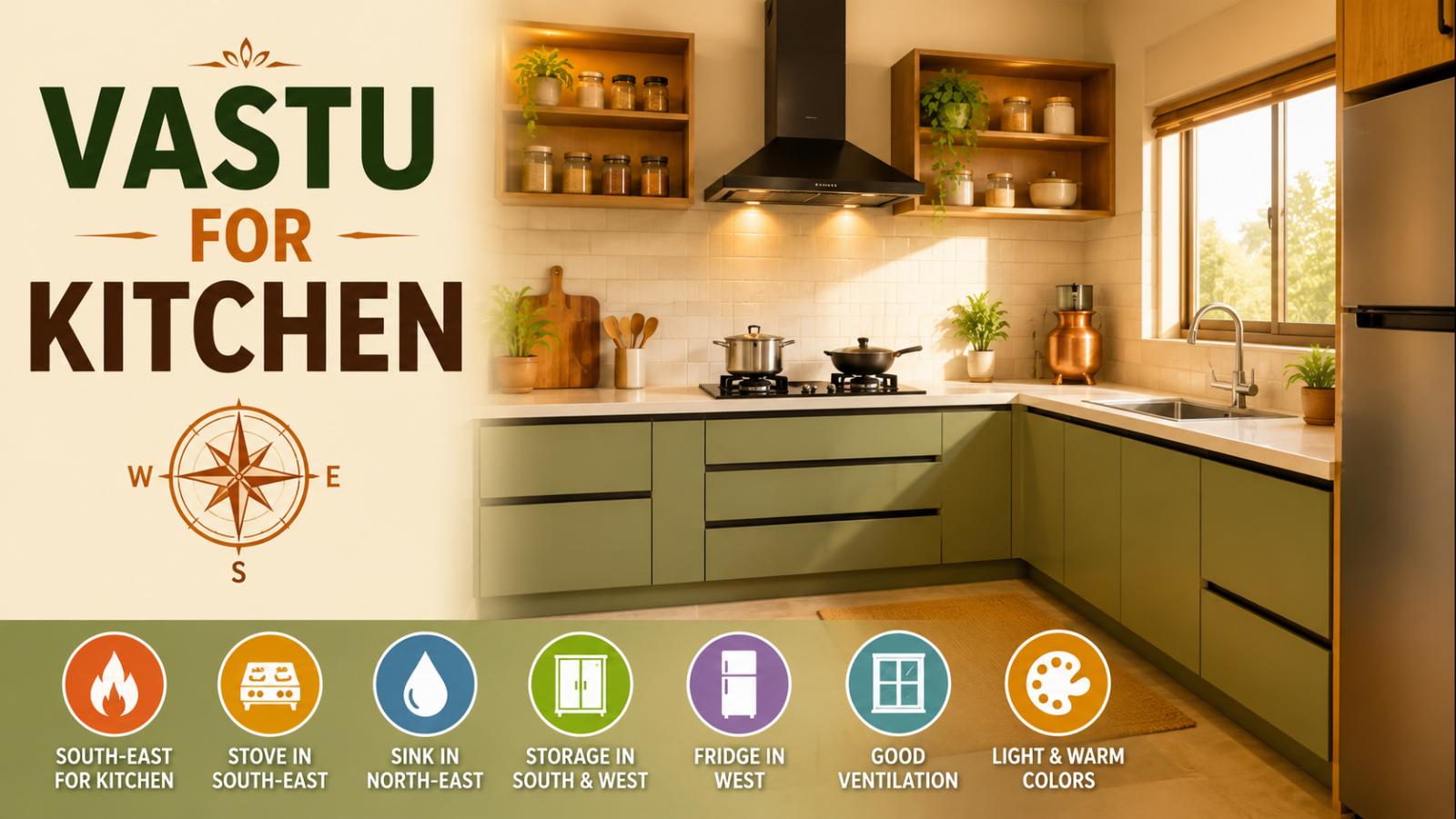
Vastu for Kitchen: Best Direction, Stove Placement & Colors
The kitchen is one of the most important spaces in a home. In Vastu Shastra, it is associated with Agni, or the fire element, which symbolizes energy, warmth and transformation. Since meals are prepared here, the kitchen is traditionally believed to play an important role in the overall balance and atmosphere of the household. A Vastu-friendly kitchen focuses on the correct direction, proper placement of the stove and sink, suitable colors, organized storage and adequate ventilation. While it may not be possible to follow every Vastu rule in modern apartments or already constructed homes, simple changes in layout and organization can still create a cleaner, brighter and more comfortable cooking space. Best Direction for Kitchen According to Vastu According to traditional Vastu principles, the south-east direction is considered the best location for a kitchen. This corner is associated with the fire element, making it a preferred area for cooking activities. The stove should ideally be placed in the south-east section of the kitchen, and the person cooking is traditionally advised to face east. If a south-east kitchen is not possible, the north-west direction is generally considered the next suitable option. Vastu guidelines commonly recommend avoiding the north-east, south-west and exact center of the home for kitchen placement. However, major structural changes may not be practical in apartments and existing homes, so smaller adjustments can be considered instead. Stove, Sink and Water Placement The stove represents the fire element and should preferably be positioned in the south-east corner. It is also advisable to avoid placing the stove directly opposite the kitchen entrance or immediately next to the sink. In Vastu Shastra, fire and water are considered opposing elements. For this reason, the sink, water purifier and drinking water storage are generally recommended in the north or north-east section of the kitchen. Whenever possible, leave some counter space between the stove and sink. Apart from traditional Vastu considerations, this creates separate cooking and washing zones and can make the kitchen easier to use. Kitchen Storage, Refrigerator and Entrance Heavy kitchen cabinets and storage units are generally recommended along the south and west walls. These areas can be used for storing grains, cookware, utensils, containers and larger appliances. The north-east portion of the kitchen should preferably remain lighter and less crowded. For refrigerator placement, the west or south-west direction is commonly preferred according to Vastu. Heavy appliances are generally avoided in the north-east whenever the kitchen layout allows. The kitchen entrance should remain clean, well-lit and free from clutter. Traditional Vastu guidelines also suggest avoiding a kitchen door that directly faces a toilet or bathroom door. Best Kitchen Colors and Ventilation Light and warm shades are usually recommended for a Vastu-friendly kitchen. Popular color options include light yellow, cream, peach, soft orange, beige, off-white and light green. Very dark shades such as black and dark grey are generally avoided because they can make the kitchen appear heavier and less spacious. Proper ventilation is equally important. Windows on the eastern side are traditionally preferred because they allow natural morning light into the kitchen. A chimney or exhaust fan should also be installed in a suitable location to remove smoke, excess heat, steam and cooking odors. Good airflow can make the kitchen more comfortable and improve the overall cooking environment. Common Kitchen Vastu Mistakes to Avoid Several common kitchen arrangements are considered unfavorable in traditional Vastu. Avoid keeping the stove and sink directly beside each other, overcrowding the north-east corner or blocking windows and ventilation. Kitchen counters should also be kept free from unnecessary clutter. Broken appliances should be repaired or removed, leaking taps should be fixed promptly, and expired or spoiled food should not be stored for long periods. Kitchen flooring should be durable, easy to clean and slip-resistant. Ceramic tiles, vitrified tiles, granite, marble and natural stone are commonly used options. What If Your Kitchen Is Not Vastu-Compliant? Not every home can be redesigned according to traditional Vastu principles, especially rented homes and apartments with fixed plumbing and electrical connections. In such situations, small practical changes can help improve the space. Portable appliances can be rearranged, lighter colors can be introduced, ventilation can be improved and unnecessary clutter can be removed. Creating some distance between cooking and water areas, organizing cabinets and keeping countertops clean can also make the kitchen more functional. Rather than making expensive structural changes, homeowners can focus on cleanliness, safety, ventilation and practical organization.
Read More →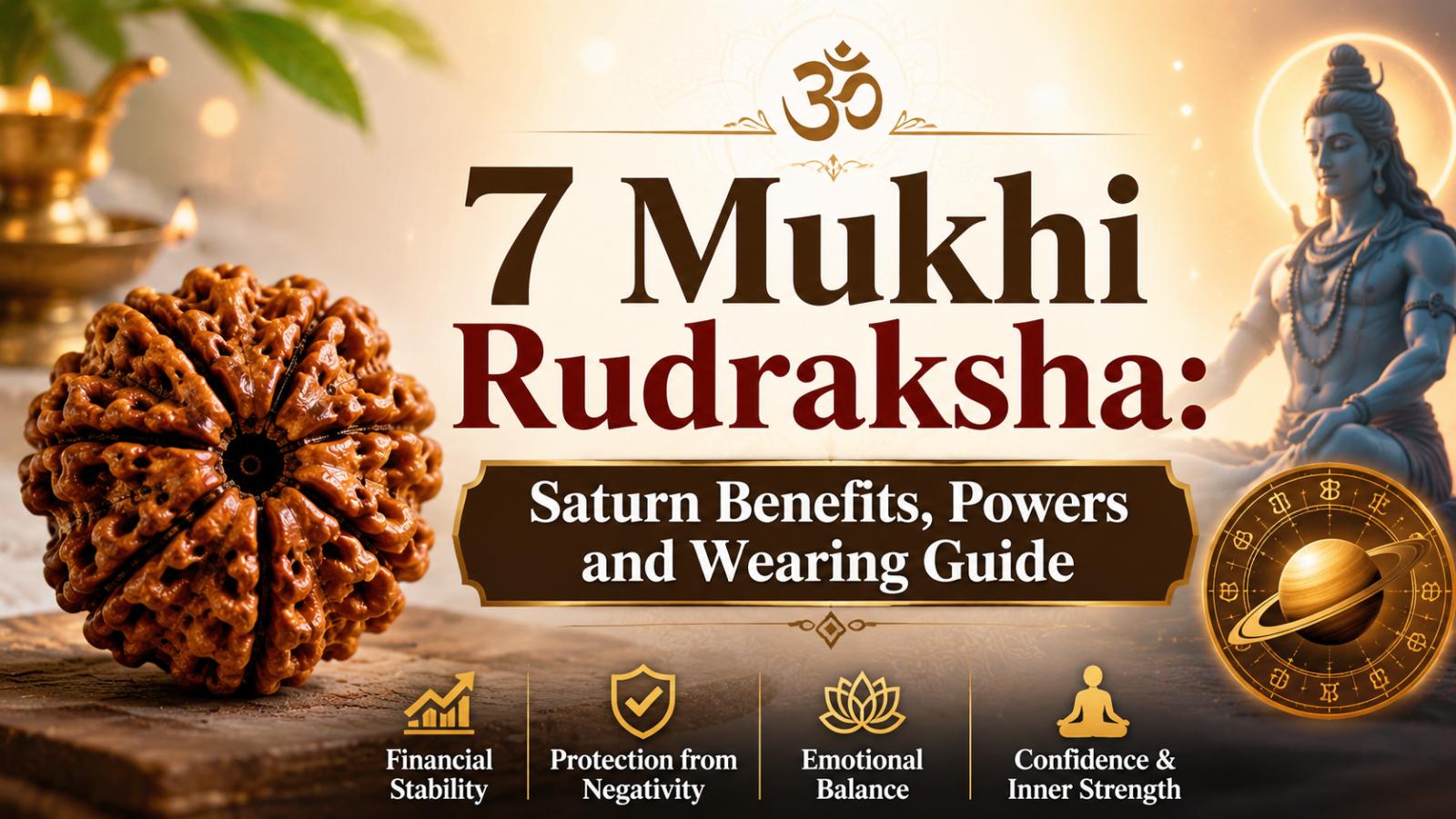
7 Mukhi Rudraksha: Saturn Benefits, Powers and Wearing Guide
The 7 Mukhi Rudraksha, also known as the Seven Faced Rudraksha, is a sacred bead marked by seven natural lines or mukhis on its surface. In Vedic tradition, it is associated with the Anang form of Lord Shiva and is also believed to carry the blessings of the Saptamatrikas, Goddess Mahalakshmi and the seven ancient sages. The bead is traditionally connected with planet Saturn (Shani), which represents discipline, karma, patience, responsibility and life lessons. Because of this association, the 7 Mukhi Rudraksha is often worn by people seeking greater stability, confidence and relief from repeated obstacles. High-quality 7 Mukhi Rudraksha beads are commonly sourced from Nepal. According to traditional belief, wearing this Rudraksha may help individuals recognise their inner strengths, improve self-confidence and move toward greater prosperity and progress. Significance of 7 Mukhi Rudraksha The 7 Mukhi Rudraksha is strongly associated with wealth, prosperity, emotional balance and karmic healing. It is traditionally believed to help people overcome delays, setbacks and periods of stagnation despite continuous effort. The bead is also connected with the Manipura Chakra, or Solar Plexus Chakra, which in yogic tradition represents courage, confidence, determination, willpower and self-esteem. For people going through challenging Saturn-related periods, including Sade Sati, the 7 Mukhi Rudraksha is sometimes recommended as a spiritual remedy to encourage patience, discipline and positivity. Benefits of Wearing 7 Mukhi Rudraksha According to traditional Rudraksha and Vedic astrology beliefs, the 7 Mukhi Rudraksha may offer the following benefits: Supports Saturn balance: Traditionally worn to reduce challenges associated with Saturn and Sade Sati. Encourages financial stability: Associated with prosperity, steady income and better financial discipline. Builds confidence: Believed to strengthen courage, self-esteem and determination. Supports career growth: Traditionally linked with professional opportunities and better decision-making. Promotes positivity: May encourage patience, hope and a constructive outlook. Improves emotional balance: Believed to support harmony and better understanding in relationships. Encourages creativity: Traditionally associated with artistic ability, intuition and self-expression. Helps overcome obstacles: Often worn by those facing repeated personal or professional setbacks. Supports inner strength: Its association with the Manipura Chakra is believed to improve willpower and confidence. Attracts prosperity: Because of its connection with Goddess Mahalakshmi, it is considered auspicious for abundance and financial well-being. Some traditional practices also associate Rudraksha beads with physical wellness. However, such claims are based on spiritual beliefs and should not replace professional medical advice or treatment. Who Can Wear 7 Mukhi Rudraksha? The 7 Mukhi Rudraksha may be considered by people experiencing financial instability, career delays, repeated obstacles or challenges traditionally associated with Saturn. It may also be suitable for business owners, professionals, students, artists and individuals seeking greater emotional balance, confidence and financial discipline. When the bead is being worn specifically as an astrological remedy, some practitioners recommend consulting a knowledgeable astrologer to determine whether it is appropriate according to the individual's birth chart. How to Wear 7 Mukhi Rudraksha Before wearing the 7 Mukhi Rudraksha, traditional practice recommends cleansing and energising the bead through prayer or mantra chanting. Best Day to Wear Saturday: Traditionally preferred when the purpose is to balance Saturn-related influences. Friday: Often chosen when the focus is prosperity, abundance and the blessings of Goddess Mahalakshmi. Metal and Thread The 7 Mukhi Rudraksha may traditionally be worn using a silk or wool thread. It can also be capped in silver or gold, depending on personal preference or astrological guidance. The bead may be worn around the neck or included as part of a Rudraksha mala. What to Do Before Wearing Follow these simple traditional steps before wearing the bead: Wake up early and take a bath. Wear clean clothes and sit in a peaceful place. Face east while performing the prayer, if possible. Clean the Rudraksha gently and place it near your place of worship. Chant “Om Mahalaxmi Namah” or “Om Hum Namah” 108 times. Wear the Rudraksha with a calm mind and positive intention. Some traditions also recommend offering flowers, incense or clean water while energising the bead. Tips to Care for 7 Mukhi Rudraksha Proper care can help preserve the Rudraksha bead for a long time. Avoid regular exposure to strong soaps, perfumes and harsh chemicals. Clean the bead gently and allow it to dry naturally. If the bead becomes very dry, a small amount of natural oil may traditionally be applied. Store it in a clean and respectful place when not in use. Avoid rough handling that could damage the natural surface. The benefits and astrological associations mentioned above are based on traditional beliefs and are intended for spiritual guidance only.
Read More →
6 Mukhi Rudraksha Benefits, Significance and How to Wear It
The 6 Mukhi Rudraksha, also known as the Six-Faced Rudraksha, is identified by six natural vertical lines or mukhis running across its surface. In Hindu spiritual traditions, this sacred bead is associated with courage, wisdom, confidence, emotional balance and disciplined thinking. The 6 Mukhi Rudraksha is traditionally connected with Lord Kartikeya, the son of Lord Shiva and Goddess Parvati. Lord Kartikeya is regarded as a fearless warrior and a symbol of strength, determination and victory over obstacles. Devotees believe that wearing this Rudraksha may help improve confidence, reduce fear and encourage a calm approach during difficult situations. Astrologically, the 6 Mukhi Rudraksha is commonly linked with Mars because of its association with Lord Kartikeya, while some traditions connect it with Venus. It is also believed to carry the blessings of Goddess Parvati, Goddess Lakshmi and Goddess Saraswati, representing strength, prosperity, knowledge and creativity. Spiritual and Astrological Significance of 6 Mukhi Rudraksha In traditional astrology, Rudraksha beads are often recommended as spiritual remedies based on a person's birth chart. A horoscope is prepared using the date, time and place of birth to study planetary positions and their perceived influence on different areas of life. The 6 Mukhi Rudraksha is traditionally recommended for people seeking greater confidence, mental stability, communication skills, creativity and harmony in relationships. It is also believed to encourage patience, practical thinking and emotional control, helping the wearer respond to challenging situations with greater clarity. These benefits are based on religious traditions and astrological beliefs and should not be considered scientifically proven outcomes. Benefits of Wearing 6 Mukhi Rudraksha According to traditional beliefs, the Six-Faced Rudraksha may offer several spiritual and personal benefits: May improve confidence, charm and self-expression. Believed to support wisdom and better decision-making. May improve concentration and mental stability. Traditionally associated with better communication and public-speaking skills. May encourage creativity and artistic abilities. Believed to reduce the negative astrological influence associated with Venus in some traditions. May increase motivation, enthusiasm and determination. Traditionally associated with stronger willpower and emotional resilience. May help the wearer manage anger, frustration and emotional stress. Believed to promote harmony and understanding in relationships. May provide courage while dealing with professional, legal or personal challenges. Encourages discipline, responsibility and balanced behaviour. Some traditional practices also associate the 6 Mukhi Rudraksha with general physical well-being. However, claims relating to diabetes, reproductive health, hormonal conditions, nerves or other medical concerns have not been scientifically established. Anyone experiencing a medical condition should consult a qualified healthcare professional and continue prescribed treatment. Who Can Wear 6 Mukhi Rudraksha? The 6 Mukhi Rudraksha may be worn by people seeking confidence, courage, concentration, creativity and emotional stability according to traditional beliefs. Students, professionals, speakers, artists and people facing demanding situations may choose to wear this bead as part of their spiritual practice. Those following astrology may also consult an experienced astrologer before wearing it to determine whether the bead is suitable for their birth chart. How to Wear 6 Mukhi Rudraksha Before wearing the Rudraksha, ensure that the bead is genuine, clean and undamaged. Many devotees prefer to purify and energise it through prayers and mantra chanting before wearing it as a pendant or bracelet. It is traditionally recommended to obtain the Rudraksha personally as a symbol of commitment to the spiritual practice. Best Day to Wear 6 Mukhi Rudraksha Tuesday is traditionally considered an auspicious day for wearing the 6 Mukhi Rudraksha because of its association with Lord Kartikeya and Mars. Devotees may wake up early, take a bath and wear clean clothes before performing the ritual. Ritual and Mantra for Wearing 6 Mukhi Rudraksha Sit in a clean and peaceful prayer area while facing east. Gently wash the Rudraksha with clean water and place it before an image or idol of Lord Shiva or Lord Kartikeya. Chant the following mantra 108 times: “Om Hreem Hoom Namah” After completing the mantra chanting, wear the Rudraksha with faith and maintain respectful conduct throughout the day. Importance of 6 Mukhi Rudraksha The 6 Mukhi Rudraksha is traditionally regarded as a sacred symbol of courage, knowledge, discipline, confidence and emotional strength. For devotees, wearing the bead can serve as a spiritual reminder to remain focused, calm and determined while facing personal and professional challenges. Its benefits remain rooted in Hindu spiritual traditions and individual belief. The Rudraksha should be used as a spiritual practice rather than as a substitute for medical, financial or professional advice.
Read More →
Office Vastu Tips for Positive Energy, Growth and Workplace Success
A well-planned office can make employees feel more comfortable, focused and motivated throughout the working day. According to traditional Vastu Shastra, the direction, seating arrangement, colors and overall layout of a workplace may also influence productivity, teamwork and business growth. Office Vastu focuses on creating a balanced and organized work environment by arranging different areas according to specific directions. Many businesses follow these principles with the belief that a Vastu-friendly office may encourage positivity, financial stability and professional success. Vastu should be treated as a traditional design guideline and used alongside practical considerations such as ergonomics, natural lighting, ventilation, workplace safety and efficient space planning. Why Is Office Vastu Important? A productive workplace depends on good organization, discipline and a comfortable atmosphere. Employees are generally able to work more efficiently when the office is clean, well-lit and thoughtfully arranged. According to Vastu beliefs, a balanced office layout may help improve communication, workflow and relationships among employees. It is also traditionally associated with business stability, financial growth and better decision-making. Proper placement of executive cabins, employee desks, reception areas and meeting spaces is believed to help maintain a positive and organized working environment. Best Direction for an Office According to Vastu North and east are generally considered favorable directions for offices in Vastu Shastra. The east is associated with the rising Sun and is traditionally linked with new beginnings, opportunities and growth. The north is associated with prosperity, career development and financial progress. However, office orientation should also take practical factors into account, including road access, natural light, ventilation and the existing building structure. Choose a Square or Rectangular Office Layout Square and rectangular office layouts are commonly preferred according to Vastu because they are believed to represent balance and stability. Highly irregular or uneven office shapes may also make furniture placement and workflow more difficult. If the workplace already has an irregular layout, partitions, furniture placement and thoughtful interior planning can help create a more structured working environment. Office Owner or Head Cabin Vastu According to traditional Vastu recommendations, the owner, director or senior decision-maker may sit in the south-west, south or western part of the office. The person can preferably face north or east while working. A solid wall behind the executive chair is generally recommended because it symbolizes stability and support. Avoid positioning the main executive seat directly opposite the entrance or with the person's back facing the office door. Best Office Colors According to Vastu Colors play an important role in creating the overall atmosphere of a workplace. Vastu generally recommends light and pleasant shades that can make the office feel calm, spacious and energetic. Popular office colors include: White Cream Light green Pale blue Soft yellow The choice of color may also depend on the direction of the room, available natural light and the overall interior design. Very dark or dull colors should be used carefully, particularly in smaller offices, as they may make the workspace appear less open. Manager Seating Direction Managers and senior employees are traditionally advised to sit in the south, south-west or western areas of the office. Their desks may be arranged so that they face north or east while working. According to Vastu beliefs, this seating direction may support concentration, leadership and decision-making. The manager's desk should also remain clean, organized and free from unnecessary clutter. Reception Area Vastu The reception is often the first part of an office that visitors, customers and clients notice. It should therefore appear professional, welcoming and well organized. According to Vastu, the north, east or north-east areas of the workplace can be suitable for the reception. The reception area should be bright and clutter-free, while the company name, logo and reception desk should remain clearly visible without obstructing the main entrance. Use Positive Artwork and Office Decor Thoughtfully selected artwork and décor can make an office feel more pleasant and inspiring. Scenic landscapes, greenery, motivational messages and artwork representing growth, achievement or teamwork can be used in workspaces and common areas. Avoid overly aggressive, disturbing or conflict-related images, especially in meeting rooms and employee work areas. Indoor plants may also add freshness and visual appeal to the office. Plants should be properly maintained and positioned so that they do not obstruct walkways or working areas. Employee Seating Arrangement Employee seating should support communication, comfort and smooth movement throughout the workplace. According to traditional Office Vastu principles, employees may face north or east while working. Sales and marketing teams are often associated with the north or north-west areas of the office. Accounts and finance departments may traditionally be placed in the north or south-east sections. However, practical requirements such as teamwork, accessibility, department coordination and workflow should remain important while planning seating arrangements. Staircase Position in Office According to Vastu Shastra, staircases are generally preferred in the south, west or south-west areas of an office building. The central part of the workplace, traditionally known as the Brahmasthan, is ideally kept open, clean and relatively light. Heavy structures such as staircases, large storage units or bulky equipment are generally avoided in the center of the office according to Vastu principles. From a practical perspective, staircase design and placement must always follow local building regulations, accessibility requirements and fire-safety standards. Avoid Sitting Directly Under Beams Traditional Vastu recommends avoiding permanent workstations directly below exposed structural beams. From an interior-design perspective, a large beam above a desk may also make the space feel visually heavy or confined. Where possible, desks can be repositioned or suitable ceiling and interior design elements can be used to create a more comfortable appearance. Employee posture, lighting, ventilation and overall comfort should remain the main priorities. Keep the Office Clean and Clutter-Free Cleanliness and organization are among the most important principles associated with Office Vastu. Broken furniture, unused equipment, unnecessary files and unwanted items should be removed regularly. Entrances, reception areas, meeting rooms and employee workstations should remain clean and organized. Good natural lighting, proper ventilation and clear pathways can also contribute to a safer, more professional and comfortable workplace. Office Vastu Tips for a Positive Workplace A Vastu-friendly office does not depend only on direction. A successful workplace should combine traditional Vastu principles with practical planning, employee comfort and modern workplace requirements. Keeping the office clean, choosing suitable seating directions, using pleasant colors, maintaining good lighting and planning departments efficiently may help create a more positive and productive environment. Ultimately, Office Vastu can be used as a supporting design approach while ergonomics, safety, accessibility and efficient business operations remain the top priorities.
Read More →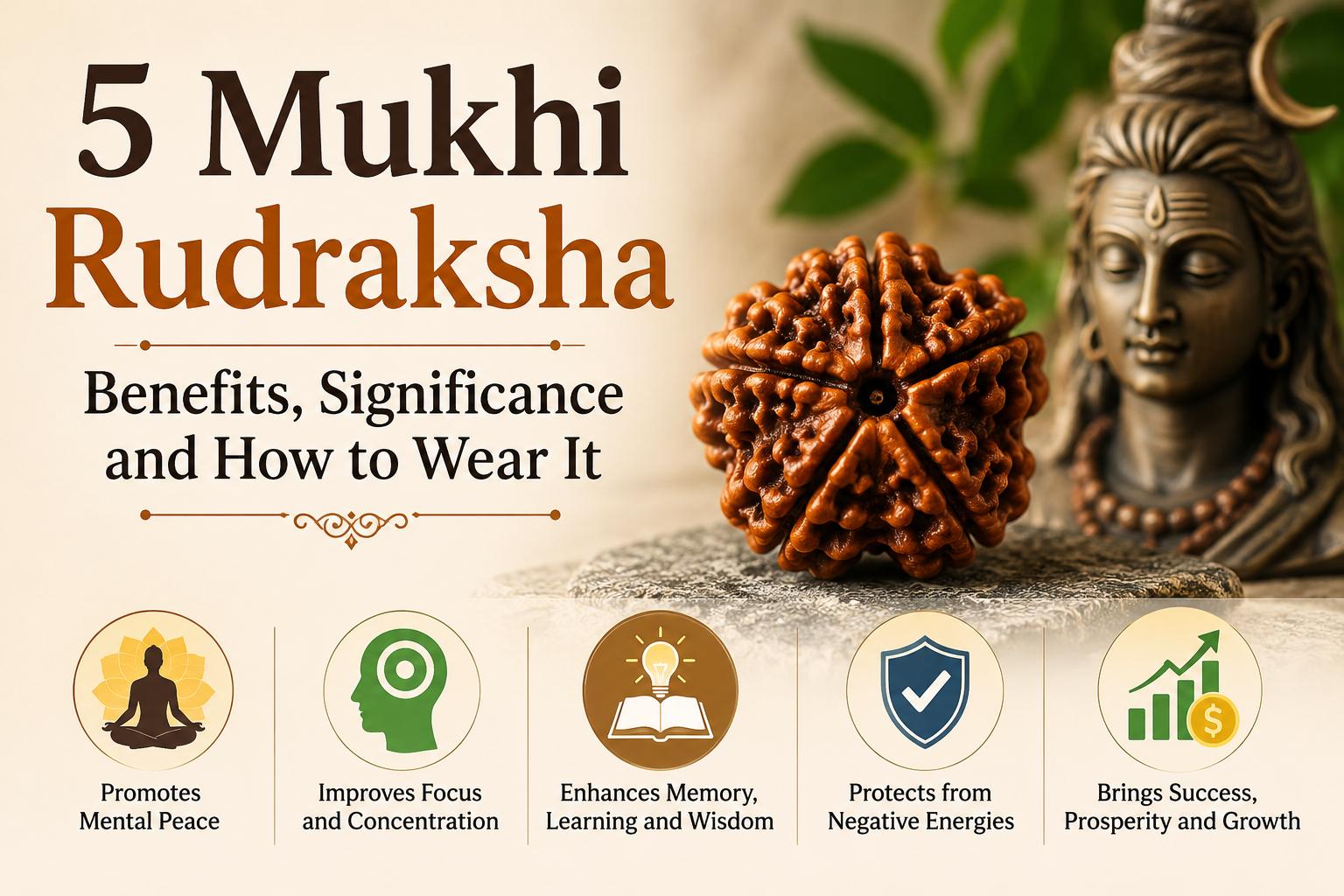
5 Mukhi Rudraksha Benefits, Significance and How to Wear It
The 5 Mukhi Rudraksha, also known as the Five-Faced Rudraksha, is one of the most commonly worn and widely available Rudraksha beads. In Hindu spiritual traditions, it is associated with peace, wisdom, protection and personal growth. The bead is traditionally connected with Lord Shiva in the form of Kaal Agni Rudra and is commonly sourced from regions such as Nepal. Devotees believe that wearing a 5 Mukhi Rudraksha may help create a sense of balance, discipline and positivity in everyday life. Astrological Significance of 5 Mukhi Rudraksha According to Vedic astrology, the 5 Mukhi Rudraksha is associated with Jupiter, or Guru, the planet traditionally linked with wisdom, knowledge, education, spirituality, prosperity and good judgment. When Jupiter is considered weak or unfavourably placed in a birth chart, astrologers believe a person may experience difficulties related to decision-making, confidence, education or personal direction. Wearing a 5 Mukhi Rudraksha is traditionally recommended as a spiritual remedy to strengthen the positive qualities associated with Jupiter. It is believed to encourage clarity of thought, patience, discipline and a more balanced approach to important decisions. Spiritual Importance of 5 Mukhi Rudraksha The 5 Mukhi Rudraksha holds an important place in meditation and spiritual practices. Saints, devotees and spiritual seekers have traditionally used Rudraksha malas to support concentration during prayer, mantra chanting and meditation. The five faces of this Rudraksha are also associated with the five elements of nature — earth, water, fire, air and space. In traditional belief, maintaining harmony among these elements can support emotional and spiritual balance. For this reason, the bead is often chosen by people seeking greater peace of mind, self-awareness and spiritual discipline. Benefits of 5 Mukhi Rudraksha According to traditional beliefs, wearing a 5 Mukhi Rudraksha may offer several spiritual and emotional benefits. It is believed to help protect the wearer from negative influences while encouraging a calmer and more positive mindset. Many devotees wear it during meditation or prayer to improve concentration and reduce mental distractions. The bead is also traditionally associated with improved focus, memory and learning ability, which is why it is often recommended for students, teachers and professionals. Regular spiritual practice with the 5 Mukhi Rudraksha is believed to support: Mental peace and emotional balance Better concentration and focus Wisdom and clearer decision-making Spiritual awareness and self-discipline Protection from negative energies Confidence and a positive outlook Meditation and mantra practice Overall harmony in daily life These benefits are based on religious and traditional beliefs and should not be considered a substitute for medical treatment or professional advice. Who Can Wear 5 Mukhi Rudraksha? The 5 Mukhi Rudraksha is generally considered suitable for people of different age groups and professions. Students may wear it for concentration and learning, while professionals may use it as part of their spiritual practice for clarity and discipline. It is also commonly worn by people who regularly meditate, chant mantras or follow traditional spiritual practices. Unlike some Rudraksha varieties that may be recommended according to specific astrological conditions, the 5 Mukhi Rudraksha is widely regarded as one of the most accessible beads for general spiritual use. How to Wear 5 Mukhi Rudraksha Thursday is traditionally considered an auspicious day to begin wearing the 5 Mukhi Rudraksha because of its association with Jupiter. Before wearing the bead, it can be cleaned gently and kept in a clean place used for prayer. The wearer may sit facing north or east and offer a short prayer to Lord Shiva. The commonly recommended mantra is: “Om Hreem Namah” Chanting the mantra 108 times before wearing the Rudraksha is traditionally believed to energize the bead. The 5 Mukhi Rudraksha may be worn around the neck as a pendant or used as a bracelet or prayer mala. It can be strung using silk or wool thread or set in metals such as silver or gold according to personal preference. Care and Precautions A Rudraksha bead should be handled respectfully and kept clean and dry. Avoid exposing it frequently to harsh chemicals, perfumes or soaps, as these may affect the natural surface of the bead. Traditional practices also recommend removing the Rudraksha before entering places considered ritually impure or during activities where the bead may become damaged. When not being worn, it can be stored in a clean and safe place.
Read More →
Solar Eclipse 2026: August 12 Timings, Zodiac Effects and Remedies
The total solar eclipse on August 12, 2026, also known as Surya Grahan, is one of the major celestial events of the year. A solar eclipse occurs when the Moon passes directly between Earth and the Sun, temporarily blocking part or all of the Sun’s light for observers located along its path. The path of totality will pass through parts of northern Russia, Greenland, Iceland, the North Atlantic, Spain and a small part of Portugal. A partial solar eclipse will also be visible across parts of the northern United States, Canada, Europe and northwestern Africa. The eclipse will not be visible from India. In Vedic astrology, the August 2026 solar eclipse occurs in Karka Rashi, or Cancer, and Ashlesha Nakshatra. This combination is traditionally associated with emotions, family matters, personal security, intuition, identity and inner transformation. Solar Eclipse August 12, 2026 Timings in CDT and IST The following timings represent the worldwide eclipse stages converted into Central Daylight Time for U.S. readers and Indian Standard Time for readers in India. Eclipse Stage USA – CDT India – IST Partial Eclipse Begins Aug 12, 10:34 AM Aug 12, 9:04 PM Total Eclipse Begins Aug 12, 11:58 AM Aug 12, 10:28 PM Maximum Eclipse Aug 12, 12:46 PM Aug 12, 11:16 PM Total Eclipse Ends Aug 12, 1:34 PM Aug 13, 12:04 AM Partial Eclipse Ends Aug 12, 2:57 PM Aug 13, 1:27 AM These are worldwide eclipse contact times expressed in CDT and IST. They are not the exact local viewing times for every city. Important Note for U.S. Readers The path of totality does not cross the United States. However, some northern parts of the country may experience a partial solar eclipse. The exact eclipse start, maximum and end times will vary depending on location. Those planning to watch the eclipse should check city-specific timings and use proper solar viewing protection. Important Note for Indian Readers The August 12, 2026 solar eclipse will not be visible from India because the Sun will already be below the horizon during the eclipse. Since the eclipse is not visible in India, Sutak Kaal is generally considered not applicable according to traditional Hindu observance. People may still choose to meditate, chant mantras, pray or follow personal spiritual practices. The following zodiac predictions are based on traditional Vedic astrology and should not be considered scientific forecasts. Solar Eclipse 2026: Timings, Effects, Remedies and Safety Tips Aries For Aries, the solar eclipse may bring greater attention to home, family, property and emotional security. You may feel a stronger need to resolve family concerns, improve your living environment or create greater stability in your personal life. Career responsibilities and family commitments may require better balance. Avoid emotionally charged decisions when situations are unclear. Remedy: Chant Om Suryaya Namah 11 times and offer water to the rising Sun the following morning. Taurus For Taurus, communication, siblings, short journeys and important conversations may become key areas of focus. Misunderstandings could arise if messages are rushed or feelings are not expressed clearly. Think carefully before speaking and avoid unnecessary arguments. Remedy: Chant the Gayatri Mantra and maintain calm, respectful communication. Gemini Gemini natives may need to pay closer attention to money, savings, family responsibilities and speech. Unexpected expenses could encourage you to review your financial habits. Your words may also carry more emotional weight than usual, particularly in family discussions. Avoid speculative investments, impulsive spending and hasty financial decisions. Remedy: Donate food to someone in need and use kind and respectful words. Cancer Because the eclipse occurs in Cancer, this phase may feel more significant for Cancer natives. Personal identity, confidence, emotional well-being and future direction may come under review. You could feel more sensitive than usual or uncertain about an important decision. Avoid reacting immediately when emotions are strong. Give yourself time to gain clarity. Remedy: Meditate, chant the Gayatri Mantra and offer water to the Sun the following morning. Leo For Leo, the eclipse may highlight rest, expenses, sleep, solitude and spiritual reflection. You may feel a stronger need to step away from unnecessary commitments and focus on your emotional and physical well-being. Expenses related to travel or personal responsibilities may also require attention. Remedy: Chant Om Suryaya Namah and spend some quiet time in prayer or meditation. Virgo Virgo natives may experience changes involving friendships, professional networks, income and long-term goals. Some relationships may become stronger while others may gradually lose importance. This phase may help you understand which connections and ambitions genuinely support your future growth. Avoid depending too heavily on external approval. Remedy: Donate food or essential items to someone in need and practice gratitude. Libra For Libra, career, authority, professional responsibilities and public reputation may become important themes. Changes in workload, leadership or workplace expectations may require patience. Avoid making sudden career decisions simply because progress appears slow. Consistency and professional discipline may help you manage this period more effectively. Remedy: Recite Aditya Hridayam or chant a simple Surya mantra. Scorpio Scorpio natives may focus more on higher education, travel, beliefs, spirituality and personal development. You may begin questioning old ideas or feel interested in new forms of learning. Travel and study plans may require flexibility, while new experiences could influence your outlook. Remedy: Spend time in prayer or spiritual study and donate food to someone in need. Sagittarius For Sagittarius, shared finances, loans, taxes, investments and emotional transformation may require greater attention. Financial matters involving partners, family members or institutions should be handled carefully. Review important decisions before taking action and avoid unnecessary financial risks. This period may also encourage you to release old fears or emotional attachments. Remedy: Chant the Maha Mrityunjaya Mantra and avoid high-risk financial decisions. Capricorn Capricorn natives may experience greater focus on relationships, marriage and business partnerships. Unresolved concerns could return for discussion, creating an opportunity for better communication and clearer boundaries. Some relationships may become easier to understand during this phase. Avoid making permanent decisions during moments of temporary emotional tension. Remedy: Practice forgiveness, communicate calmly and chant the Gayatri Mantra. Aquarius For Aquarius, daily routines, work responsibilities, health habits and discipline may need adjustment. You may realize that your schedule has become stressful or unbalanced. Workplace demands could temporarily increase, making time management and healthy routines more important. Small improvements in daily habits may bring greater stability and peace of mind. Remedy: Read or listen to the Hanuman Chalisa and maintain a disciplined daily routine. Pisces Pisces natives may focus on creativity, education, children, romance and personal interests. Students may need greater concentration, while those involved in investments should avoid impulsive speculation. You may also reconsider how much time you devote to activities that genuinely bring happiness and fulfillment. Creative ideas may become clearer after the eclipse period. Remedy: Chant the Gayatri Mantra and donate books, educational materials or food to students or children.
Read More →
Solar Eclipse 2026: Timings, Effects, Remedies and Safety Tips
The total solar eclipse on August 12, 2026, also known as Surya Grahan, is one of the major celestial events of the year. A solar eclipse occurs when the Moon passes between Earth and the Sun, temporarily blocking part or all of the Sun’s light for observers located within the eclipse path. On Wednesday, August 12, 2026, people along the path of totality will briefly see the Moon completely cover the Sun. The total eclipse will pass through parts of Greenland, Iceland, northern Russia, Spain, Portugal and the Atlantic region. A partial solar eclipse will also be visible across parts of North America, Europe and northwestern Africa. In Vedic astrology, the eclipse takes place in Karka Rashi, or Cancer, and Ashlesha Nakshatra. This combination is traditionally associated with emotions, family matters, security, intuition, self-reflection and personal transformation. What Is a Solar Eclipse? A solar eclipse happens when the Moon moves between Earth and the Sun and casts its shadow on Earth. During a total solar eclipse, the Sun is completely covered for observers located within the Moon’s central shadow. Daylight becomes noticeably darker and the Sun’s outer atmosphere, known as the corona, may become visible. People outside the path of totality may experience a partial eclipse, during which only a portion of the Sun is covered. A solar eclipse is a natural astronomical event caused by the alignment of the Sun, Moon and Earth. Is the Solar Eclipse Visible in India? No. The August 12, 2026 solar eclipse will not be visible from India because the Sun will already be below the horizon during the event. People in India who want to watch the eclipse can follow trusted live streams from regions where the eclipse is visible. Is Sutak Kaal Applicable in India? According to traditional Hindu customs, Sutak Kaal is generally observed when an eclipse is visible from the observer’s location. Since the August 12 solar eclipse will not be visible in India, Sutak Kaal is generally considered not applicable. Traditional eclipse-related restrictions are therefore generally not required in India. However, people may still choose to pray, meditate, chant mantras or follow personal spiritual practices. Solar Eclipse 2026: August 12 Timings, Zodiac Effects and Remedies Basic Effects of the August 2026 Solar Eclipse From an astronomical perspective, a solar eclipse temporarily reduces sunlight in areas located within the eclipse path. In Vedic astrology, Surya Grahan is traditionally associated with reflection, emotional sensitivity, changes in personal direction and inner transformation. The Sun represents confidence, identity, authority, vitality and leadership. Since the eclipse occurs in Cancer and Ashlesha Nakshatra, astrologers may particularly focus on themes involving emotions, family, home, security, attachment and hidden concerns. Possible Astrological Effects Increased emotional sensitivity or mood changes Greater focus on family and domestic matters Reconsideration of personal priorities and long-term goals Temporary uncertainty around important decisions Stronger desire for emotional security Hidden concerns or unresolved issues may surface Increased interest in prayer, meditation or spirituality Need to balance emotions with practical thinking Reassessment of finances, career plans or commitments Greater need for rest, reflection and emotional healing These are traditional astrological interpretations and should not be treated as scientific predictions. Individual results are traditionally believed to depend on a person’s complete birth chart. People with strong Cancer or Ashlesha Nakshatra placements may be advised to remain calm and avoid making emotionally driven decisions during the eclipse period. General Solar Eclipse Remedies Those who follow Vedic traditions may use the eclipse period for prayer, meditation, charity and self-reflection. Simple Solar Eclipse Remedies Chant Om Suryaya Namah 11, 21 or 108 times Recite the Gayatri Mantra for peace and mental clarity Read or listen to Aditya Hridayam Spend a few minutes in meditation or silent prayer Avoid unnecessary arguments and impulsive decisions Donate food, clothes or useful items to people in need Offer water to the rising Sun the following morning Keep the home and prayer area clean Practice gratitude and emotional discipline Focus on patience before making major decisions What to Do During the Solar Eclipse People living in areas where the eclipse is visible should combine safe viewing practices with personal spiritual observances if they choose to follow them. Use certified eclipse glasses during the partial phases Follow reliable astronomical guidance Meditate or chant mantras if you follow spiritual traditions Make sure children use proper eye protection Watch a trusted live stream if the eclipse is not visible in your area What to Avoid During the Solar Eclipse The most important precautions relate to eye safety. Do not look directly at the partially eclipsed Sun Do not use ordinary sunglasses as eclipse glasses Do not view the Sun through an unfiltered camera Do not use binoculars or telescopes without proper solar filters Avoid using damaged, scratched or uncertified eclipse viewers Solar Eclipse Safety Precautions Looking directly at the Sun during the partial phases of an eclipse can cause serious eye damage. Regular sunglasses do not provide adequate protection. Anyone watching the eclipse should use certified solar eclipse glasses or approved handheld solar viewers. Cameras, binoculars and telescopes must be fitted with suitable solar filters placed over the front of the optics. A pinhole projector is another safe way to observe the eclipse indirectly. Only observers located within the path of totality may briefly view the Sun without eclipse glasses during the short period when the Sun is completely covered. Eye protection must be put back on immediately when any bright part of the Sun begins to reappear.
Read More →
Factory Vastu Guide: Best Layout, Directions and Placement Tips
Factory Vastu focuses on the direction and placement of machinery, offices, storage areas, entrances, utilities and production zones. According to traditional beliefs, a balanced factory layout may support smoother operations, productivity, financial stability and better coordination. Before constructing or modifying a factory, factors such as plot shape, road position, slope, entrance, open spaces and workflow should be studied carefully. Vastu should be treated only as a supporting guideline. Structural engineering, fire safety, environmental regulations and worker safety must always remain the top priority. Why Is Factory Vastu Important? A factory layout affects how efficiently employees, raw materials and finished goods move through the facility. Traditional Factory Vastu is believed to support business growth, steady production and better administration. From a practical perspective, a well-planned layout can also improve storage, reduce unnecessary movement and create a safer workplace. Best Direction for Factory According to Vastu North, east and north-east are generally considered favourable directions in Factory Vastu. These directions are traditionally linked with growth, opportunity and positive financial movement. More open space may also be kept towards the north and east. However, the final factory orientation should consider road access, ventilation, vehicle movement, plot shape, industry requirements and local building rules. Factory Building Height and Main Entrance Vastu The south and west portions are usually preferred to be heavier or higher than the north and east. The main entrance is commonly recommended in the east, north or north-east. It should be wide, well-lit and free from obstacles. Parking, loading zones and security cabins should not block the regular movement of workers or vehicles. Factory Owner Office Vastu The owner’s or management office may be placed in the north, east or north-east. Facing north or east while working or holding important meetings is traditionally considered favourable. The office should remain accessible to the production area while staying away from excessive noise, fumes and hazardous operations. Water Tank and Borewell Vastu Borewells, wells and underground water tanks are generally recommended in the north-east, north or east. Overhead water tanks may be placed in the west, south-west or south, depending on structural feasibility. Proper drainage is essential to prevent leakage, contamination and waterlogging. Electrical Equipment and Boiler Placement The south-east is traditionally associated with the fire element. Generators, transformers, electrical panels, boilers, furnaces and other heat-producing equipment are therefore commonly placed in this direction. All electrical and heating installations must follow industrial safety standards, with proper ventilation, insulation and fire-control systems. Raw Material Storage Vastu Raw materials may be stored in the south, west or south-west. Heavy materials are often preferred in the south-west because this direction is traditionally associated with stability. Storage areas should be organised according to material weight, usage and safety classification. Hazardous and flammable materials must be stored separately according to safety regulations. Factory Machinery Placement Vastu Heavy machinery is generally recommended in the south, west or south-west, while lighter machinery may be placed in the north or east where suitable. The centre of the factory should remain open wherever possible to reduce congestion. Machines should follow the production sequence so materials move smoothly from one stage to another. Adequate space should be maintained for maintenance, inspection and emergency access. Structural strength, electrical load, vibration and worker safety should also be checked before installation. Production Area Vastu for Factory The production area should be planned around workflow, lighting, ventilation, safety and technical requirements. Traditional Vastu suggests that production may begin from the south or west and move towards the north or east. However, the manufacturing line should always follow the most efficient technical process and quality-control standards. Finished Goods and Dispatch Vastu The north-west is commonly recommended for finished goods because it is traditionally associated with movement. A separate dispatch zone can help distinguish outgoing finished products from incoming raw materials. Loading areas, forklift routes and truck movement should be planned carefully to avoid congestion. Factory Toilet, Septic Tank and Waste Vastu Toilets may be located in the north-west, west or south-east, while the north-east and centre are generally avoided. A septic tank may be placed in the north-west or west, subject to drainage design and local regulations. Industrial waste, chemical discharge and sewage must be handled according to environmental and safety standards. Factory Canteen and Employee Facilities The south-east is generally preferred for the factory canteen kitchen because of its association with fire. Dining and rest areas should be clean, ventilated and separated from hazardous industrial operations. Employee facilities should also be designed for comfort, hygiene and easy access. Open Space and Boundary Wall Vastu More open space is generally recommended towards the north and east. The south and west portions may be comparatively heavier, while boundary walls on these sides may be higher or stronger where permitted. The north-east should ideally remain clean and free from heavy storage. Additional Factory Vastu Tips Keep the centre free from clutter and heavy machinery wherever possible. Where technically suitable, the land may slope from the south-west towards the north-east. Staircases are traditionally preferred in the south, west or south-west. Worker and vehicle routes should be separated where possible. Fire exits and emergency equipment must remain clearly visible and unobstructed. Leaks, broken machinery, damaged flooring and electrical faults should be repaired promptly. Factory Vastu Direction Guide Factory Area Recommended Direction Main Entrance North, East or North-East Owner’s Office North, East or North-East Heavy Machinery South, West or South-West Light Machinery North or East Raw Material Storage South, West or South-West Finished Goods North-West Borewell/Underground Tank North-East, North or East Overhead Water Tank South, South-West or West Electrical Equipment/Boiler South-East Canteen Kitchen South-East Toilets North-West, West or South-East Septic Tank North-West or West Staircase South, West or South-West Open Space North and East Factory Vastu Summary Factory Vastu combines traditional directional beliefs with practical industrial planning. A thoughtfully organised layout may support smoother workflow, better storage and safer movement. Vastu should never replace professional planning. Structural engineering, fire safety, electrical safety, environmental compliance and worker protection should always come first. These Factory Vastu recommendations are based on traditional beliefs and should be treated as general guidance, not as a guarantee of business success.
Read More →